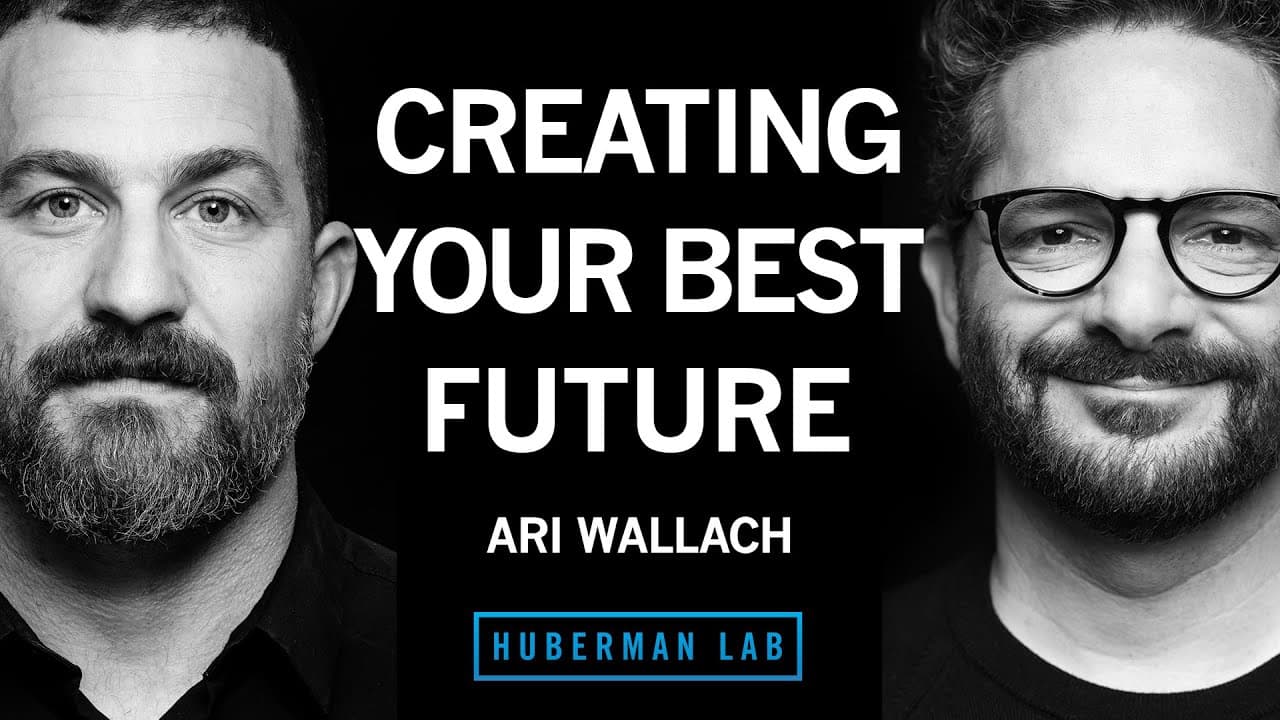
Create Your Ideal Future Using Science-Based Protocols | Ari Wallach
TL;DR
Exploring long-term thinking for a better future.
Transcript
welcome to the huberman Lab podcast where we discuss science and science-based tools for everyday life I'm Andrew huberman and I'm a professor of neurobiology and Opthalmology at Stanford School of Medicine my guest today is Ari wallik Ari wallik is an adjunct associate professor at Columbia University's School of International and public affairs h... Read More
Key Insights
- Ari Wallach emphasizes the importance of long-term thinking, proposing that we should consider how our actions today impact future generations.
- The concept of 'transgenerational empathy' involves understanding and feeling empathy for past, present, and future selves and generations.
- Wallach introduces 'Cathedral Thinking,' a mindset where actions are taken today for the benefit of future generations, even if we won't see the results.
- Social media and technology often promote presentism, focusing on immediate rewards, which can hinder long-term planning and thinking.
- Wallach suggests practical tools like writing letters to your future self and visualizing aged versions of yourself to foster long-term thinking.
- The dismantling of traditional institutions has altered people's sense of purpose, making it crucial to redefine goals and values.
- Emotions should guide actions toward future goals; connecting desired future states with current emotions can drive meaningful change.
- Wallach challenges the notion of egoic legacy, advocating for modeling behavior that positively impacts future generations.
Install to Summarize YouTube Videos and Get Transcripts
Explore YouTube Video Summarizer or Get YouTube Transcript Extractor
Questions & Answers
Q: What is transgenerational empathy?
Transgenerational empathy is a concept introduced by Ari Wallach, which involves understanding and feeling empathy not just for oneself and others in the present, but also for past and future generations. It encourages individuals to consider the impact of their actions on future descendants, fostering a mindset that prioritizes long-term well-being and societal progress.
Q: How does technology affect our perception of time?
Technology, particularly social media, often promotes presentism by focusing on immediate rewards and notifications. This can lead to a shortened perception of time, where individuals are more concerned with short-term gratification rather than long-term planning. Wallach suggests that this focus on the present can hinder our ability to think about and plan for the future effectively.
Q: What is Cathedral Thinking?
Cathedral Thinking is a mindset where actions are taken today for the benefit of future generations, even if the results are not immediately visible. This concept, discussed by Ari Wallach, encourages individuals and societies to engage in projects and actions that may take decades or even centuries to come to fruition, similar to how cathedrals were built over long periods.
Q: How can emotions guide actions toward future goals?
Emotions can guide actions toward future goals by connecting desired future states with current emotional experiences. Wallach suggests that visualizing and feeling the emotions associated with future goals can create a strong motivational pull, akin to a CED anchor, which helps drive actions and decisions that align with long-term objectives.
Q: What tools does Wallach suggest for fostering long-term thinking?
Wallach suggests several practical tools for fostering long-term thinking, including writing letters to your future self and visualizing aged versions of yourself. These exercises help individuals connect with their future selves, encouraging them to consider the long-term consequences of their actions and make decisions that benefit their future well-being.
Q: How does the dismantling of traditional institutions affect people's sense of purpose?
The dismantling of traditional institutions, such as religious and cultural frameworks, has altered people's sense of purpose by removing established narratives that provided meaning and direction. Wallach emphasizes the need to redefine goals and values, encouraging individuals to create their own sense of purpose that aligns with long-term thinking and societal progress.
Q: What is the role of egoic legacy in long-term thinking?
Egoic legacy refers to the desire for recognition and credit for one's actions. Wallach challenges this notion, advocating for a focus on modeling behavior that positively impacts future generations. He suggests that true legacy is not about having one's name remembered but about the lasting influence of one's actions on the well-being of future descendants.
Q: How can individuals balance short-term and long-term thinking?
Individuals can balance short-term and long-term thinking by integrating practical tools and exercises that encourage future-oriented decision-making. Wallach suggests using visualizations, emotional connections, and reflective practices like writing letters to one's future self to maintain awareness of long-term goals while addressing immediate needs and challenges. This approach helps create a positive, lasting impact on oneself and society.
Summary & Key Takeaways
-
Ari Wallach discusses the importance of long-term thinking, emphasizing 'transgenerational empathy' and the need to consider how our actions impact future generations. He introduces 'Cathedral Thinking,' where actions today benefit the future, even if results aren't immediately visible.
-
Wallach addresses the role of social media and technology in promoting presentism, which can impede long-term planning. He suggests practical tools like writing letters to your future self and visualizing aged versions of yourself to foster a future-oriented mindset.
-
The conversation explores how dismantling traditional institutions has altered people's sense of purpose, highlighting the need to redefine goals and values. Emotions should guide actions toward future goals, and Wallach challenges the notion of egoic legacy, advocating for modeling behavior that positively impacts future generations.
Read in Other Languages (beta)
Share This Summary 📚
Summarize YouTube Videos and Get Video Transcripts with 1-Click
Try YouTube Summary with ChatGPT & Claude or YouTube Transcript Generator
Explore More Summaries from Andrew Huberman 📚
Summarize YouTube Videos and Get Video Transcripts with 1-Click
Try YouTube Summary with ChatGPT & Claude or YouTube Transcript Generator