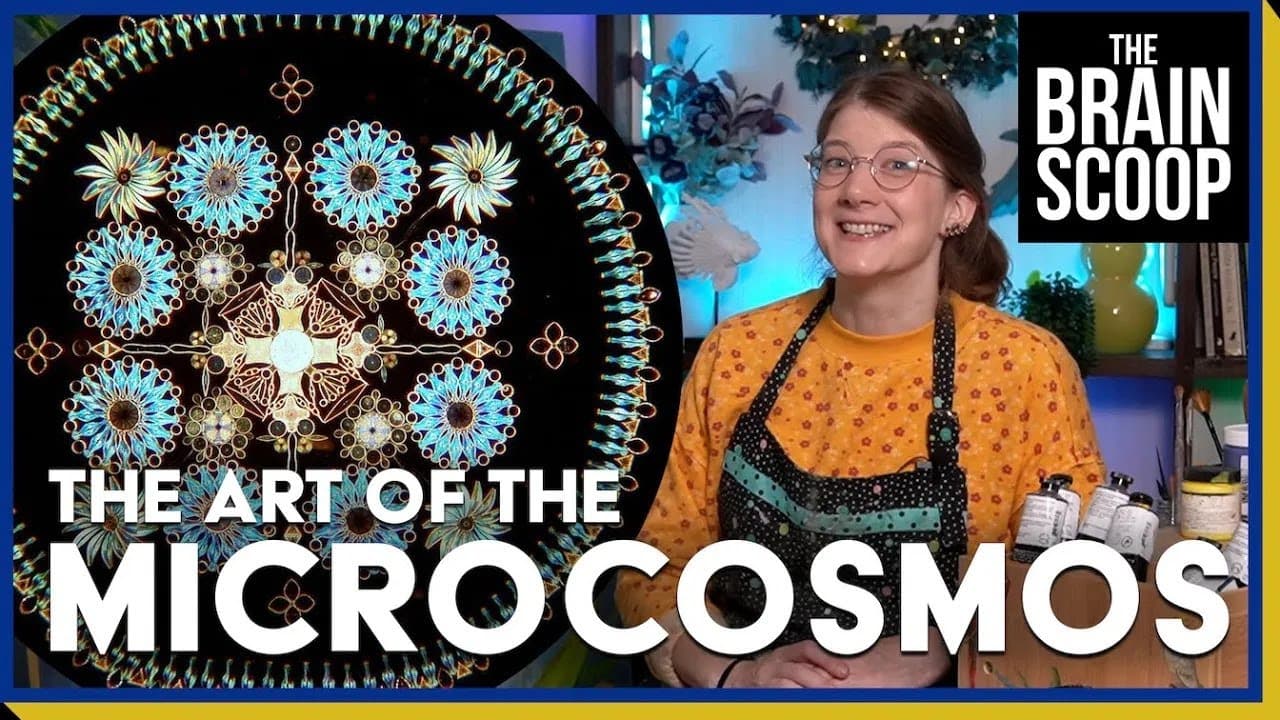
The world's smallest artwork is microscopic ✨
TL;DR
Journey into the tiny world of microorganisms, featuring tardigrades and diatoms, with James from Journey to the Microcosmos.
Transcript
Happy New Year! Whoo! I made this video a few years ago with my friend James who provides the incredible footage for the YouTube channel, Journey to the Microcosmos. And in that video, you will get to meet my friend, Jake the Tardigrade. And the reason I'm mentioning this is, in the time since making Jake the Tardigrade, I have also turned Jake the... Read More
Key Insights
- 🫤 Microscopy technology has evolved significantly since its inception over four centuries ago.
- 🫥 Victorians viewed microscopic creatures as mystical beings, blurring the lines between science and fantasy.
- 🖐️ Diatoms play a vital role in the ecosystem, generating a significant amount of the Earth's oxygen.
- 🥰 Microscopic art, inspired by organisms like diatoms, continues to captivate audiences.
- 🥳 Modern-day microscopists like James continue to explore and showcase the wonders of the microscopic world.
- 🙊 The association of microorganisms with fairies in Victorian times speaks to the wonder and imagination inspired by early microscopic discoveries.
- 💦 Artists draw inspiration from the microscopic world, creating unique works based on microscopic samples.
Install to Summarize YouTube Videos and Get Transcripts
Explore YouTube Video Summarizer or Get YouTube Transcript Extractor
Questions & Answers
Q: How did the technology of microscopy evolve over time?
The first compound microscope dates back 430 years ago, with Antony van Leeuwenhoek developing a more powerful version. Louis Pasteur's work in the 1860s further propelled the microscope's advancements.
Q: Why did Victorians associate microorganisms with fairies?
Victorians lacked scientific language to describe what they saw, leading them to believe they were peering into fairylands when observing microscopic creatures.
Q: What is the significance of diatoms in the ecosystem?
Diatoms are crucial for generating oxygen, with trillions of species existing worldwide and serving as indicators of environmental health and ecosystem changes.
Summary & Key Takeaways
-
James from Journey to the Microcosmos explores microscopic samples, showcasing water bears like Jake the Tardigrade and diatoms.
-
Microscope history from Robert Hooke to modern-day enthusiasts like James is highlighted.
-
Victorians perceived microorganisms as fairies, blurring the lines between science and fantasy.
Read in Other Languages (beta)
Share This Summary 📚
Summarize YouTube Videos and Get Video Transcripts with 1-Click
Try YouTube Summary with ChatGPT & Claude or YouTube Transcript Generator
Explore More Summaries from thebrainscoop 📚

Summarize YouTube Videos and Get Video Transcripts with 1-Click
Try YouTube Summary with ChatGPT & Claude or YouTube Transcript Generator