How Does a Digital Storage Oscilloscope Work?
TL;DR
A digital storage oscilloscope (DSO) works by capturing analog signals, converting them to digital format using an A/D converter, and storing them in digital memory. It then processes and reconstructs these signals to display waveforms on-screen, allowing for detailed analysis. Key steps include amplification, digitization, and waveform reconstruction.
Transcript
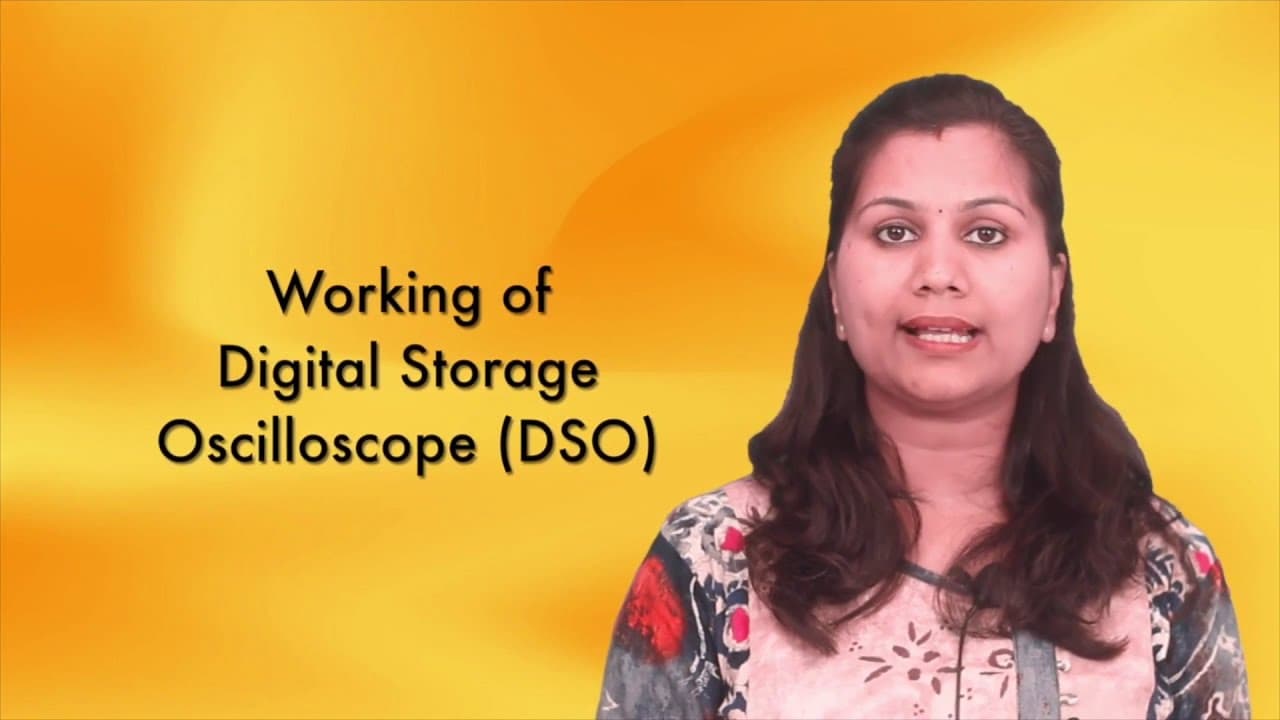
hello friends in this video we are going to study the working of digital storage oscilloscope also known as dso so let us start with our topic if we talk about that what basically a digital storage oscilloscope is we can say that it is an instrument which gives us a digital copy of the signals also it is going to store those digital signals so that... Read More
Key Insights
- 🏪 DSOs digitize, store, analyze, and display signals with digital processing capabilities.
- 😄 Analog signals are converted to digital through sampling and A to D conversion.
- 🏪 Digital waveform reconstruction recreates analog signals from stored digital data.
- 📡 Memory storage in DSOs facilitates signal retention and analysis.
- 😒 DSOs use a digitizer, memory, and processing circuitry for signal manipulation.
- ☠️ Sampling rate and frequency determine the accuracy of digital signal conversion.
- 🛟 Signal amplitudes and waveform shapes are preserved digitally for display.
Install to Summarize YouTube Videos and Get Transcripts
Explore YouTube Video Summarizer or Get YouTube Transcript Extractor
Questions & Answers
Q: What is a Digital Storage Oscilloscope (DSO) and how does it differ from analog oscilloscopes?
A DSO captures, digitizes, stores, and displays signals in digital form, offering digital processing capabilities unlike analog oscilloscopes which lack digital features.
Q: How does a DSO convert analog signals into digital signals?
A DSO uses a digitizer to sample analog signals, pass them through an A to D converter, and store the digital values in memory for further processing and display.
Q: What is waveform reconstruction in a DSO?
Waveform reconstruction in a DSO involves converting digitally stored signal points back into an analog waveform for display on a cathode ray tube screen.
Q: Why is digital memory essential in a DSO?
Digital memory in a DSO allows for storing, processing, and reanalyzing digital signals, enabling efficient signal manipulation and waveform display.
Summary & Key Takeaways
-
A Digital Storage Oscilloscope (DSO) captures analog signals, converts them to digital, stores in digital memory, processes digitally, and displays waveforms.
-
DSO uses a digitizer, memory, and processing circuitry to convert, store, analyze, and display signals.
-
Sampling analog signals, converting to digital, storing in memory, and waveform reconstruction are key processes in DSO.
Read in Other Languages (beta)
Share This Summary 📚
Summarize YouTube Videos and Get Video Transcripts with 1-Click
Try YouTube Summary with ChatGPT & Claude or YouTube Transcript Generator
Explore More Summaries from Ekeeda 📚




Summarize YouTube Videos and Get Video Transcripts with 1-Click
Try YouTube Summary with ChatGPT & Claude or YouTube Transcript Generator