How Does NeuroAI Enhance Brain and AI Research?
TL;DR
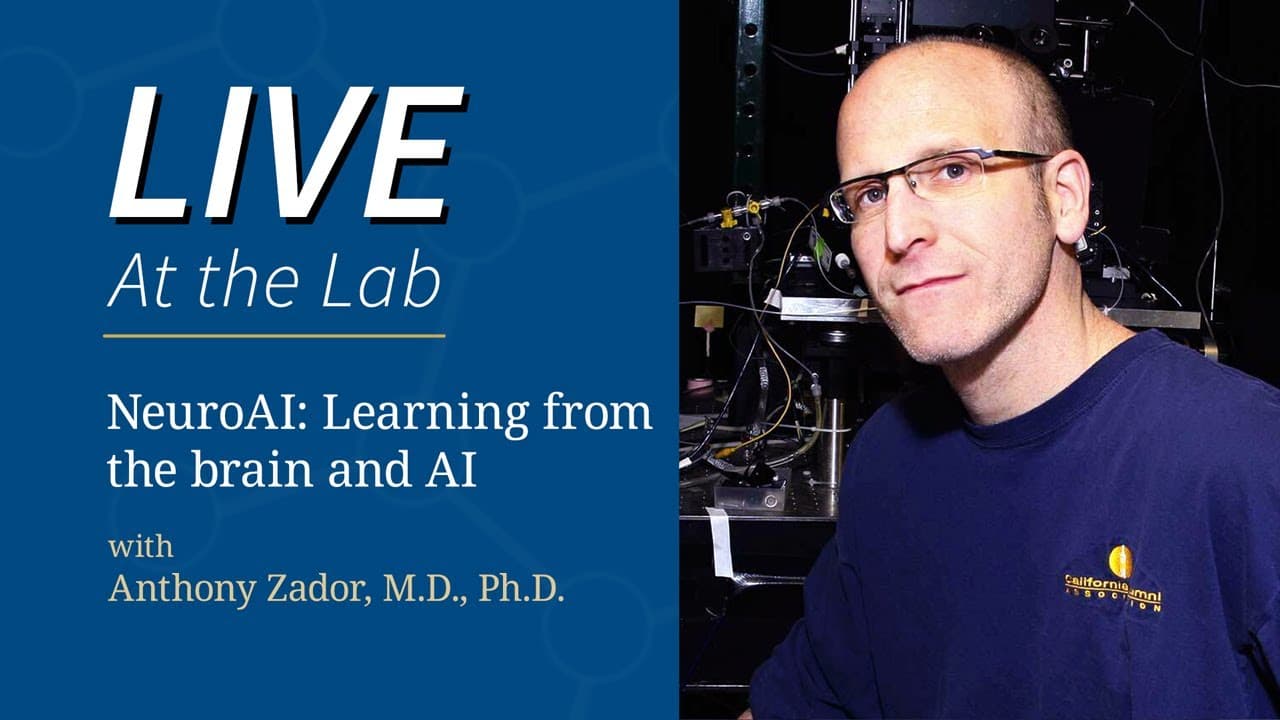
NeuroAI, at the intersection of neuroscience and artificial intelligence, explores how understanding the brain can improve AI and vice versa. Historical AI milestones reveal how early concepts in neuroscience laid the groundwork for modern AI advancements. The potential for AI to revolutionize fields like medicine and robotics is immense, but challenges remain in replicating human-like interaction with the world.
Transcript
I'm going to be talking about neuro AI and basically it's a field at the intersection of neuroscience and artificial intelligence. And so this picture here sort of suggests something that I strongly believe, which is that natural brains can tell us about how to build better artificial brains and build artificial intelligence. But the other way arou... Read More
Key Insights
- NeuroAI is a field combining neuroscience and artificial intelligence to enhance understanding and capabilities of both.
- Natural brains provide insights into building better AI systems, while AI offers tools to explore brain functions.
- Historical AI developments, such as the Mechanical Chess Turk, illustrate early attempts to mimic human intelligence.
- The 1943 McCulloch and Pitts paper laid foundational concepts for AI by modeling brain function mathematically.
- Modern AI breakthroughs were fueled by faster computers and large datasets, allowing systems to excel in tasks like image recognition.
- AI systems, such as AlphaFold, can perform tasks beyond human capability, like predicting protein structures for drug discovery.
- Despite advancements, AI struggles with tasks requiring physical interaction, like loading a dishwasher, highlighting ongoing challenges.
- The future of AI involves integrating insights from neuroscience to build systems that mimic human-like interaction and reasoning.
Install to Summarize YouTube Videos and Get Transcripts
Explore YouTube Video Summarizer or Get YouTube Transcript Extractor
Questions & Answers
Q: How does NeuroAI combine neuroscience and artificial intelligence?
NeuroAI combines neuroscience and artificial intelligence by leveraging insights from natural brain functions to enhance AI systems. This interdisciplinary approach explores how understanding the brain can inform the development of artificial intelligence, while AI tools can be used to study and model brain functions. The goal is to improve both fields by creating more sophisticated AI and gaining deeper insights into brain mechanisms.
Q: What historical developments laid the groundwork for modern AI?
Historical developments such as the 1943 McCulloch and Pitts paper laid the groundwork for modern AI by modeling brain function mathematically. This paper introduced the concept of neurons computing information, which influenced the design of computers and AI systems. Additionally, early attempts like the Mechanical Chess Turk illustrated efforts to mimic human intelligence, highlighting the longstanding interest in creating machines that replicate human cognitive abilities.
Q: What are some recent breakthroughs in AI capabilities?
Recent breakthroughs in AI capabilities include advancements in image recognition and protein structure prediction. In 2012, AI systems began excelling at recognizing and parsing images, a task previously challenging for computers. AlphaFold, an AI system, can predict protein structures, aiding drug discovery. These achievements were driven by faster computers, large datasets, and improved algorithms, showcasing AI's potential to solve complex problems beyond human capability.
Q: Why do AI systems struggle with tasks requiring physical interaction?
AI systems struggle with tasks requiring physical interaction because they lack the sensory-motor capabilities that humans and animals have evolved over millions of years. While AI excels in computational tasks, replicating the intuitive and adaptive nature of human interaction with the physical world, such as loading a dishwasher, remains challenging. This highlights the need for further research to develop AI systems that can better mimic human-like interaction and reasoning.
Q: What is the potential impact of AI on medicine?
AI has the potential to significantly impact medicine by enhancing diagnostic accuracy and efficiency, as well as accelerating drug discovery. AI systems can perform routine diagnostic tasks more reliably and at scale, making healthcare more accessible. Additionally, AI applications like AlphaFold can predict protein structures, facilitating drug development. These advancements promise to improve patient outcomes and revolutionize medical research and practice.
Q: Will AI achieve human-like intelligence in the next century?
AI is expected to achieve human-like intelligence, or artificial general intelligence (AGI), within the next century. This involves developing systems that can perform a wide range of tasks comparable to human abilities. While current AI excels in specific domains, replicating human-like interaction and reasoning remains a challenge. However, ongoing research integrating neuroscience insights is advancing the field, bringing AGI closer to reality.
Q: What challenges remain in developing AI systems with human-like reasoning?
Developing AI systems with human-like reasoning involves overcoming challenges related to mimicking the nuanced and adaptive nature of human cognitive processes. Current AI systems often perform tasks without truly understanding them, lacking common sense and contextual awareness. Integrating insights from neuroscience to build systems that replicate the underlying mechanisms of human reasoning is crucial to addressing these challenges and achieving more sophisticated AI.
Q: How can neuroscience insights improve AI systems?
Neuroscience insights can improve AI systems by providing a deeper understanding of how natural brains process information and interact with the world. By studying neural circuits and brain functions, researchers can develop AI systems that mimic these processes, potentially leading to more efficient and adaptable AI. This interdisciplinary approach aims to create systems that perform tasks with human-like precision and understanding, enhancing AI capabilities across various domains.
Summary & Key Takeaways
-
NeuroAI explores the intersection of neuroscience and artificial intelligence, aiming to enhance both fields by leveraging insights from natural brain functions to improve AI systems. Historical AI milestones, such as the 1943 McCulloch and Pitts paper, laid the groundwork for modern advancements. Despite significant progress, challenges remain in replicating human-like interaction with the world, highlighting the need for continued research.
-
AI has achieved remarkable feats, such as image recognition and protein structure prediction, thanks to faster computers and large datasets. However, tasks requiring physical interaction, like loading a dishwasher, remain challenging. The future of AI involves integrating neuroscience insights to develop systems that better mimic human interaction and reasoning, potentially revolutionizing fields like medicine and robotics.
-
The potential for AI to revolutionize daily life is immense, yet the journey from initial concepts to practical applications can span decades. Curiosity-driven research, like that conducted at Cold Spring Harbor Laboratory, plays a crucial role in advancing AI and neuroscience, with the promise of transformative impacts across various domains, including medicine, robotics, and beyond.
Read in Other Languages (beta)
Share This Summary 📚
Summarize YouTube Videos and Get Video Transcripts with 1-Click
Try YouTube Summary with ChatGPT & Claude or YouTube Transcript Generator
Explore More Summaries from Cold Spring Harbor Laboratory 📚




Summarize YouTube Videos and Get Video Transcripts with 1-Click
Try YouTube Summary with ChatGPT & Claude or YouTube Transcript Generator