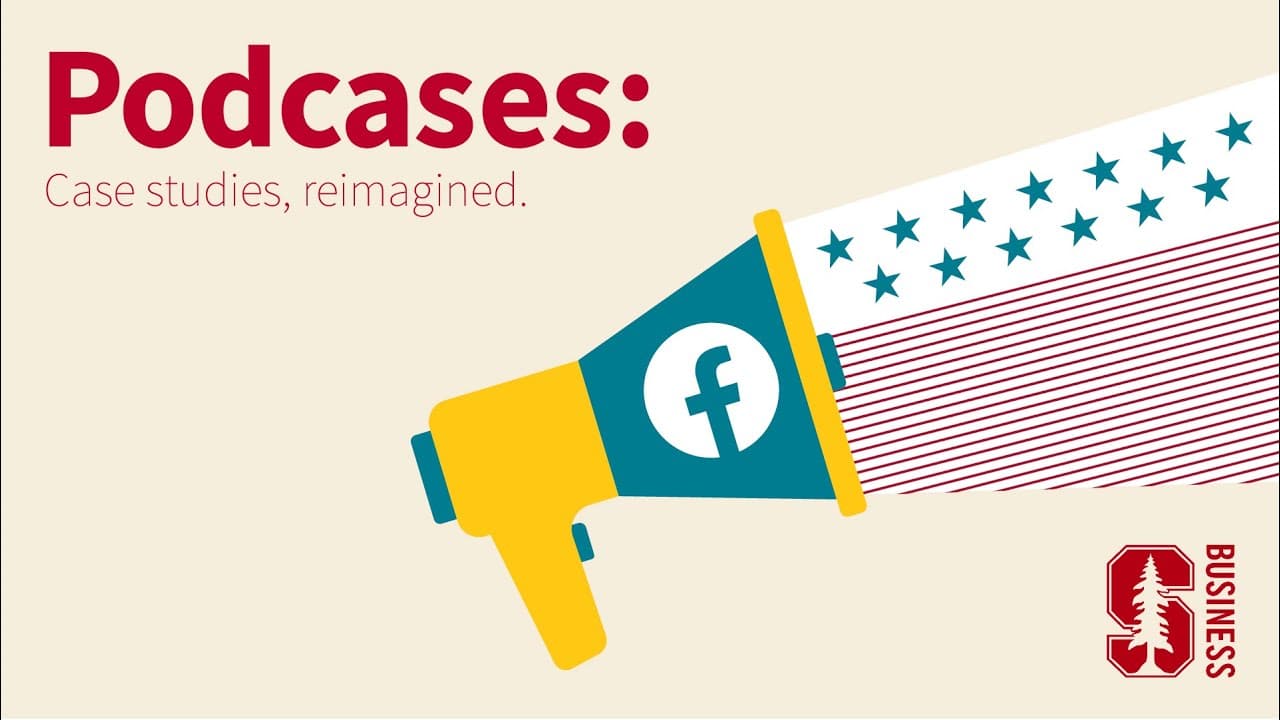
Podcase: Facebook and Political Speech
TL;DR
Facebook's influence on political speech and elections has raised concerns over bias, censorship, and the spread of misinformation.
Transcript
I don't think that Facebook or or Internet Platforms in general should be Arbiters of truth I think that's a kind of a dangerous line to get down to in terms of deciding what is what is true and what isn't Facebook's products harm children Stoke Division and weaken our democracy the company's leadership knows how to make Facebook and Instagram safe... Read More
Key Insights
- 😯 Facebook's role in political speech raises complex ethical questions concerning free speech, censorship, and the responsibility of social media platforms.
- 🫠 The platform's algorithms and ad targeting capabilities have been both praised for their effectiveness and criticized for their potential to amplify hate speech and disinformation.
- 😯 Facebook's handling of political speech during elections has faced scrutiny, with claims of bias and the spread of misinformation being hotly debated.
- 🪡 The company's responses to allegations of bias and censorship have been met with mixed reactions, and the need for regulation to address these issues has been widely discussed.
- 👨🔬 Facebook's impact on democracy and political polarization is a subject of ongoing research, with evidence suggesting that the platform has contributed to increasing divisiveness and misinformation in public discourse.
- 🪡 The case study highlights the need for critical examination of social media platforms' role in shaping public opinion and the potential consequences of their actions on democratic processes.
- 🥶 The rise of social media platforms like Facebook has necessitated a reevaluation of the boundaries of free speech, as the power of these platforms to influence public opinion and shape political discourse continues to grow.
Install to Summarize YouTube Videos and Get Transcripts
Explore YouTube Video Summarizer or Get YouTube Transcript Extractor
Questions & Answers
Q: How has Facebook's approach to political speech evolved over time?
Facebook initially aimed to make the world more open and connected, but it later shifted its mission to focus on bringing the world closer together. This change has raised questions about the platform's responsibility in balancing freedom of speech with the prevention of violence and civil unrest.
Q: How did Facebook influence the 2016 US presidential election?
Facebook played a significant role in the 2016 US election by allowing political advertising and targeted messaging. The platform's algorithms and ad targeting tools were used extensively by both the Trump and Clinton campaigns. However, Facebook also faced criticism for enabling the spread of fake news and divisive content.
Q: How has Facebook responded to allegations of bias and censorship?
Facebook has implemented measures to address concerns of bias and misinformation, such as banning certain political figures and introducing transparency in political ads. However, the platform has been criticized for inconsistent enforcement and favoring certain political ideologies.
Q: What impact has Facebook had on democracy and political polarization?
Facebook's algorithms and content ranking systems have been criticized for promoting polarizing and divisive content. Researchers argue that the platform's emphasis on engagement and time spent on the site has contributed to increasing political polarization and the spread of misinformation.
Summary & Key Takeaways
-
Facebook, with its mission to connect people, has become the world's largest social media platform, but it has faced criticism for prioritizing profits over social responsibility.
-
The platform's algorithms and advertising strategies have been accused of amplifying hate speech, spreading disinformation, and inciting violence, leading to calls for stricter regulation.
-
Facebook's handling of political speech in the context of elections, both in the US and worldwide, has drawn scrutiny, with allegations of bias and censorship.
Read in Other Languages (beta)
Share This Summary 📚
Summarize YouTube Videos and Get Video Transcripts with 1-Click
Try YouTube Summary with ChatGPT & Claude or YouTube Transcript Generator
Explore More Summaries from Stanford Graduate School of Business 📚
Summarize YouTube Videos and Get Video Transcripts with 1-Click
Try YouTube Summary with ChatGPT & Claude or YouTube Transcript Generator