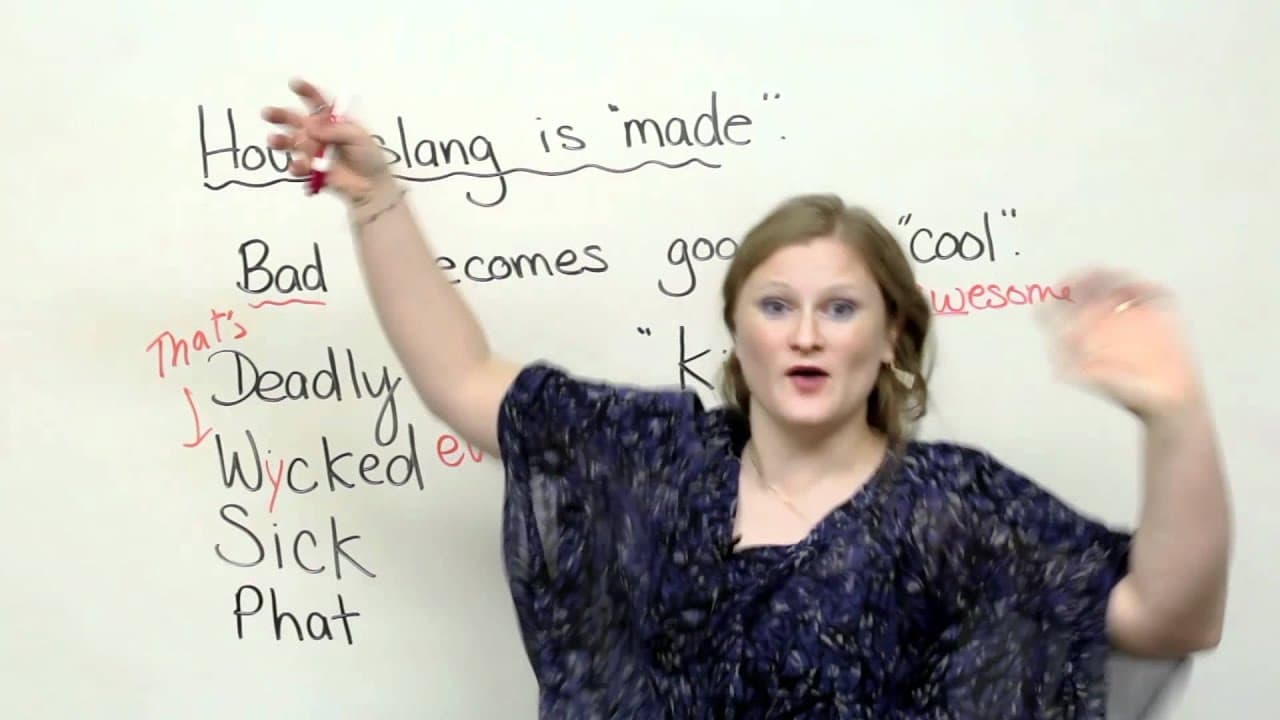
How slang is "made" in English - bad-ass, wicked, deadly, sick
TL;DR
Rani explains the usage of present perfect and past perfect tenses with clear examples and tips.
Transcript
Hi, my name is Rani, today by special request I'm going to teach you some grammar. A lot of people comment, thank you, and ask me, "Rani, what's present perfect, what's past perfect, what's PP, where am I, how did I get here?" So I'm here to help you, teach you this so you can learn it forever. It's very easy once you get it first of all. So presen... Read More
Key Insights
- 💯 Present perfect and past perfect tenses rely on the past participle of verbs for correct formation.
- 😒 Remember to use "have" with pronouns "I", "they", "you", and "we" and "has" with pronouns "he", "she", and "it".
- 😒 Past perfect tense uses "had" universally, without variation based on the subject.
- 💯 Negative forms of present and past perfect tenses involve using "haven't" and "hadn't" respectively.
Install to Summarize YouTube Videos and Get Transcripts
Explore YouTube Video Summarizer or Get YouTube Transcript Extractor
Questions & Answers
Q: What is the key difference between present perfect and past perfect tenses?
The main difference lies in the auxiliary verb used, with present perfect employing "have/has" and past perfect utilizing "had" alongside the past participle of the verb.
Q: How can one remember the correct usage of "have" and "has" in sentences?
By associating "I", "they", "you", and "we" with "have", and "he", "she", and "it" with "has", one can easily determine the correct auxiliary verb to use.
Q: Why is it important to remember the past participle of verbs in perfect tenses?
The past participle is essential in constructing proper sentences in present perfect and past perfect tenses, showcasing the completion of actions.
Q: How can one form a question in past perfect tense?
By using "had" followed by the subject and past participle of the verb, one can create a grammatically correct question in past perfect tense.
Summary & Key Takeaways
-
Rani teaches the difference between present perfect and past perfect tenses, focusing on using the past participle of verbs.
-
Present perfect is formed with "have/has" + past participle, while past perfect is formed with "had" + past participle.
-
She emphasizes the correct usage of "have" and "has" based on the subject in sentences.
Read in Other Languages (beta)
Share This Summary 📚
Summarize YouTube Videos and Get Video Transcripts with 1-Click
Try YouTube Summary with ChatGPT & Claude or YouTube Transcript Generator
Explore More Summaries from English with Ronnie · EnglishLessons4U with engVid 📚




Summarize YouTube Videos and Get Video Transcripts with 1-Click
Try YouTube Summary with ChatGPT & Claude or YouTube Transcript Generator