What Caused the Oroville Dam Spillway Crisis?
TL;DR
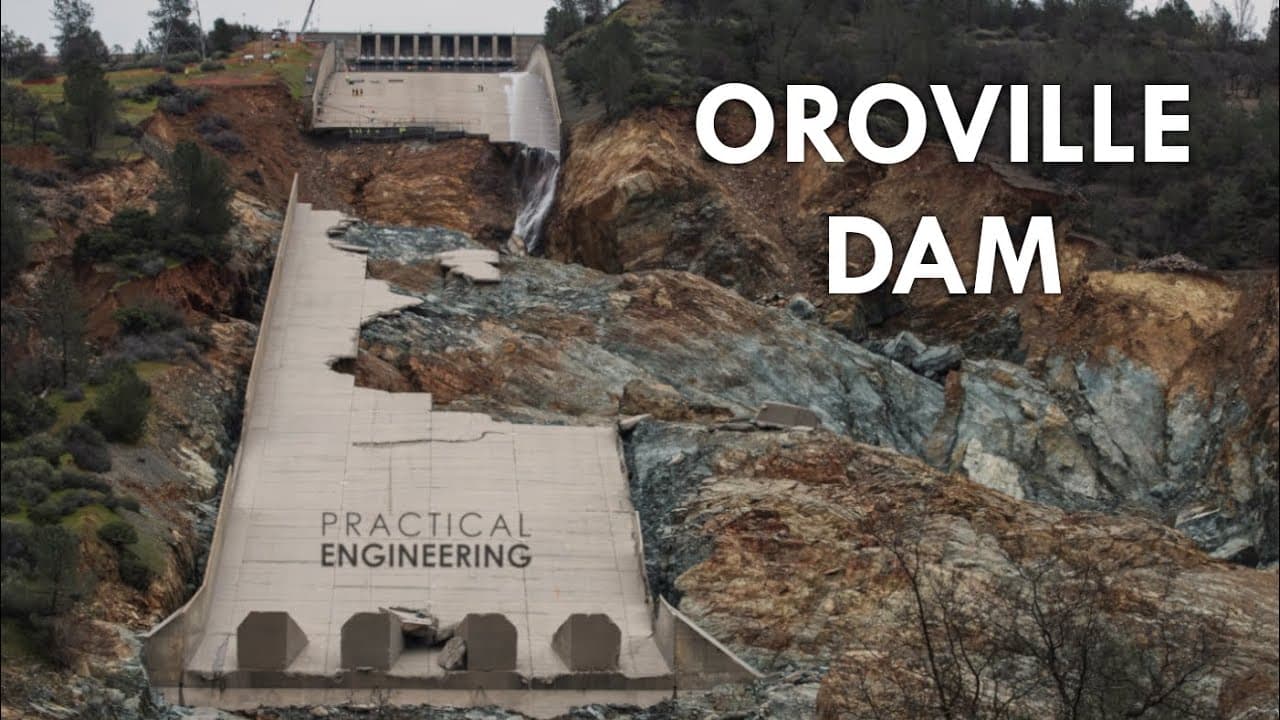
In February 2017, the Oroville Dam spillway in California suffered a major failure due to a combination of geologic mischaracterization and poor design. The spillway's concrete slabs were dislodged by water pressure, leading to erosion and the evacuation of 200,000 people. The incident highlights the importance of thorough engineering assessments and the need for robust safety measures in dam infrastructure.
Transcript
In February 2017, concrete slabs in the spillway at Oroville Dam failed during releases from the floodgates, starting a chain of events that prompted the evacuation of nearly 200,000 people downstream. The dam didn’t fail, but it came too close for comfort, especially for the tallest structure of its kind in the United States. Oroville Dam fall... Read More
Key Insights
- Oroville Dam is the tallest dam in the U.S. at 770 feet high.
- The dam's service spillway failed due to uplift forces on cracked concrete slabs.
- Inaccurate geologic assessments led to the spillway's design flaws.
- The emergency spillway was untested and eroded rapidly, threatening stability.
- Operators faced a critical decision between further damaging the service spillway or risking the emergency spillway.
- The failure highlighted deficiencies in dam inspection and maintenance protocols.
- Modern spillway designs incorporate features to prevent such failures.
- The incident underscores the vital role of engineering in public safety.
Install to Summarize YouTube Videos and Get Transcripts
Explore YouTube Video Summarizer or Get YouTube Transcript Extractor
Questions & Answers
Q: What caused the failure of the Oroville Dam spillway?
The failure of the Oroville Dam spillway was primarily caused by uplift forces on the cracked concrete slabs of the service spillway. These cracks allowed water to seep underneath, reducing the slabs' stability and leading to their displacement. The spillway's design did not account for the actual geologic conditions, contributing to the failure.
Q: How did the emergency spillway at Oroville Dam perform during the crisis?
The emergency spillway at Oroville Dam was untested before the crisis and performed poorly. When water overtopped it, rapid erosion occurred on the hillside, threatening the stability of the spillway structure. This erosion prompted authorities to issue an evacuation order for nearly 200,000 residents downstream.
Q: What were the main engineering flaws in the Oroville Dam spillway design?
The main engineering flaws in the Oroville Dam spillway design included a mischaracterization of the foundation materials and inadequate drainage systems. The spillway was designed with the assumption of solid bedrock, but it was actually built on erodible soil and weathered rock. The drains also contributed to cracking, allowing water to destabilize the structure.
Q: Why was the decision to use the emergency spillway at Oroville Dam considered risky?
The decision to use the emergency spillway at Oroville Dam was risky because it had never been tested and was built on erodible materials. As water flowed over it, rapid erosion occurred, creating headcuts that threatened the spillway's stability. The risk of structural failure and subsequent flooding of downstream communities made the decision highly precarious.
Q: What lessons were learned from the Oroville Dam spillway crisis?
The Oroville Dam spillway crisis taught several lessons, including the importance of accurate geologic assessments, the need for robust design and maintenance of spillways, and the critical role of engineering in public safety. It highlighted deficiencies in inspection protocols and emphasized the need for modern spillway features to prevent similar failures.
Q: How did the operators manage the crisis at Oroville Dam?
Operators at Oroville Dam managed the crisis by balancing the risks of further damaging the service spillway against the untested emergency spillway. They incrementally opened gates to control erosion and eventually allowed the emergency spillway to be used, which led to rapid erosion. The decision-making was complicated by changing conditions and the need to protect downstream communities.
Q: What were the consequences of the Oroville Dam spillway failure?
The consequences of the Oroville Dam spillway failure included the evacuation of nearly 200,000 people, significant erosion damage to the dam's infrastructure, and a comprehensive review of dam safety practices. The incident highlighted the vulnerabilities in dam design and maintenance and prompted changes in safety regulations and engineering assessments.
Q: What is the significance of the forensic report on the Oroville Dam incident?
The forensic report on the Oroville Dam incident is significant because it provides a detailed analysis of the causes of the spillway failure and offers recommendations for improving dam safety. It highlights the need for accurate geologic assessments, robust design features, and regular maintenance. The report serves as a critical resource for engineers and regulators to prevent similar incidents in the future.
Summary & Key Takeaways
-
The Oroville Dam spillway crisis in 2017 was caused by a combination of design flaws and geologic mischaracterization. The service spillway's concrete slabs were lifted by water pressure, leading to a chain reaction of failures. The emergency spillway, untested and poorly constructed, eroded rapidly, prompting the evacuation of 200,000 people downstream.
-
Operators faced a dilemma between further damaging the service spillway or risking the untested emergency spillway. The crisis revealed significant gaps in dam safety protocols and underscored the importance of accurate engineering assessments and robust safety features in infrastructure design.
-
The incident serves as a critical lesson in professional responsibility, highlighting the need for engineers, operators, and regulators to ensure the safety and reliability of critical infrastructure. The aftermath led to a comprehensive review and overhaul of dam safety practices and regulations.
Read in Other Languages (beta)
Share This Summary 📚
Summarize YouTube Videos and Get Video Transcripts with 1-Click
Try YouTube Summary with ChatGPT & Claude or YouTube Transcript Generator
Explore More Summaries from Practical Engineering 📚


Summarize YouTube Videos and Get Video Transcripts with 1-Click
Try YouTube Summary with ChatGPT & Claude or YouTube Transcript Generator