Sensory Processing in a Small Brain - Rachel Wilson
TL;DR
Dr. Rachel Wilson discusses the integration of sensory information in the brain and how different neural channels interact to shape perception and behavior.
Transcript
Stanford University our next featured speaker is dr. Rachel Wilson and it's my pleasure to introduce dr. Wilson to you currently she is the Martin family professor of basic research in neurobiology and in HHMI investigator at Harvard University dr. Wilson and her research has been recognized by several awards notably an Eppendorf in science prize i... Read More
Key Insights
- ❓ Sensory encoding is a complex process involving the integration of neural activity from sensory neurons.
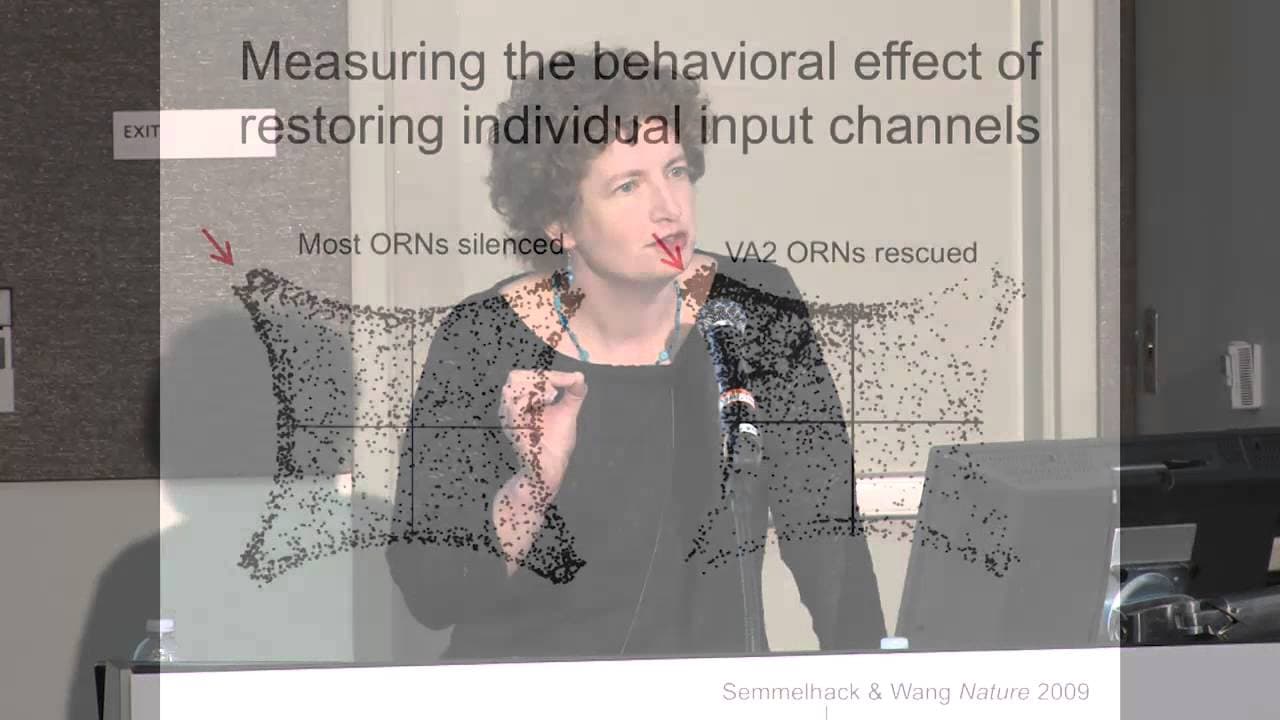
- ❓ Different glomeruli in the olfactory system can either summate their effects or exhibit antagonistic interactions, influencing behavioral responses.
- 🧠 Understanding the relationship between neural activity and behavior is crucial for unraveling how the brain processes and interprets sensory information.
- ➗ The olfactory system offers a useful model for studying sensory encoding due to its natural division into different channels.
- 🧠 Investigating the interactions of glomeruli in the olfactory system provides insights into the mechanisms underlying behavior and information processing in the brain.
- 🎮 Summation and antagonism among glomeruli suggest competition for control of behavior.
Install to Summarize YouTube Videos and Get Transcripts
Explore YouTube Video Summarizer or Get YouTube Transcript Extractor
Questions & Answers
Q: How does the brain process and interpret sensory information?
The brain processes and interprets sensory information through the integration of neural activity from different sensory neurons. This integration allows for the construction of a coherent perceptual experience.
Q: Why is understanding the relationship between neural activity and behavior important?
Understanding how neural activity relates to behavior provides insights into how the brain generates complex behaviors and solves problems. It can also have implications for understanding neurological disorders and developing treatments.
Q: What is the significance of the olfactory system in studying sensory encoding?
The olfactory system is a useful model for studying sensory encoding because it naturally divides itself into different channels. By investigating how these channels combine and interact, researchers can gain insights into the general principles of information processing in the brain.
Q: What are the key findings of the study on glomeruli interactions in fruit flies?
The study found that some glomeruli in the olfactory system summate their effects, contributing to behavioral attraction, while others exhibit antagonistic interactions, reducing the efficacy of one or both glomeruli. These findings suggest competition among glomeruli for control of behavior.
Summary & Key Takeaways
-
Dr. Wilson explores the relationship between neural activity and perception, focusing on sensory encoding in the brain.
-
She investigates how different glomeruli in the olfactory system combine to influence behavior, using optogenetic stimulation and behavioral experiments in fruit flies.
-
The results show that some glomeruli summate their effects, while others exhibit antagonistic interactions, suggesting competition for control of behavior.
Read in Other Languages (beta)
Share This Summary 📚
Summarize YouTube Videos and Get Video Transcripts with 1-Click
Try YouTube Summary with ChatGPT & Claude or YouTube Transcript Generator
Explore More Summaries from Stanford 📚






Summarize YouTube Videos and Get Video Transcripts with 1-Click
Try YouTube Summary with ChatGPT & Claude or YouTube Transcript Generator