What Is Consensus in Distributed Computing?
TL;DR
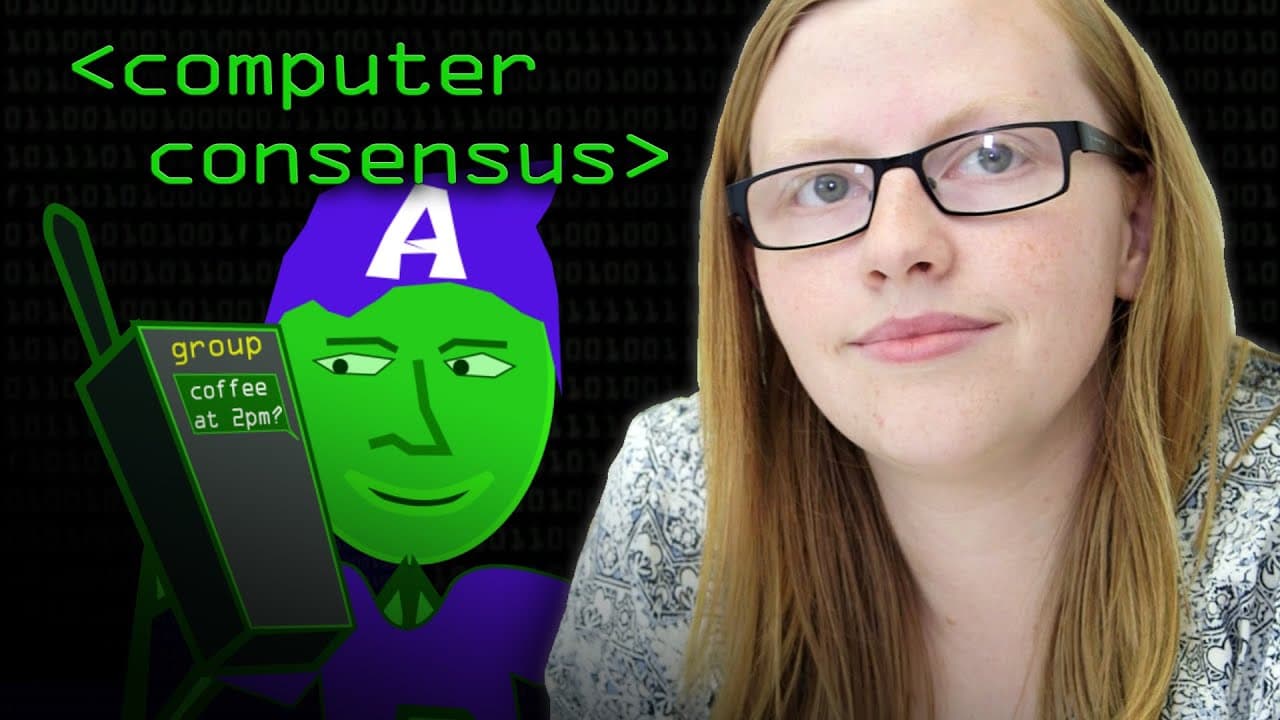
Consensus in distributed computing ensures all nodes agree on the state of a system, similar to friends organising a coffee outing despite communication glitches. Protocols like two-phase and three-phase commit manage these agreements, addressing issues like node failures and ensuring data consistency, especially in critical applications like banking.
Transcript
consensus in terms of computing is similar to consensus in terms of humans if you're a group of friends who's organizing to go to coffee and you're trying to pick a time in which to go you may have some friends that don't reply some messages might get lost you might ask a friend to ask another friend they might forget about it one friend might be o... Read More
Key Insights
- 😾 Consensus in computing is analogous to reaching agreement among friends organizing a social outing, where communication, coordination, and multiple exchanges are involved.
- ❓ Consensus algorithms, like the two-phase commit protocol, are used to ensure consistency and accuracy in distributed computing systems, particularly in scenarios like banking.
- ❓ The three-phase commit protocol introduces an additional step to address the limitations of the two-phase commit and enhance fault tolerance.
- 🛟 Working with majorities in consensus algorithms reduces the load on servers and allows for continued operation even in cases of server failures or network partitions.
- 🪡 The majority intersection property ensures that any two majorities in a distributed network will have at least one overlapping node, enabling detection of previous transactions and reducing the need for all nodes to be involved in every transaction.
- 🏛️ Modern consensus protocols, such as Paxos, have built upon earlier algorithms and are widely used in distributed computing systems.
Install to Summarize YouTube Videos and Get Transcripts
Explore YouTube Video Summarizer or Get YouTube Transcript Extractor
Questions & Answers
Q: How does consensus in computing relate to friends trying to organize a coffee outing?
Consensus in computing is similar to friends organizing a coffee outing, where messages may get lost and confirmations may be delayed, but an agreement can still be reached through communication and coordination.
Q: Why is consensus important in computing, especially in banking scenarios?
Consensus is crucial in computing systems, especially in banking, to ensure consistent data representation across multiple machines. It prevents inconsistencies in account balances and supports accurate financial transactions.
Q: What is the two-phase commit protocol, and why is it used?
The two-phase commit protocol is a common starting point for achieving consensus in computing systems. It involves nodes communicating and coordinating to reach an agreement on a transaction. It ensures that all nodes agree before committing to the transaction.
Q: What are the limitations of the two-phase commit protocol?
The two-phase commit protocol has limitations, such as potential failures in the coordinating node, which may leave other nodes unsure about whether to proceed with the transaction. It also increases the round-trip time required to reach consensus.
Summary & Key Takeaways
-
Consensus in computing is similar to consensus among friends trying to pick a time to go for coffee, where messages may get lost or ignored, but an agreement can still be reached.
-
In computing systems, consensus is crucial for maintaining consistency, especially in scenarios like banking, where multiple machines need to communicate to ensure accurate data representation.
-
The two-phase commit protocol is a common starting point for achieving consensus, but it has limitations, such as potential failures and increased round-trip time.
Read in Other Languages (beta)
Share This Summary 📚
Summarize YouTube Videos and Get Video Transcripts with 1-Click
Try YouTube Summary with ChatGPT & Claude or YouTube Transcript Generator
Explore More Summaries from Computerphile 📚



Summarize YouTube Videos and Get Video Transcripts with 1-Click
Try YouTube Summary with ChatGPT & Claude or YouTube Transcript Generator