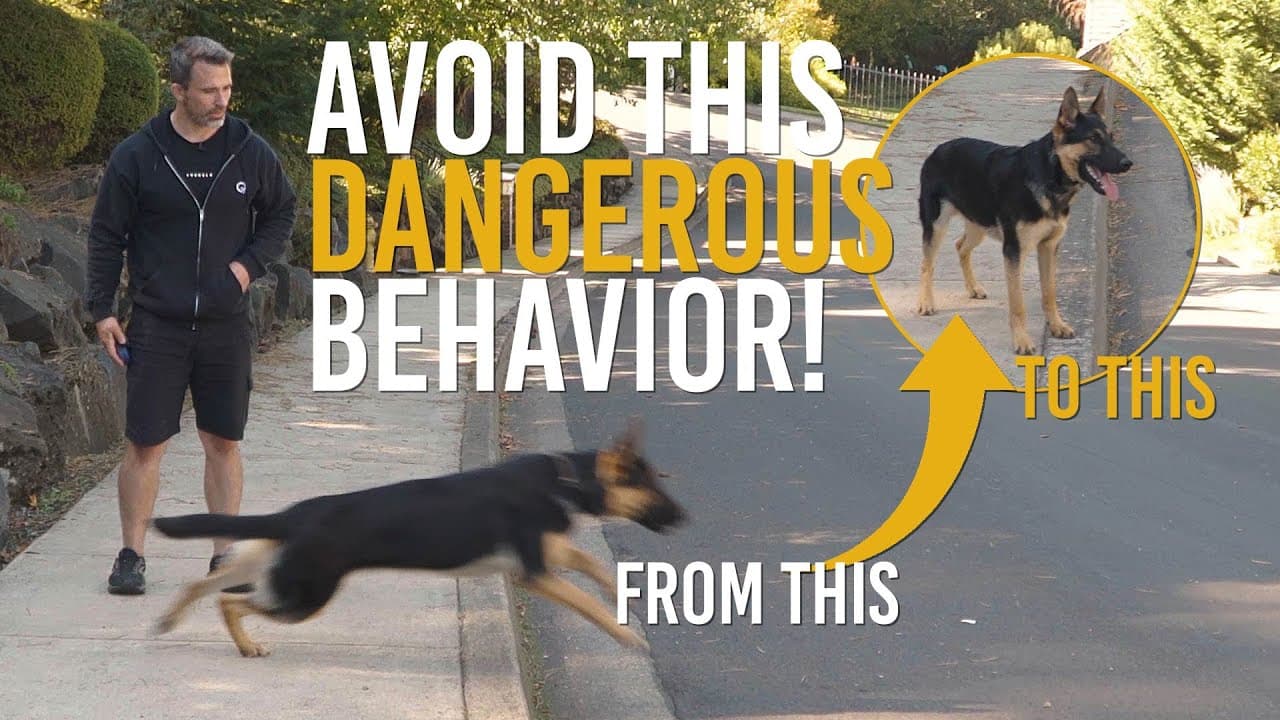
How to Train Your Dog Not to Run Into the Street
TL;DR
To train your dog not to run into the street, use clear verbal cues and leash techniques. When the leash tightens, wait a second before applying a gentle corrective pop, guiding them back to safety. Reward them for maintaining position on the sidewalk, and gradually increase the challenge by adding distractions or speed while ensuring their understanding of boundaries.
Transcript
I want to show you in today's video how I like to teach a dog not to run into the street and we're also going to be working on a casual loose leash walk now it's nice to have a dog that walks in the heel position and we can use food lure to help establish that and he's kind of zoned out so we're going to get him into the training right and we can h... Read More
Key Insights
- Teaching a dog not to run into the street involves establishing clear boundaries and using reinforcement techniques.
- Utilizing a combination of positive and negative reinforcement helps the dog understand and follow commands effectively.
- The leash cue method is employed to guide the dog back to the sidewalk when they step into the street.
- Repetitive training sessions are essential for reinforcing the desired behavior and ensuring the dog understands the boundaries.
- The remote collar with a Pavlovian tone setting is used for off-leash reliability, providing a gentle reminder followed by a correction if needed.
- Reward placement is crucial; rewarding the dog for maintaining the desired position rather than returning from a mistake.
- Gradual increase in training difficulty, such as increasing walking speed or introducing toys, helps solidify the dog's understanding.
- Consistency in training across various environments is key to achieving reliable and safe behavior from the dog.
Install to Summarize YouTube Videos and Get Transcripts
Explore YouTube Video Summarizer or Get YouTube Transcript Extractor
Questions & Answers
Q: How do you initially teach a dog not to run into the street?
Initially, you walk the dog toward the street with enough leash freedom to make a mistake. If they step into the street, apply leash pressure to guide them back, using a marker sound predicting negative reinforcement. Praise the dog once they return to the sidewalk, but avoid giving treats to prevent them from associating stepping into the street with a reward.
Q: What role does the remote collar play in the training?
The remote collar is used for off-leash reliability and includes a Pavlovian tone setting. When the tone button is pressed, the collar emits a sound followed by mild stimulation if the dog doesn't respond. This system helps reinforce the boundary, ensuring the dog understands not to enter the street even when off-leash.
Q: Why is reward placement important in this training?
Reward placement is crucial because rewarding the dog for maintaining the desired position reinforces the correct behavior. If the dog steps into the street and receives a reward upon returning, it might learn that entering the street leads to a treat. Therefore, rewards are given when the dog consistently stays on the sidewalk.
Q: How do you increase the difficulty of the training?
Difficulty is increased by gradually walking faster towards the street or introducing toys as distractions. The goal is to challenge the dog while reinforcing the boundary, ensuring they understand not to enter the street under various conditions. This gradual increase helps solidify the dog's understanding and reliability.
Q: What is the significance of using both positive and negative reinforcement?
Using both positive and negative reinforcement ensures the dog understands and follows commands effectively. Positive reinforcement encourages desired behaviors by adding rewards, while negative reinforcement involves applying and releasing pressure to guide the dog. This combination helps the dog learn boundaries and respond reliably.
Q: How does the leash cue method work?
The leash cue method involves applying leash pressure when the dog steps into the street, guiding them back to the sidewalk. Once they return, the pressure is released, and the dog receives praise. This method helps reinforce the boundary and teaches the dog to associate leash tension with the need to return to the sidewalk.
Q: Why is consistency important in dog training?
Consistency is crucial because it helps the dog understand and internalize the desired behavior. Training across various environments and maintaining the same rules ensures the dog reliably follows commands, regardless of distractions or changes in surroundings. Consistent practice reinforces the training and builds the dog's confidence.
Q: What is the ultimate goal of this training method?
The ultimate goal is to teach the dog to reliably avoid running into the street, ensuring their safety. By using a combination of reinforcement techniques, leash cues, and remote collar training, the dog learns to respect boundaries and respond appropriately, even off-leash. This training method aims to create a street-smart dog that remains safe in various situations.
Summary & Key Takeaways
-
The video provides a detailed guide on training a dog not to run into the street using reinforcement techniques and leash cues.
-
By establishing clear boundaries and using both positive and negative reinforcement, the dog learns to stay on the sidewalk.
-
The training involves repetitive sessions and gradually increasing difficulty to ensure the dog reliably understands the boundaries.
Read in Other Languages (beta)
Share This Summary 📚
Summarize YouTube Videos and Get Video Transcripts with 1-Click
Try YouTube Summary with ChatGPT & Claude or YouTube Transcript Generator
Explore More Summaries from Nate Schoemer 📚



Summarize YouTube Videos and Get Video Transcripts with 1-Click
Try YouTube Summary with ChatGPT & Claude or YouTube Transcript Generator