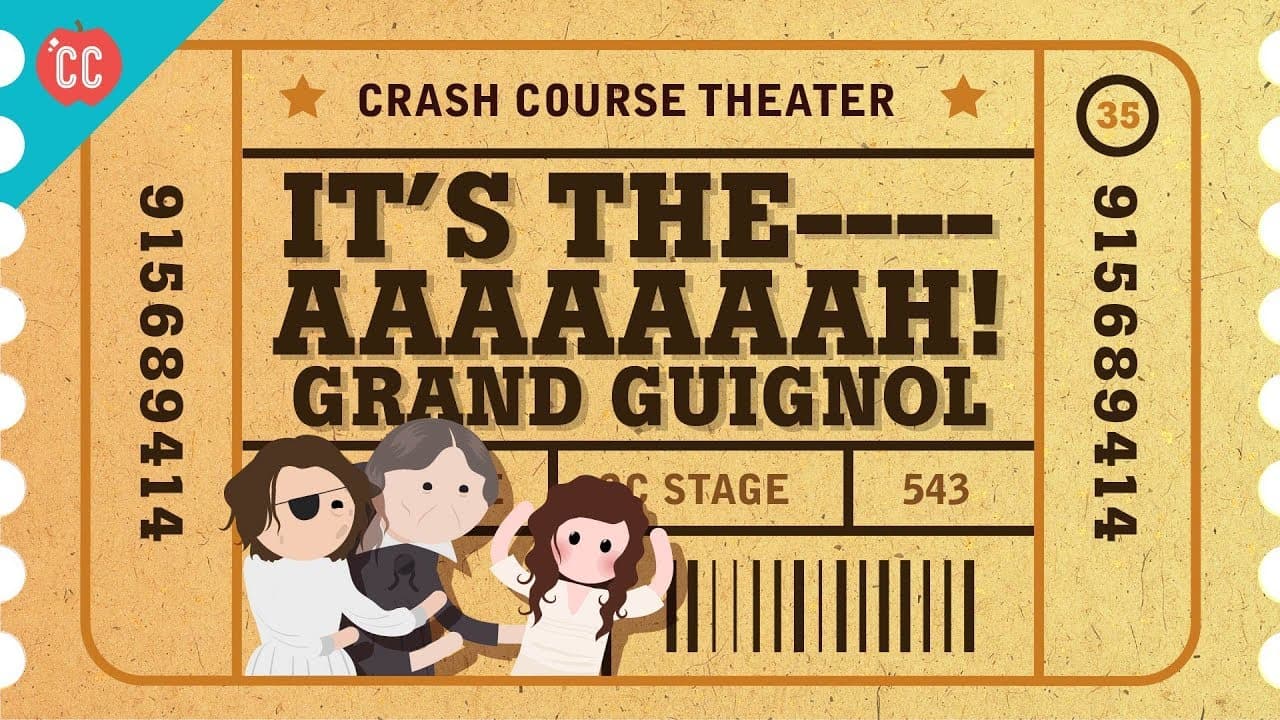
What Is the Grand Guignol Theater?
TL;DR
The Grand Guignol was a French theater known for its horror plays, shocking audiences with graphic depictions of violence and gore. It combined elements of melodrama and French naturalism, offering a mix of comedic and terrifying performances. The theater's popularity peaked during and after World War I, but it eventually closed in 1962 as real-world horrors overshadowed its fictional ones.
Transcript
Hey there! I’m Mike Rugnetta, this is Crash Course Theater, and today we’ll be exploring— [Mike reacts to Yorick]—aaaaah! YEEESH. We’ll be exploring the Grand Guignol— the horrifying theatrical tradition that had French audiences rolling in the aisles… and then fainting in the aisles… and then vomiting on the pavement outside the building that con... Read More
Key Insights
- The Grand Guignol was a theater in Paris known for horror plays, active from 1897 to 1962.
- It featured short plays alternating between comedies and horror, known as 'hot and cold showers.'
- Andre de Lorde, a key playwright, aimed to terrify audiences with themes of mutilation and insanity.
- Stage effects included fake blood, retractable weapons, and prosthetics to simulate gruesome injuries.
- The theater's popularity surged during and after World War I, offering catharsis amid real-world horrors.
- Audiences were gauged by the number of people who fainted during performances.
- Interest declined post-World War II as real atrocities overshadowed fictional horror.
- The Grand Guignol's legacy influenced modern horror media, emphasizing graphic and psychological terror.
Install to Summarize YouTube Videos and Get Transcripts
Explore YouTube Video Summarizer or Get YouTube Transcript Extractor
Questions & Answers
Q: What was the Grand Guignol theater known for?
The Grand Guignol theater was known for its horror plays that shocked audiences with graphic depictions of violence and gore. It combined elements of melodrama and French naturalism, offering a mix of comedic and terrifying performances. The theater became synonymous with horror and influenced modern horror media.
Q: How did the Grand Guignol theater gauge its success?
The Grand Guignol theater gauged its success by the number of audience members who fainted during performances. This measure highlighted the effectiveness of its horror plays in evoking strong emotional and physical reactions, showcasing the theater's ability to shock and terrify its viewers.
Q: What stage effects were used at the Grand Guignol?
The Grand Guignol used various stage effects to enhance its horror plays, including fake blood, retractable weapons, and prosthetics to simulate gruesome injuries. These effects were designed to make scenes of violence and gore appear realistic, contributing to the theater's reputation for shocking and graphic performances.
Q: Why did the Grand Guignol theater's popularity decline?
The Grand Guignol theater's popularity declined after World War II as real-world atrocities, such as those reported from Nazi death camps, overshadowed its fictional horror. Audiences became less interested in simulated violence as real events highlighted the potential for true human suffering, leading to a decline in the theater's appeal.
Q: Who was a key playwright at the Grand Guignol?
Andre de Lorde was a key playwright at the Grand Guignol, known as 'The Prince of Terror.' He aimed to terrify audiences with themes of mutilation, insanity, and other forms of psychological and physical horror. His work significantly contributed to the theater's reputation for shocking and graphic plays.
Q: What themes were common in Grand Guignol plays?
Common themes in Grand Guignol plays included mutilation, insanity, strangulation, hypnosis, and other forms of psychological and physical horror. These themes were designed to shock and terrify audiences, contributing to the theater's reputation for graphic and intense performances that pushed the boundaries of traditional theater.
Q: What was the 'hot and cold showers' method at the Grand Guignol?
The 'hot and cold showers' method at the Grand Guignol involved alternating between comedic and horror plays in a single evening. This approach was designed to keep audiences engaged by contrasting light-hearted comedies with intense, terrifying horror, creating a dynamic and varied theatrical experience.
Q: How did the Grand Guignol influence modern horror media?
The Grand Guignol influenced modern horror media by emphasizing graphic and psychological terror. Its use of realistic stage effects and shocking themes set a precedent for horror in film and theater, inspiring future creators to explore the darker aspects of human nature and push the boundaries of horror entertainment.
Summary & Key Takeaways
-
The Grand Guignol was a Parisian theater known for its horror plays, shocking audiences with graphic depictions of violence. It combined elements of melodrama and French naturalism, offering a mix of comedic and terrifying performances. The theater's popularity peaked during and after World War I, but eventually closed in 1962 as real-world horrors overshadowed its fictional ones.
-
Stage effects at the Grand Guignol included fake blood, retractable weapons, and prosthetics to simulate gruesome injuries. The theater's popularity surged during and after World War I, offering catharsis amid real-world horrors. However, interest declined post-World War II as real atrocities overshadowed fictional horror.
-
Andre de Lorde, a key playwright, aimed to terrify audiences with themes of mutilation and insanity. The Grand Guignol's legacy influenced modern horror media, emphasizing graphic and psychological terror. The theater's performances were gauged by the number of people who fainted, highlighting its impact on audiences.
Read in Other Languages (beta)
Share This Summary 📚
Summarize YouTube Videos and Get Video Transcripts with 1-Click
Try YouTube Summary with ChatGPT & Claude or YouTube Transcript Generator
Explore More Summaries from CrashCourse 📚



Summarize YouTube Videos and Get Video Transcripts with 1-Click
Try YouTube Summary with ChatGPT & Claude or YouTube Transcript Generator