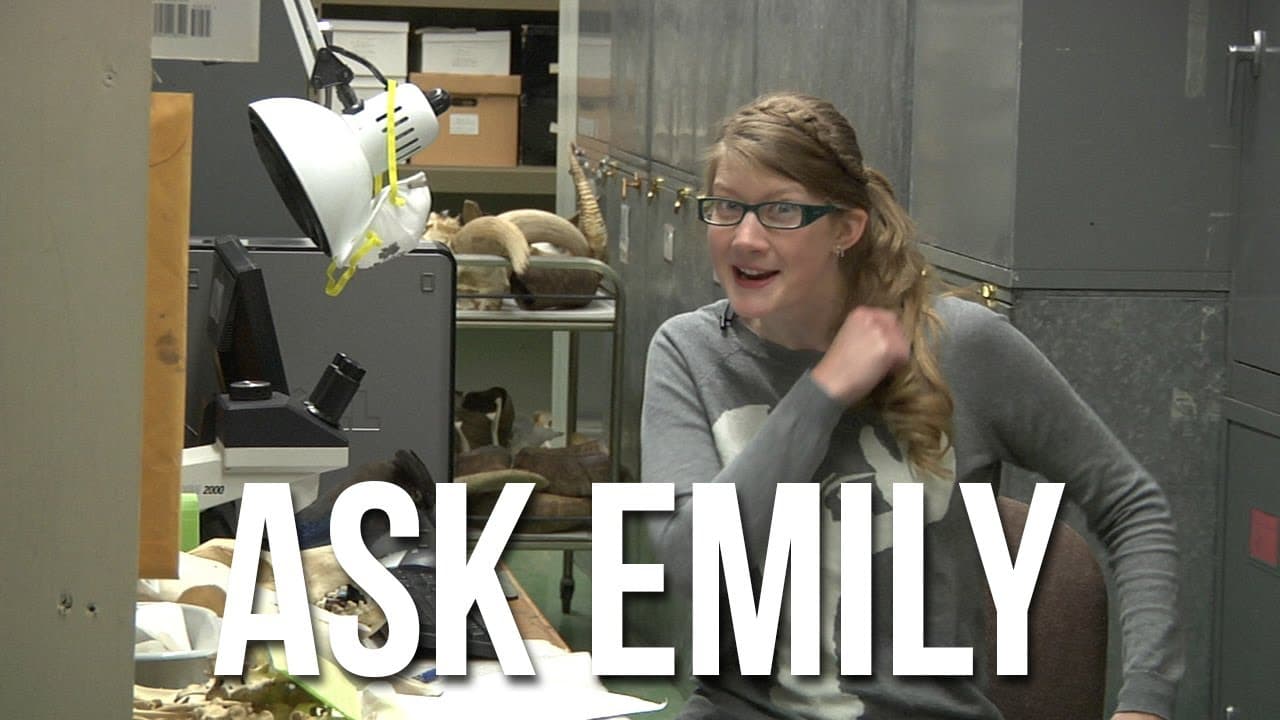
Ask Emily #2
TL;DR
Emily, a museum expert, shares her journey through art education to working with animal specimens in a museum.
Transcript
Hey everyone! Welcome to Ask Emily episode number 2! First off, I'd like to apologize for the Grossometer apparently being inaccurate in the last episode. If I could go back, I'd probably bump it up a little bit, but... You should probably be warned if there is ever a Grossometer, be wary. Secondly, uh, huge thanks to NPR and Robert Krulwich this w... Read More
Key Insights
- 🤗 Hands-on experience outweighs formal education in some museum roles.
- 🤝 Museums prioritize preservation over financial gain when dealing with collection items.
- 💪 Discoveries in a museum collection can evoke strong emotional reactions, like finding a pangolin.
- 🍵 Safety protocols are crucial when handling specimens to avoid mishaps.
- 💦 Financial assistance, partnerships, and merchandise sales help sustain the work of museum volunteers.
- 🦮 Conservation ethics guide decision-making in museums regarding the disposal or sale of collection items.
- 💦 Personal connections to the specimens contribute to job satisfaction in museum work.
Install to Summarize YouTube Videos and Get Transcripts
Explore YouTube Video Summarizer or Get YouTube Transcript Extractor
Questions & Answers
Q: How did your art background lead you to work with biology in a museum?
Emily's transition from a Bachelor of Fine Arts to working with animal specimens was through hands-on experience and volunteering, rather than traditional academic paths.
Q: Why don't museums sell specimens to raise money?
Selling specimens goes against museums' ethical obligations to preserve and maintain collections indefinitely, prioritizing conservation over financial gain.
Q: What is the protocol for finding human remains in an animal's stomach?
Emily advises to contact the authorities immediately if such a discovery is made, ensuring proper procedures are followed.
Q: What is the best part of working in a zoological museum?
Emily enjoys the close interaction with animals' specimens, a unique experience not possible in the wild, while mentioning cataloging shrews as the worst part of her job.
Summary & Key Takeaways
-
Emily's unconventional journey from a Bachelor of Fine Arts to working with animal specimens in a zoological museum.
-
Emphasizes the importance of hands-on experience and volunteering in natural history settings to gain knowledge.
-
Explains the ethical considerations museums have when it comes to selling or disposing of collection items.
Read in Other Languages (beta)
Share This Summary 📚
Summarize YouTube Videos and Get Video Transcripts with 1-Click
Try YouTube Summary with ChatGPT & Claude or YouTube Transcript Generator
Explore More Summaries from thebrainscoop 📚

Summarize YouTube Videos and Get Video Transcripts with 1-Click
Try YouTube Summary with ChatGPT & Claude or YouTube Transcript Generator