How to Build Immersed Tube Tunnels
TL;DR
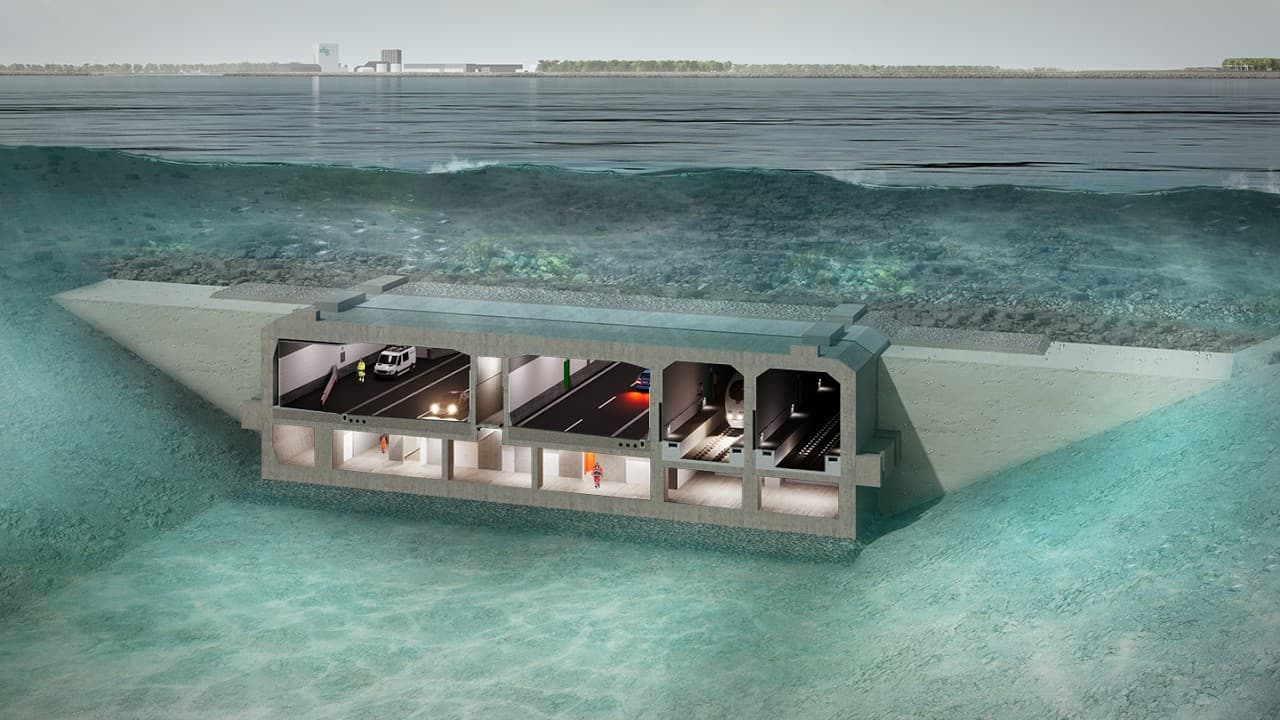
Immersed tube tunneling involves prefabricating tunnel sections on land and then submerging them in a waterway trench. This method allows for shorter, cost-effective tunnels with flexible shapes, unlike traditional boring. Despite its complexity, it minimizes surface disruption and is often cheaper, though it can impact marine environments during construction.
Transcript
The original plan to get I-95 over the Baltimore Harbor was a double-deck bridge from Fort McHenry to Lazaretto Point. The problem with the plan was this: the bridge would have to be extremely high so that large ships could pass underneath, dwarfing and overshadowing one of the US’s most important historical landmarks. Fort McHenry famously rep... Read More
Key Insights
- Immersed tube tunneling involves prefabricating sections and placing them in a trench underwater.
- This method allows for shorter tunnels compared to traditional boring, often reducing costs.
- Tunnel sections are designed to float and are transported to the site like watercraft.
- The segments are sunk into a pre-excavated trench, often lined with rock or gravel for stability.
- Rubber seals and hydrostatic pressure help ensure watertight joints between tunnel segments.
- Backfill is crucial for securing tunnel segments and preventing movement.
- Construction mostly occurs on land, reducing the complexity and cost of underwater work.
- Environmental impacts include disturbance to marine habitats and potential sediment contamination.
Install to Summarize YouTube Videos and Get Transcripts
Explore YouTube Video Summarizer or Get YouTube Transcript Extractor
Questions & Answers
Q: How are immersed tube tunnels constructed?
Immersed tube tunnels are constructed by prefabricating sections on land, then transporting them to the construction site where they are submerged into a pre-excavated trench. The sections are designed to float and are towed into position before being sunk and aligned. Rubber seals and hydrostatic pressure ensure watertight joints, while backfill secures the segments in place.
Q: Why choose immersed tube tunneling over traditional boring?
Immersed tube tunneling is chosen over traditional boring because it allows for shorter, cost-effective tunnels that can be shaped flexibly to accommodate combined road and rail routes. This method reduces the need for deep boring, minimizing surface disruption and typically lowering construction costs. However, it does have environmental impacts that need consideration.
Q: What are the environmental impacts of immersed tube tunneling?
The environmental impacts of immersed tube tunneling include disturbance to marine habitats and potential sediment contamination during dredging. The construction process can cloud water and release buried pollutants, affecting aquatic life. Mitigation measures, such as using sealed clamshell buckets and scheduling construction to avoid sensitive periods, help reduce these impacts.
Q: What are the advantages of using immersed tube tunnels?
The advantages of using immersed tube tunnels include reduced surface disruption, cost-effectiveness, and flexibility in tunnel shape. This method allows for shorter tunnels, minimizing land usage and construction costs. Prefabrication on land simplifies construction, reducing the complexity and expense of underwater work, making it a viable option for navigable waterways.
Q: How does immersed tube tunneling ensure watertight joints?
Watertight joints in immersed tube tunneling are ensured through the use of rubber seals around tunnel segment faces and the application of hydrostatic pressure. Once segments are in place, water is drained from between them, creating a pressure difference that presses the segments together, enhancing the seal. Additional measures, like omega seals, further secure joints.
Q: What role does backfill play in immersed tube tunneling?
Backfill plays a critical role in immersed tube tunneling by securing the tunnel segments in place and preventing movement. The first layer, known as locking fill, consists of angular rock that self-compacts to lock each segment. Subsequent layers protect the tunnel and backfill against currents and potential damage from ship anchors, ensuring long-term stability.
Q: What challenges are associated with immersed tube tunneling?
Challenges associated with immersed tube tunneling include the complexity of aligning and sealing segments underwater, environmental impacts from dredging, and the need to manage construction in high-traffic waterways. Additionally, the method requires careful engineering to ensure segments function as watercraft during transport and as stable structures once submerged.
Q: What are some notable examples of immersed tube tunnels?
Notable examples of immersed tube tunnels include the Øresund Link between Denmark and Sweden, the Busan-Geoje tunnel in South Korea, the Marmaray tunnel in Turkey, the Fort McHenry tunnel in Baltimore, and the BART Transbay Tube between Oakland and San Francisco. These projects demonstrate the method's viability and adaptability to various geographic and engineering challenges.
Summary & Key Takeaways
-
Immersed tube tunneling involves creating tunnel sections on land, then transporting and submerging them in a waterway trench. This method allows for shorter, cost-effective tunnels that can be shaped flexibly to suit combined road and rail routes. Despite its complexity, it minimizes surface disruption and is often more economical, though it can impact marine environments during construction.
-
Prefabricated tunnel sections are floated to the construction site and sunk into a trench lined with rock or gravel. Rubber seals and hydrostatic pressure ensure watertight joints, while backfill secures the segments and prevents shifting. This method reduces the need for deep boring, making it a cost-effective alternative to traditional tunnel construction.
-
Immersed tube tunneling offers advantages such as reduced surface disruption and flexible tunnel shapes. However, it also poses environmental challenges, including habitat disturbance and sediment contamination. Despite these challenges, it remains a viable option for constructing tunnels in navigable waterways, with numerous successful projects worldwide.
Read in Other Languages (beta)
Share This Summary 📚
Summarize YouTube Videos and Get Video Transcripts with 1-Click
Try YouTube Summary with ChatGPT & Claude or YouTube Transcript Generator
Explore More Summaries from Practical Engineering 📚

Summarize YouTube Videos and Get Video Transcripts with 1-Click
Try YouTube Summary with ChatGPT & Claude or YouTube Transcript Generator