"Send in the clones: Superseeds, superweeds & green energy" - CSHL Prof. Rob Martienssen
TL;DR
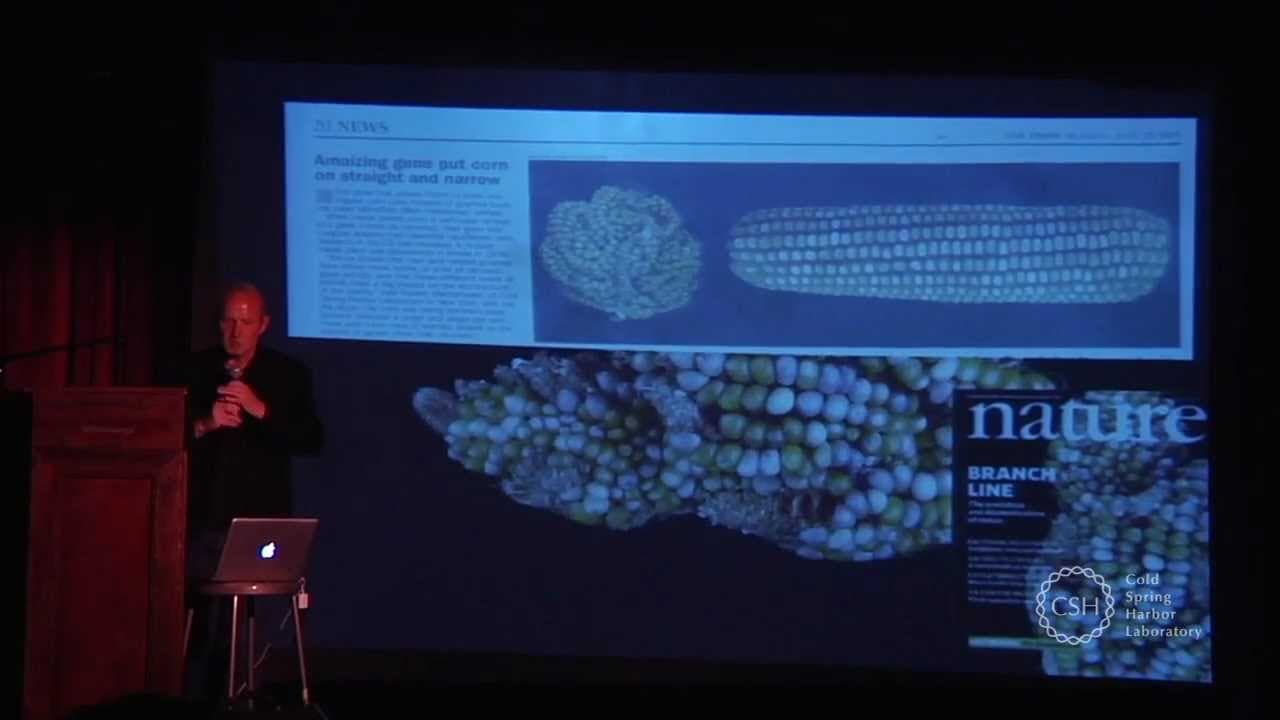
Prof. Rob Martienssen discusses plant cloning and biofuels at Cold Spring Harbor Laboratory.
Transcript
- Tonight's speaker again is Rob Martienssen, professor at Cold Spring Harbor Laboratory in plant biology. Again, for those of you who may not know, Cold Spring Harbor Lab is based in Long Island and the scientists there conduct cutting edge research on cancer, the brain, plant biology and historically much of their research has centered on genomic... Read More
Key Insights
- Cold Spring Harbor Laboratory conducts pioneering research in plant genetics and epigenetics, focusing on applications like biofuels and crop yields.
- Cloning in plants is a natural process, with the largest organism on Earth being a clonal stand of quaking aspens.
- Transposable elements or 'jumping genes' can cause epigenetic changes in plants, affecting traits like color in grapes.
- Hybrid vigor is crucial for crop yield, with clones maintaining genetic advantages without sexual reproduction's variability.
- Biofuels aim to reduce net carbon emissions by using plant biomass, but current energy balances, like corn ethanol, are not optimal.
- Clonal propagation can maintain hybrid vigor in biofuel plants like sugar cane and miscanthus, improving energy efficiency.
- Duckweed, a small aquatic plant, shows promise as a high-yield biofuel source due to its rapid clonal reproduction.
- Research into clonal seeds could help farmers save seeds and improve yields, especially in developing regions.
Install to Summarize YouTube Videos and Get Transcripts
Explore YouTube Video Summarizer or Get YouTube Transcript Extractor
Questions & Answers
Q: What role does Cold Spring Harbor Laboratory play in plant genetics research?
Cold Spring Harbor Laboratory is at the forefront of plant genetics and epigenetics research. The lab focuses on understanding genetic and epigenetic mechanisms in plants to improve applications such as biofuels and crop yields. Prof. Rob Martienssen's work contributes to these efforts by exploring the potential of plant cloning and transposable elements.
Q: Why are clones important in plant biology?
Clones are important in plant biology because they maintain genetic identicality, preserving hybrid vigor without the variability introduced by sexual reproduction. This makes them valuable for agriculture and horticulture, as they ensure consistent traits and high yields. Clones are also naturally occurring, with the largest organism on Earth being a clonal stand of quaking aspens.
Q: What are transposable elements, and how do they affect plants?
Transposable elements, or 'jumping genes,' are DNA sequences that can move within the genome, causing epigenetic changes. They can affect plant traits, such as color in grapes, and play a role in genetic variation. Understanding these elements helps researchers manipulate plant genetics for improved traits and stability in clones.
Q: How does hybrid vigor contribute to crop yields?
Hybrid vigor, or heterozygosity, results from combining genetic material from two different parents, leading to superior traits compared to inbred lines. This vigor is crucial for high crop yields, as it enhances growth, resilience, and productivity. Clonal propagation helps maintain hybrid vigor across generations, ensuring consistent agricultural output.
Q: What challenges do biofuels face in terms of energy balance?
Biofuels face challenges in achieving a favorable energy balance, which measures the energy output relative to input. Corn ethanol, for example, has a low energy balance, meaning it requires significant energy to produce. Researchers are exploring alternative plants like sugar cane and miscanthus, which offer better energy balances and potential for sustainable biofuel production.
Q: How can clonal propagation benefit biofuel production?
Clonal propagation benefits biofuel production by maintaining hybrid vigor, ensuring consistent and high yields. Plants like sugar cane and miscanthus, which are propagated as clones, exhibit improved energy efficiency compared to traditional crops. This method helps overcome genetic variability issues in sexual reproduction, making biofuel production more sustainable and economically viable.
Q: What makes duckweed a promising candidate for biofuels?
Duckweed is a promising biofuel candidate due to its rapid clonal reproduction and high biomass yield. It doubles in size every two days, producing 20 times the biomass of corn per hectare. Duckweed's ability to grow in various water conditions and its potential for starch and oil production make it an attractive option for sustainable biofuel development.
Q: How could clonal seeds impact global agriculture?
Clonal seeds could revolutionize global agriculture by allowing farmers to save seeds without yield loss, reducing dependency on commercial seed suppliers. This is particularly beneficial for farmers in developing regions, where access to hybrid seeds is limited. Clonal seeds ensure hybrid vigor and high yields, contributing to food security and sustainable farming practices.
Summary & Key Takeaways
-
Prof. Rob Martienssen from Cold Spring Harbor Laboratory explores the role of plant cloning and epigenetics in enhancing crop yields and developing sustainable biofuels. Clones, both natural and engineered, can maintain genetic advantages, crucial for agricultural productivity.
-
The lecture highlights the potential of biofuels in reducing carbon emissions, with plants like sugar cane and miscanthus offering better energy balances than traditional crops like corn. Clonal propagation preserves hybrid vigor, essential for high yields.
-
Duckweed emerges as a promising biofuel candidate due to its rapid clonal growth and high biomass potential. Martienssen discusses the importance of clonal seeds in agriculture, which could revolutionize farming by allowing seed saving without yield loss.
Read in Other Languages (beta)
Share This Summary 📚
Summarize YouTube Videos and Get Video Transcripts with 1-Click
Try YouTube Summary with ChatGPT & Claude or YouTube Transcript Generator
Explore More Summaries from Cold Spring Harbor Laboratory 📚




Summarize YouTube Videos and Get Video Transcripts with 1-Click
Try YouTube Summary with ChatGPT & Claude or YouTube Transcript Generator