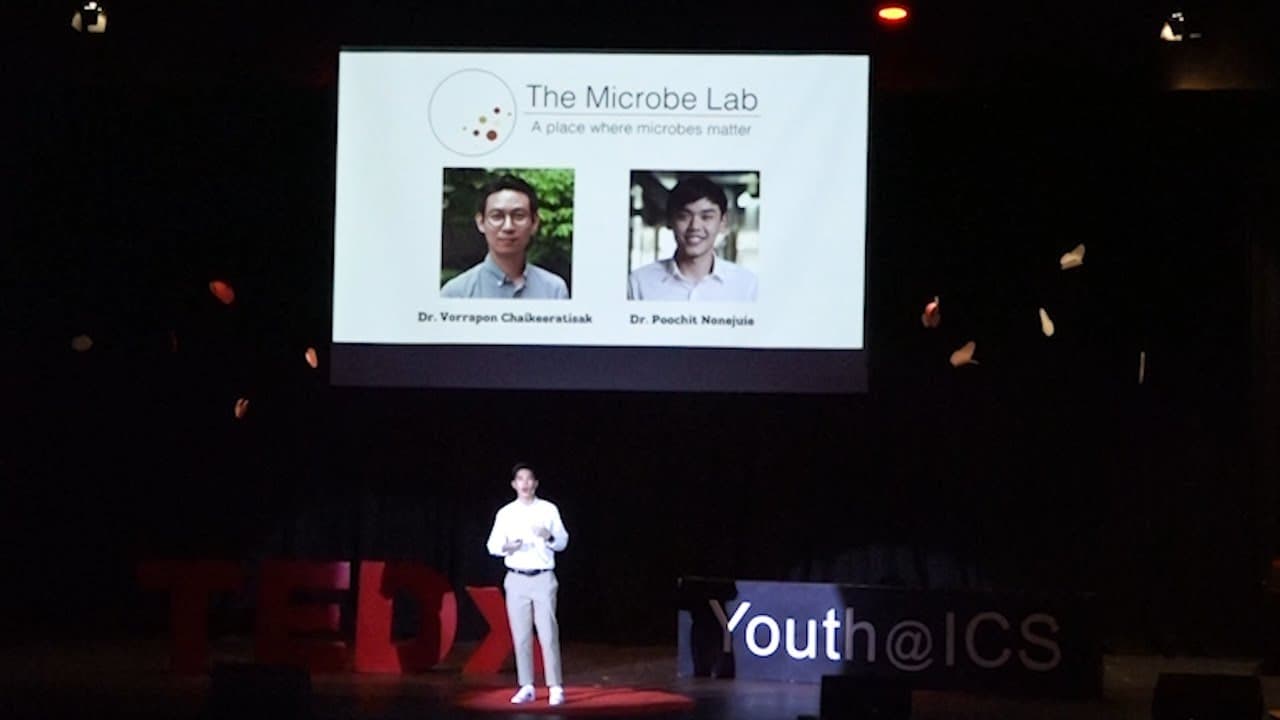
The future of medicine | Toya Chotichaicharin | TEDxYouth@ICS
TL;DR
Genetics is revolutionizing healthcare by offering long-term solutions to diseases and infections, eliminating the need for frequent hospital visits and providing permanent treatments.
Transcript
[Applause] [Applause] ever since the dawn of humanity medicine and Healthcare have always been something rather routine believe it or not we humans are more susceptible to diseases and infections and any other animal on Earth as we take our corsy visits to the doctors maybe because of some cold it becomes a reset for our bodies but it's not permane... Read More
Key Insights
- 🥺 Traditional medicine provides temporary relief but fails to offer long-term solutions, leading to frequent hospital visits.
- 💁 dsRNAi offers a more permanent solution by preventing the formation of receptors on cell membranes, making cells resistant to infections.
- ❓ Bacteriophages show promise in combating antibiotic resistance, providing an alternative to traditional antibiotics.
- 💅 Gene therapy offers a potential cure for genetic diseases like thalassemia, eliminating the need for lifelong treatments.
- 💦 Researchers are working to make gene therapy more affordable and accessible to ensure better healthcare outcomes.
- 😷 Understanding genetics and its role in healthcare is crucial to address the inefficiencies in our current medical system.
- 💨 Advancements in genetics have the potential to transform the role of physicians and the way treatments are administered in hospitals.
Install to Summarize YouTube Videos and Get Transcripts
Explore YouTube Video Summarizer or Get YouTube Transcript Extractor
Questions & Answers
Q: How does dsRNAi offer long-term protection against infections?
dsRNAi works by preventing the formation of cell membrane receptors, making cells resistant to infections. The technique involves introducing identical RNA sequences into cells, which cut into smaller interfering RNAs (siRNAs) that target and break down the gene encoding the receptors. This leads to the absence of receptors on the cell membrane, providing long-term protection.
Q: How do bacteriophages combat antibiotic resistance?
Bacteriophages are viruses that specifically target and kill bacteria. They inject their genetic material into bacteria, taking control of the cell and causing its death. By collecting and organizing these bacteriophages into a database, scientists can create "f cocktails" containing multiple phages to overcome bacterial resistance. This approach ensures that bacteria are killed even if they have developed resistance to a particular phage.
Q: What is gene therapy and how does it benefit patients with thalassemia?
Gene therapy involves introducing the correct genes into cells to treat genetic diseases. For patients with thalassemia, viral vectors containing the correct hemoglobin genes are used to infect the patient's bone marrow, where stem cells produce red blood cells. Over time, the dysfunctional red blood cells are replaced by fully functional ones, eliminating the need for frequent, expensive blood transfusions.
Q: How are researchers working to reduce the cost of gene therapy for thalassemia patients?
Researchers at various institutions are collaborating to reduce the price of gene therapy for thalassemia patients from 40 million B to 10 million B. This reduction in cost makes it a more viable option compared to the lifelong expenses of regular blood transfusions. The aim is to make gene therapy more accessible and ensure that patients with thalassemia can live comfortable lives.
Summary & Key Takeaways
-
Traditional medicine offers only temporary relief from diseases and infections, leading to frequent hospital visits for many patients.
-
A new biotech technique called double stranded RNA interference (dsRNAi) is being used to prevent the formation of receptors on cell membranes, providing long-term protection against infections.
-
Bacteria's rapid evolution and resistance to antibiotics is a major challenge in healthcare, but the use of bacteriophages (bacteria-targeting viruses) offers a potential solution.
-
Gene therapy through viral vectors is being explored to treat genetic diseases like thalassemia, providing permanent and more convenient treatment options.
Read in Other Languages (beta)
Share This Summary 📚
Summarize YouTube Videos and Get Video Transcripts with 1-Click
Try YouTube Summary with ChatGPT & Claude or YouTube Transcript Generator
Explore More Summaries from TEDx Talks 📚





Summarize YouTube Videos and Get Video Transcripts with 1-Click
Try YouTube Summary with ChatGPT & Claude or YouTube Transcript Generator