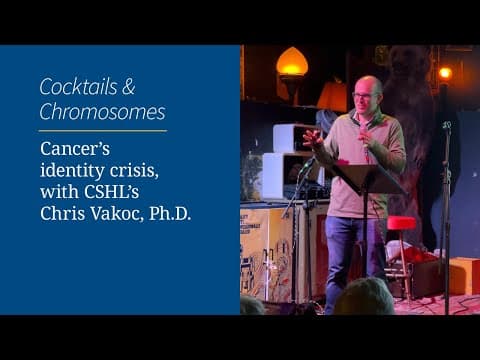
Cancer drugs don’t always work as intended, researchers warn
TL;DR
Cancer drugs often fail due to off-target effects.
Transcript
If you look across all clinical trials in cancer, about 97% of drug cancer pairs that go into clinical testing fail during clinical trials. And this extremely high rate of clinical trial failure suggests that there are certain ways in which the characterization of cancer drugs and cancer drug targets can be improved. This is particularly relevant t... Read More
Key Insights
- A staggering 97% of cancer drug trials fail, indicating significant issues in drug characterization and target identification.
- Precision therapy aims to target specific genetic changes in tumors with specialized drugs, but its success is limited by current drug development practices.
- Ten anti-cancer drugs were tested to verify if they worked as intended, revealing discrepancies in their advertised mechanisms.
- Older technologies like RNA interference identified proteins as essential for cancer, but newer CRISPR mutagenesis showed these proteins are not critical.
- Despite knocking out supposed essential proteins, cancer cells survived, suggesting drugs kill via unknown off-target mechanisms.
- One drug was found to target CDK11, a protein not previously associated with cancer therapy, highlighting unexpected drug actions.
- Technological advancements, such as CRISPR, offer more precise methods to identify true cancer cell dependencies.
- Understanding actual drug targets can help clinicians better match therapies to patient populations, improving treatment outcomes.
Install to Summarize YouTube Videos and Get Transcripts
Explore YouTube Video Summarizer or Get YouTube Transcript Extractor
Questions & Answers
Q: Why do most cancer drug trials fail?
Most cancer drug trials fail due to flaws in the characterization of drugs and their targets. A significant issue is the reliance on outdated technologies that inaccurately identify essential cancer proteins. As a result, drugs may not work as intended, leading to a high failure rate of 97% in clinical trials.
Q: What is precision therapy in cancer treatment?
Precision therapy involves designing drugs to target specific genetic changes in a patient's tumor, aiming to kill cancer cells without affecting healthy cells. However, its success is hindered by challenges in accurately identifying essential cancer targets, as evidenced by the high failure rate of cancer drug trials.
Q: How did researchers test the effectiveness of anti-cancer drugs?
Researchers tested ten anti-cancer drugs by examining whether they worked as advertised. They used CRISPR mutagenesis, a more precise technology than RNA interference, to determine if proteins previously deemed essential for cancer were truly critical. This approach revealed that many drugs may function through off-target effects.
Q: What surprising findings did the researchers discover about cancer proteins?
Researchers found that proteins previously thought to be essential for cancer growth, based on RNA interference studies, were not critical when examined using CRISPR mutagenesis. This finding suggests that many cancer drugs may not target these proteins as intended, but instead work through unknown mechanisms.
Q: What did the researchers discover about one specific anti-cancer drug?
The researchers discovered that one anti-cancer drug unexpectedly targeted CDK11, a protein not previously associated with cancer therapy. This finding highlights the potential for drugs to act through unknown pathways, emphasizing the need for precise identification of drug targets to improve treatment outcomes.
Q: How can technological advancements improve cancer drug development?
Technological advancements, such as CRISPR mutagenesis, offer more precise methods for identifying true cancer cell dependencies. These tools can reveal unexpected drug targets and mechanisms, improving the accuracy of drug development and enhancing the ability to match therapies with patient populations likely to respond.
Q: What is the significance of identifying actual drug targets in cancer therapy?
Identifying actual drug targets is crucial for improving precision therapy, as it allows clinicians to better match treatments with patient populations likely to benefit. Accurate target identification can reduce trial failures by ensuring drugs work as intended, ultimately enhancing treatment efficacy and patient outcomes.
Q: What challenges do current cancer drug development practices face?
Current cancer drug development practices face challenges such as reliance on outdated technologies that misidentify essential cancer proteins, leading to high trial failure rates. The unexpected off-target effects of drugs further complicate precision therapy, necessitating more precise methods like CRISPR to improve drug characterization.
Summary & Key Takeaways
-
The high failure rate of cancer drug trials suggests flaws in the drug development process, particularly in precision therapy, which aims to target specific genetic changes in tumors. Researchers investigated ten anti-cancer drugs to determine if they functioned as advertised, uncovering significant discrepancies.
-
Using CRISPR mutagenesis, researchers found that proteins previously considered essential for cancer growth were not critical, challenging older RNA interference-based findings. This discovery indicates that many cancer drugs may work through off-target effects rather than their intended mechanisms.
-
One drug unexpectedly targeted CDK11, a protein not previously linked to cancer therapy, illustrating the importance of technological advancements in drug research. Accurate identification of drug targets can enhance precision therapy by better aligning treatments with responsive patient populations.
Read in Other Languages (beta)
Share This Summary 📚
Summarize YouTube Videos and Get Video Transcripts with 1-Click
Try YouTube Summary with ChatGPT & Claude or YouTube Transcript Generator
Explore More Summaries from Cold Spring Harbor Laboratory 📚
Summarize YouTube Videos and Get Video Transcripts with 1-Click
Try YouTube Summary with ChatGPT & Claude or YouTube Transcript Generator