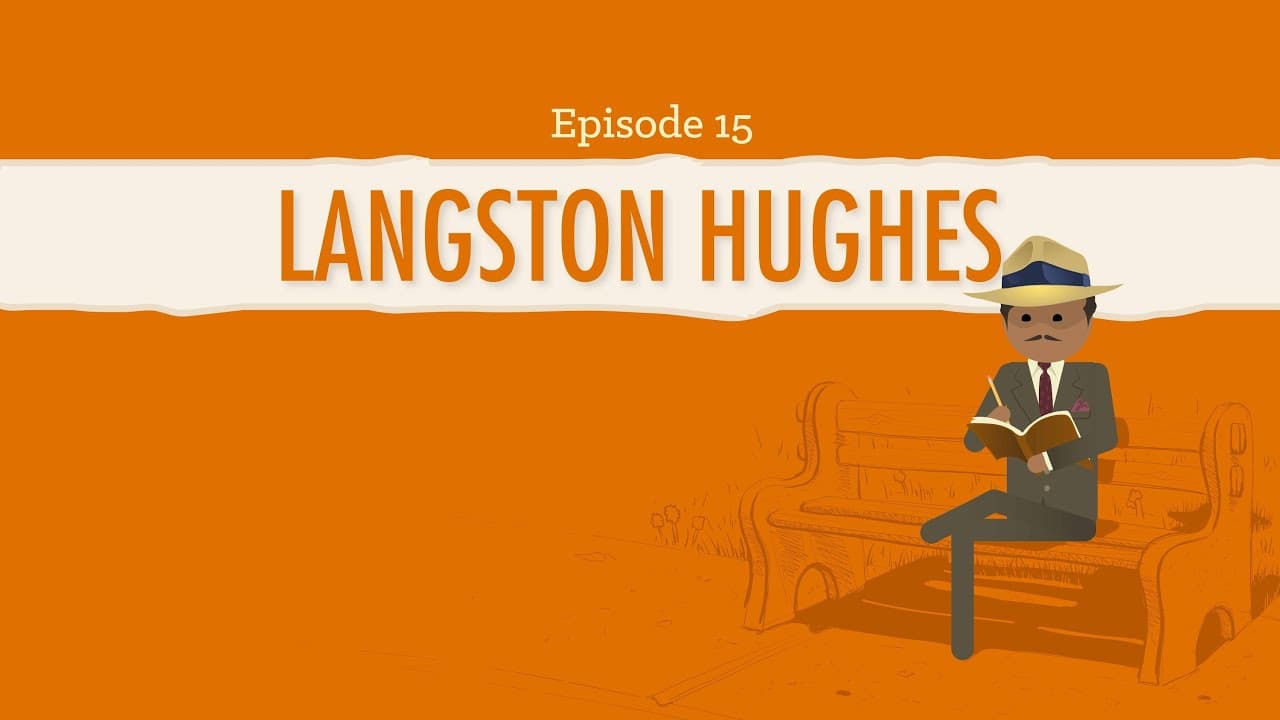
How Did Langston Hughes Impact the Harlem Renaissance?
TL;DR
Langston Hughes played a pivotal role in the Harlem Renaissance by using accessible language and folk forms to express the African American experience. He challenged the norms of poetry by blending fine art with folk art, highlighting the double consciousness faced by African Americans. Hughes' work remains influential for its exploration of racial identity and cultural expression.
Transcript
Hi, I'm John Green, this is Crash Course Literature, and today we're going to discuss the poetry of Langston Hughes. So the Harlem Renaissance was an early 20th Century movement in which writers and artists of color explored what it means to be an artist, what it means to be black, and what it means to be an American, and also what it means to be a... Read More
Key Insights
- Langston Hughes was a central figure in the Harlem Renaissance, using poetry to explore themes of racial identity.
- The Harlem Renaissance was a cultural movement in the early 20th century that celebrated African American art and literature.
- Hughes often used the term 'negro' in his work, reflecting the language of his time, though it is considered offensive today.
- His poetry often addressed the 'double consciousness' experienced by African Americans, a term coined by W.E.B. Dubois.
- Hughes preferred folk forms and vernacular language over classical European forms to better represent African American life.
- His poem 'The Negro Speaks of Rivers' connects African American history to ancient civilizations through symbolic rivers.
- In 'Harlem', Hughes warns of the consequences of deferred dreams, using vivid imagery and changing rhythms.
- Hughes was critiqued by contemporaries for both being too focused on black themes and not delving deeply enough into the African American experience.
Install to Summarize YouTube Videos and Get Transcripts
Explore YouTube Video Summarizer or Get YouTube Transcript Extractor
Questions & Answers
Q: What was the Harlem Renaissance?
The Harlem Renaissance was a cultural and artistic movement in the early 20th century that celebrated African American art, literature, and music. It primarily took place in Harlem, New York City, and marked a period of significant cultural expression and exploration of African American identity. The movement included writers, poets, musicians, and artists who sought to redefine African American culture and challenge racial stereotypes.
Q: How did Langston Hughes contribute to the Harlem Renaissance?
Langston Hughes contributed to the Harlem Renaissance by using poetry to explore themes of racial identity and cultural expression. He favored accessible language and folk forms, such as blues and spirituals, over classical European styles. His work addressed the complexities of the African American experience, emphasizing the importance of embracing cultural heritage and challenging societal norms.
Q: What is the significance of 'The Negro Speaks of Rivers'?
'The Negro Speaks of Rivers' is significant for its symbolic connection between African American history and ancient civilizations. Hughes uses rivers as metaphors for the depth and continuity of the African American experience. The poem highlights the enduring strength and resilience of African Americans, linking their history to the great rivers of the world, such as the Nile and the Mississippi.
Q: What themes are explored in Hughes' poem 'Harlem'?
In 'Harlem', Langston Hughes explores the theme of deferred dreams and the potential consequences of unfulfilled aspirations. The poem uses vivid imagery and changing rhythms to convey the frustration and despair that can result from postponed ambitions. It warns of the explosive consequences that may arise if societal conditions do not change, reflecting the broader struggle for racial equality and justice.
Q: Why did Hughes prefer folk forms over classical European forms?
Hughes preferred folk forms over classical European forms because he believed they better represented the African American experience. By using vernacular language and incorporating elements of blues, spirituals, and oral traditions, Hughes made his poetry more accessible and relatable to a broader audience. This approach allowed him to challenge traditional norms and redefine the boundaries of poetry.
Q: What is 'double consciousness' and how does it relate to Hughes' work?
Double consciousness is a concept coined by W.E.B. Dubois to describe the internal conflict experienced by African Americans who navigate between their cultural heritage and the dominant American culture. Hughes' work often addresses this theme by exploring the complexities of racial identity and the struggle to reconcile these dual identities. His poetry reflects the challenges and resilience of African Americans in the face of societal pressures.
Q: How did Hughes' contemporaries view his work?
Hughes' contemporaries had mixed views on his work. Some, like Countee Cullen, criticized him for focusing too much on black themes, while others, like James Baldwin, felt he didn't delve deeply enough into the African American experience. Despite these critiques, Hughes' work remains influential for its exploration of racial identity and cultural expression, challenging traditional norms and redefining poetry.
Q: What impact did Langston Hughes have on literature and culture?
Langston Hughes had a profound impact on literature and culture by redefining poetry through the use of accessible language and folk forms. His exploration of African American identity and cultural expression challenged societal norms and inspired future generations of writers and artists. Hughes' work remains a cornerstone of the Harlem Renaissance, celebrating the complexities of racial identity and the importance of embracing cultural heritage.
Summary & Key Takeaways
-
Langston Hughes was a key figure in the Harlem Renaissance, exploring African American identity through poetry. He often used folk forms and vernacular language to make his work accessible and relatable. His poem 'The Negro Speaks of Rivers' connects African American history to ancient civilizations, while 'Harlem' warns of the dangers of deferred dreams.
-
The Harlem Renaissance was a cultural movement that celebrated African American art and literature. Hughes' work often addressed the 'double consciousness' experienced by African Americans, using language that reflected the era. His preference for folk forms over classical European styles helped redefine poetry and challenged traditional norms.
-
Hughes was criticized by some peers for being too focused on black themes and by others for not exploring them deeply enough. Despite this, his influence on literature and culture remains significant, as he highlighted the complexities of racial identity and the importance of cultural expression.
Read in Other Languages (beta)
Share This Summary 📚
Summarize YouTube Videos and Get Video Transcripts with 1-Click
Try YouTube Summary with ChatGPT & Claude or YouTube Transcript Generator
Explore More Summaries from CrashCourse 📚





Summarize YouTube Videos and Get Video Transcripts with 1-Click
Try YouTube Summary with ChatGPT & Claude or YouTube Transcript Generator