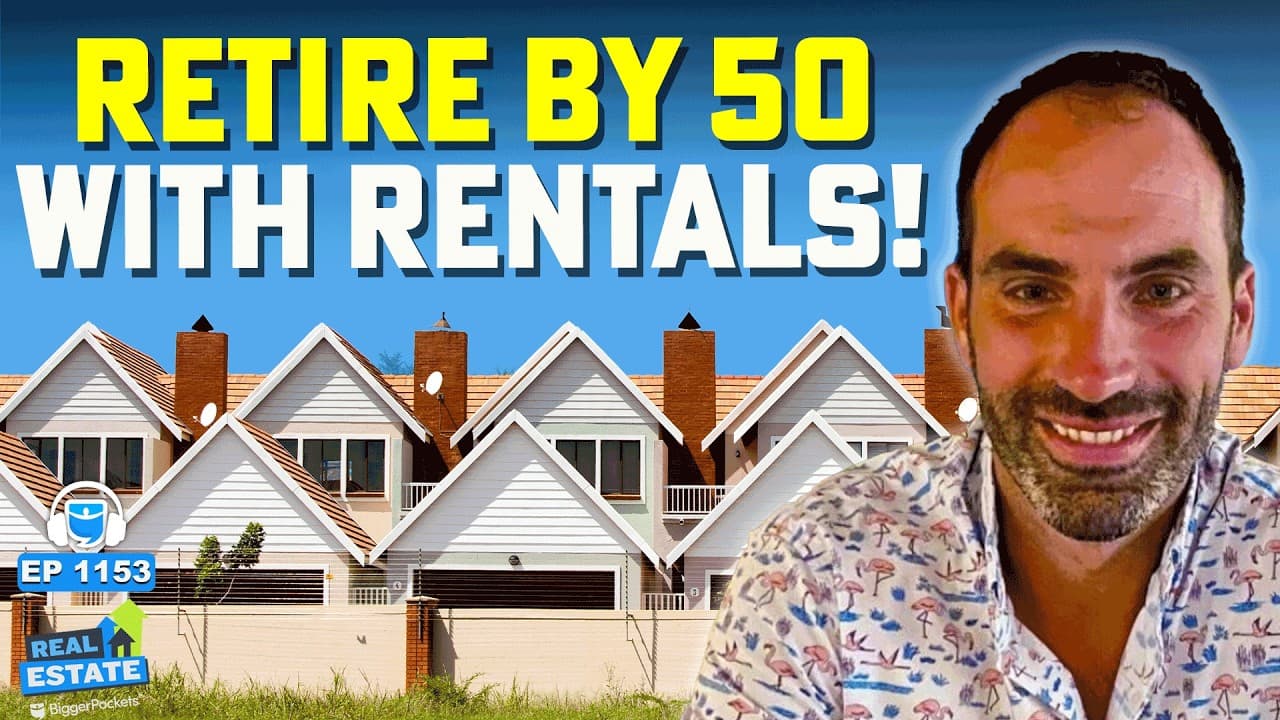
Retiring 15 Years Early by Using Home Equity to Invest on Repeat
TL;DR
Tony achieved financial freedom with 15 rental properties using HELOCs.
Transcript
This investor found a formula that works in his market and he's stuck with it for almost two decades. Now he has almost 30 rental units which will give him the option to retire from his day job by age 50 without compromising his lifestyle in retirement. That's the power of real estate. You choose the strategy, you control the investments, and over ... Read More
Key Insights
- Tony DeGiacomo started investing in real estate inspired by his immigrant father's journey and has built a successful portfolio over two decades.
- He managed to save significantly by living with his parents while investing in his first rental properties, accelerating his investment growth.
- Tony's strategy evolved from buying small multifamily homes to larger projects, including industrial complexes and condominium conversions.
- The use of home equity lines of credit (HELOCs) allowed Tony to leverage his existing properties to fund new investments and renovations.
- Tony successfully navigated the 2008 financial crisis by maintaining a stable income from his landscaping business and strategically acquiring properties.
- During the pandemic, Tony shifted focus from small multifamily homes to industrial properties due to increased competition from first-time homebuyers.
- He emphasizes the importance of building strong relationships with contractors and utilizing a trusted team for successful project execution.
- Tony plans to retire by age 50, using rental income as his primary source of passive income, while continuing real estate projects for enjoyment.
Install to Summarize YouTube Videos and Get Transcripts
Explore YouTube Video Summarizer or Get YouTube Transcript Extractor
Questions & Answers
Q: How did Tony DeGiacomo start his real estate investment journey?
Tony DeGiacomo's real estate journey began in his early 20s, inspired by his immigrant father's success in property management. He started investing shortly after college, initially purchasing a small condo with significant savings accrued from multiple jobs. Living with his parents allowed him to save aggressively and reinvest in additional properties.
Q: What strategy did Tony use to expand his real estate portfolio?
Tony utilized home equity lines of credit (HELOCs) to leverage his existing properties, allowing him to invest in new properties and fund renovations. This strategy enabled him to scale his portfolio efficiently, turning one rental property into multiple investments. HELOCs provided the flexibility to access funds as needed, similar to a credit card.
Q: How did Tony navigate the 2008 financial crisis?
During the 2008 financial crisis, Tony maintained a stable income through his landscaping business, which provided financial security. He strategically acquired properties by leveraging his network of real estate agents and closing attorneys, allowing him to capitalize on opportunities even during economic downturns. His approach included buying undervalued multifamily properties from landlords facing tenant issues.
Q: What changes did Tony make to his investment strategy during the pandemic?
During the pandemic, Tony noticed increased competition for small multifamily homes from first-time homebuyers. As a result, he pivoted to investing in industrial properties, such as renting out garage spaces to contractors. This shift allowed him to find less competitive market segments and continue growing his portfolio with stable tenants and minimal maintenance requirements.
Q: What are Tony's future goals for his real estate portfolio?
Tony plans to retire by age 50, using the cash flow from his rental properties as his primary source of income. He aims to continue engaging in real estate projects, such as condominium conversions and small subdivision developments, for personal enjoyment and financial growth. His goal is to maintain his current lifestyle without financial constraints post-retirement.
Q: What advice does Tony offer to aspiring real estate investors?
Tony advises aspiring investors to view real estate as a long-term investment rather than a get-rich-quick scheme. He emphasizes the importance of strategic planning, understanding market dynamics, and building a reliable team of contractors and real estate professionals. Tony believes that patience and consistent effort will lead to substantial financial rewards over time.
Q: How did Tony's early experiences influence his real estate career?
Tony's early experiences with his father's property management work exposed him to the potential of real estate as a financial freedom tool. Participating in property maintenance and rent collection from a young age instilled in him a deep understanding of the industry and the long-term benefits of real estate investment, shaping his career path and investment philosophy.
Q: What unique investment projects has Tony undertaken recently?
Recently, Tony has undertaken unique projects such as developing an industrial garage complex for contractors and converting a former commercial building into a 14-unit condominium complex. These projects demonstrate his ability to identify niche market opportunities and leverage his industry knowledge to execute innovative investment strategies, diversifying his portfolio and maximizing returns.
Summary & Key Takeaways
-
Tony DeGiacomo built a real estate portfolio by leveraging his home equity, allowing him to retire early. He started investing young, inspired by his father's success, and used HELOCs to expand his investments. Tony's portfolio now includes 15 properties, providing significant cash flow.
-
Tony transitioned from buying small multifamily homes to larger projects, such as industrial complexes and condo conversions. He successfully navigated the 2008 financial crisis and the pandemic by adapting his investment strategy and leveraging his landscaping business income.
-
Tony's long-term goal is to retire by age 50, using rental income to maintain his lifestyle. He enjoys real estate projects and plans to continue them post-retirement. His advice to investors is to view real estate as a long-term investment rather than a get-rich-quick scheme.
Read in Other Languages (beta)
Share This Summary 📚
Summarize YouTube Videos and Get Video Transcripts with 1-Click
Try YouTube Summary with ChatGPT & Claude or YouTube Transcript Generator
Explore More Summaries from BiggerPockets 📚



Summarize YouTube Videos and Get Video Transcripts with 1-Click
Try YouTube Summary with ChatGPT & Claude or YouTube Transcript Generator