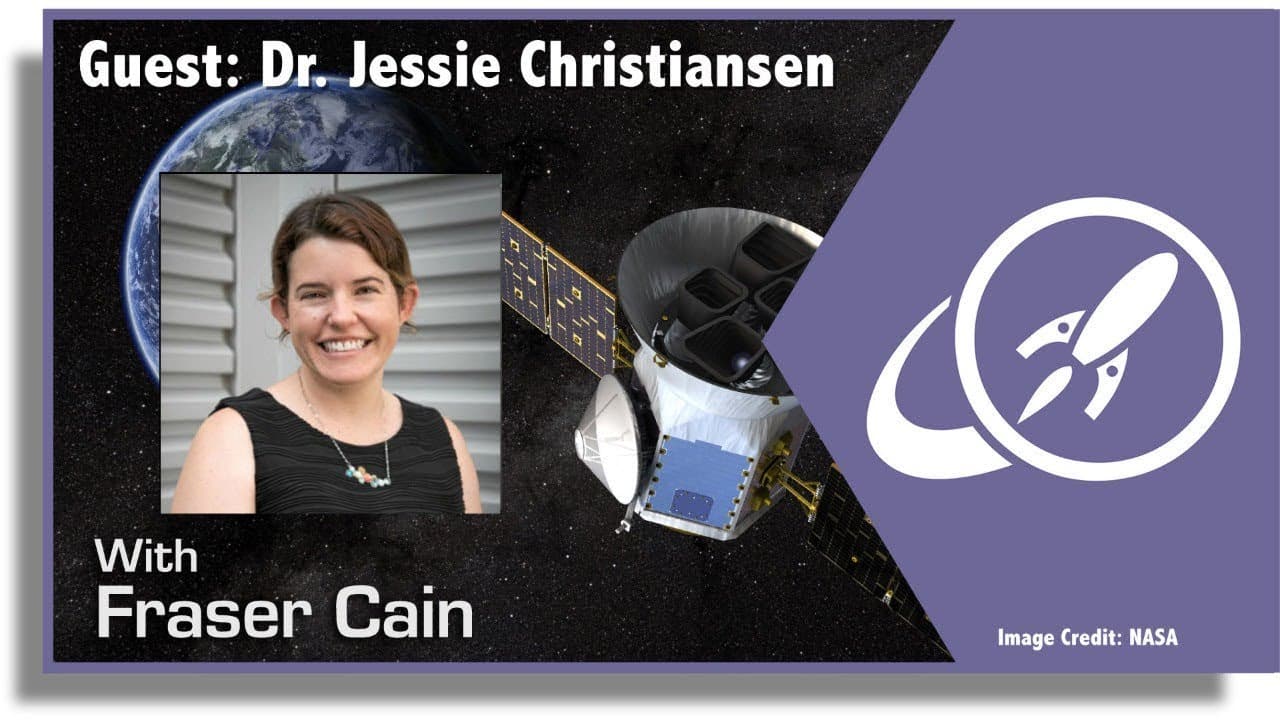
Interview: Dr. Jessie Christiansen, 2,200 Planets for TESS
TL;DR
Exoplanet discoveries and missions highlight diverse planetary findings and possibilities for future exploration.
Transcript
and come on little youtube there we go we did it all right we're live uh yeah so i warned jesse i'm going to warn everybody as well who's watching right now which there could be some surprise background hammering there's some people coming to work on our on our deck today they have to do like they quickly put some plywood down before it rains and a... Read More
Key Insights
- 🪐 The TESS mission, in its extended phase, has made significant contributions to exoplanet discoveries with over 200 confirmed planets.
- 👨🔬 Future endeavors, such as the PLATO mission and ground-based telescopes, aim to expand exoplanet research with enhanced capabilities for finding Earth-like planets.
- 📁 Different methods, including astrometry and direct imaging, are crucial for understanding planetary systems' dynamics and composition.
Install to Summarize YouTube Videos and Get Transcripts
Explore YouTube Video Summarizer or Get YouTube Transcript Extractor
Questions & Answers
Q: What is Jesse Christensen's role in exoplanet research?
Jesse Christensen is a research scientist at the NASA Exoplanet Science Institute, specializing in archiving and studying exoplanets.
Q: How many confirmed exoplanets are there currently?
As of the latest update, there are 4,368 confirmed exoplanets, with more candidates awaiting validation.
Q: What are the challenges in detecting biosignatures on exoplanets?
Detecting biosignatures, like phosphine, presents challenges due to possible geological or non-biological origins of the detected molecules.
Q: How can amateur astronomers participate in exoplanet research?
Amateur astronomers can contribute by conducting ground-based follow-up observations to confirm exoplanet transits using standard CCD telescopes.
Summary & Key Takeaways
-
Exoplanet expert and NASA scientist Jesse Christensen discusses findings and advancements in exoplanet research.
-
The TESS mission, in its extended phase, has led to discoveries of over 200 exoplanets, with potential for more as it continues observing different sky regions.
-
Future missions and ground-based telescopes are essential for exploring Earth-like planets and potential habitable systems.
Read in Other Languages (beta)
Share This Summary 📚
Summarize YouTube Videos and Get Video Transcripts with 1-Click
Try YouTube Summary with ChatGPT & Claude or YouTube Transcript Generator
Explore More Summaries from Fraser Cain 📚



Summarize YouTube Videos and Get Video Transcripts with 1-Click
Try YouTube Summary with ChatGPT & Claude or YouTube Transcript Generator