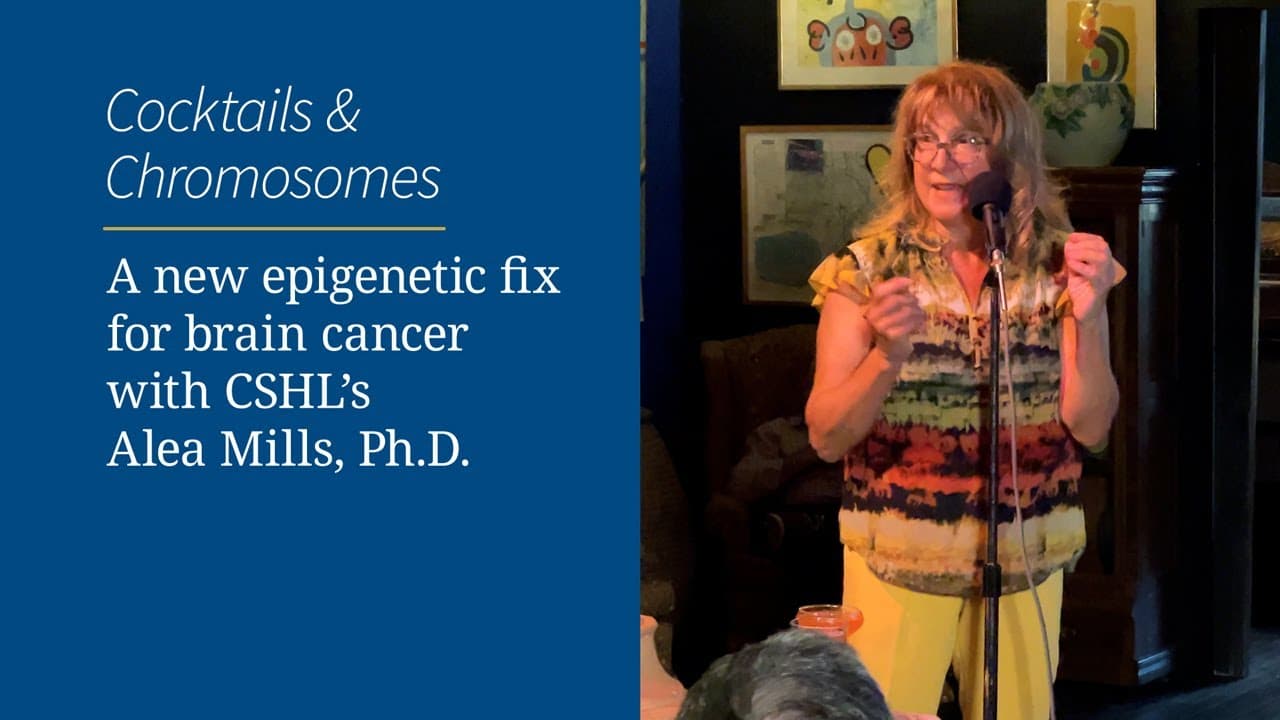
A new epigenetic fix for brain cancer with CSHL's Alea Mills, Ph.D.
TL;DR
Alea Mills discusses new epigenetic strategies for treating glioblastoma.
Transcript
[music] [applause] So, the thing about, as a professor at Cold Spring Harbor Laboratory, I'm really lucky to work on this gorgeous campus here. And if you haven't been to Cold Spring Harbor, please come and pay us a visit. We’ll show you around the campus. It’s quite, quite amazing. But the most important thing that has been fantastic for me as a ... Read More
Key Insights
- Cold Spring Harbor Laboratory's collaborative environment fosters groundbreaking cancer research, combining basic science with clinical applications.
- Glioblastoma, a highly aggressive brain cancer, remains challenging due to its rapid growth and resistance to conventional treatments.
- Hereditary cancers, like those involving BRCA genes, are easier to study due to clear genetic links, unlike spontaneous cancers.
- Cancer involves a battle between oncogenes, which promote cancer, and tumor suppressor genes, which inhibit it.
- Epigenetics plays a crucial role in cancer, influencing how DNA is packaged and accessed, affecting gene expression.
- BRD8, a chromatin remodeling protein, disrupts tumor suppressor gene p53, facilitating glioblastoma's malignancy.
- Targeting BRD8's bromodomain can restore p53 function, offering a potential therapeutic avenue for glioblastoma.
- Collaborations with clinicians and organic chemists aim to develop effective BRD8 inhibitors for personalized cancer treatment.
Install to Summarize YouTube Videos and Get Transcripts
Explore YouTube Video Summarizer or Get YouTube Transcript Extractor
Questions & Answers
Q: What is the significance of BRD8 in glioblastoma research?
BRD8 is a chromatin remodeling protein that plays a crucial role in glioblastoma by inhibiting the tumor suppressor gene p53. This inhibition allows the cancer to maintain its malignancy and resist treatment. By targeting BRD8, researchers aim to restore p53 function, offering a potential therapeutic strategy for treating this aggressive brain cancer.
Q: How does epigenetics contribute to cancer development?
Epigenetics involves the study of how DNA is packaged and accessed, influencing gene expression without changing the DNA sequence. In cancer, epigenetic changes can activate oncogenes or silence tumor suppressor genes, contributing to tumor growth and progression. Understanding these changes is crucial for developing targeted therapies that can reverse harmful epigenetic modifications.
Q: Why is collaboration important in cancer research?
Collaboration in cancer research brings together diverse expertise from basic scientists, clinicians, and chemists, facilitating the translation of laboratory discoveries into clinical applications. This interdisciplinary approach enhances the development of novel treatments, as researchers can draw on clinical insights and chemical expertise to refine therapeutic strategies and test them in realistic models.
Q: What challenges do researchers face in treating glioblastoma?
Glioblastoma presents several challenges due to its rapid growth, resistance to conventional treatments, and genetic complexity. The tumor's ability to recur after treatment and its location in the brain complicate surgical and therapeutic interventions. Researchers aim to overcome these challenges by identifying specific genetic and epigenetic targets, like BRD8, that can be therapeutically exploited.
Q: How do patient-derived organoids aid in cancer research?
Patient-derived organoids are 3D cell cultures that mimic the tumor environment, providing a valuable model for studying cancer biology and testing treatments. These organoids allow researchers to observe how cancer cells respond to genetic and chemical manipulations in a controlled setting, facilitating the development of personalized therapies and improving our understanding of cancer mechanisms.
Q: What role does BRD8 play in the epigenetic regulation of cancer?
BRD8 is involved in the epigenetic regulation of cancer by altering the chromatin structure, which affects DNA accessibility and gene expression. In glioblastoma, BRD8 compacts the chromatin at p53 target sites, preventing p53 from activating tumor suppressor genes. By targeting BRD8, researchers aim to disrupt this process and restore the tumor suppressive functions of p53.
Q: What potential does targeting BRD8 have for glioblastoma treatment?
Targeting BRD8 holds significant potential for glioblastoma treatment as it offers a novel approach to reactivate the tumor suppressor gene p53. By disrupting BRD8's function, researchers can potentially inhibit cancer cell proliferation and enhance the effectiveness of existing therapies. This strategy represents a promising avenue for developing targeted treatments for glioblastoma patients.
Q: How does the collaboration with Northwell Health enhance the research?
The collaboration with Northwell Health enhances the research by providing access to clinical expertise and patient samples, facilitating the translation of basic research findings into clinical applications. This partnership enables the testing of new therapeutic strategies in realistic models and supports the development of personalized treatments, ultimately aiming to improve patient outcomes in glioblastoma.
Summary & Key Takeaways
-
Alea Mills' research at Cold Spring Harbor Laboratory focuses on the genetic and epigenetic mechanisms driving glioblastoma, a deadly brain cancer. Her team discovered that the chromatin remodeling protein BRD8 inhibits tumor suppressor p53, promoting cancer. Targeting BRD8 offers a new therapeutic strategy.
-
Mills highlights the importance of collaboration with clinical and chemical experts to translate basic research findings into potential treatments. Her team uses patient-derived organoids and mouse models to study glioblastoma and test new compounds targeting BRD8, aiming to develop effective therapies.
-
The research emphasizes the significance of understanding epigenetic factors in cancer development and treatment. By targeting specific proteins like BRD8, Mills' team aims to reactivate tumor suppressor genes and inhibit cancer growth, advancing towards personalized medicine for glioblastoma patients.
Read in Other Languages (beta)
Share This Summary 📚
Summarize YouTube Videos and Get Video Transcripts with 1-Click
Try YouTube Summary with ChatGPT & Claude or YouTube Transcript Generator
Explore More Summaries from Cold Spring Harbor Laboratory 📚

Summarize YouTube Videos and Get Video Transcripts with 1-Click
Try YouTube Summary with ChatGPT & Claude or YouTube Transcript Generator