What Are Dying Gods in Mythology?
TL;DR
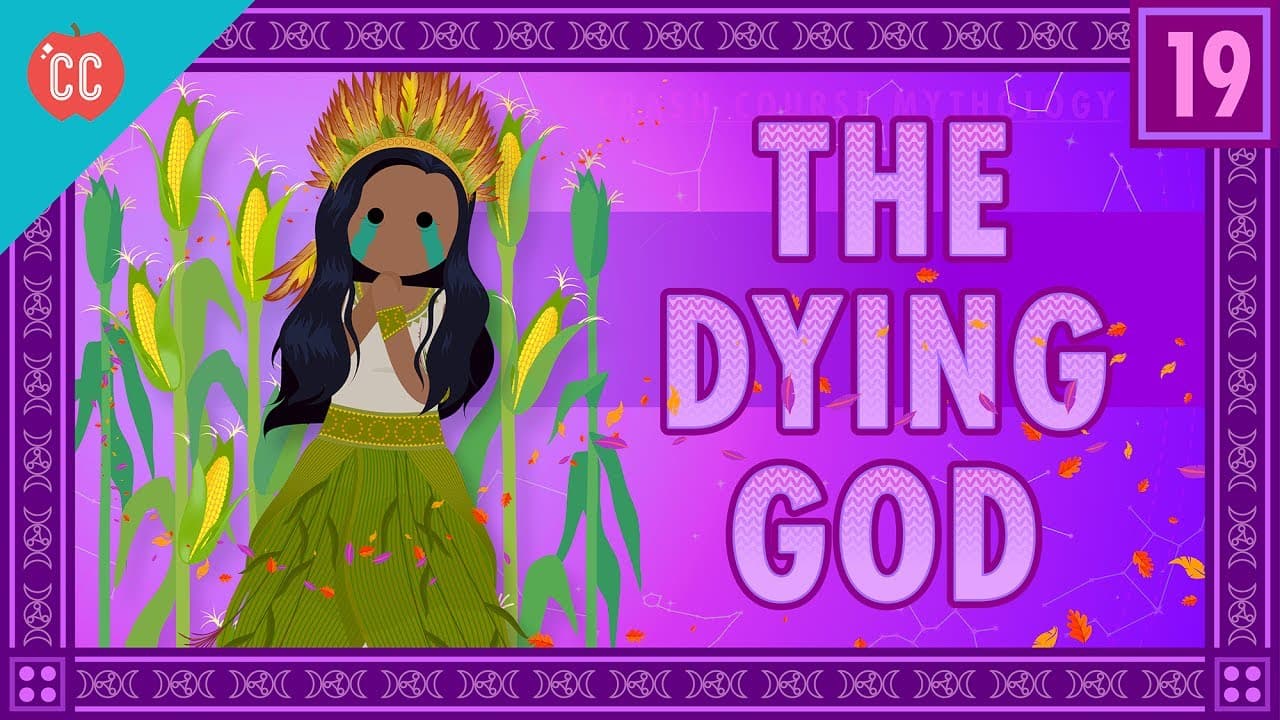
Dying gods are deities who die and are often reborn, symbolizing cycles of life and death. Examples include Adonis, Odin, and the Corn Mother. These myths highlight themes of sacrifice and renewal, offering hope and cultural significance across various traditions.
Transcript
Hey there, I'm Mike Rugnetta! This is Crash Course Mythology and today We're going to talk about the dying god, a specific archetype of god that might seem counterintuitive, considering lots of the myths we've already talked about feature gods who are immortal. The dying god trope, though, is one found in many regions throughout the world, but espe... Read More
Key Insights
- Dying gods are deities who die and are often reborn, symbolizing cycles of life and death.
- Adonis, a Greco-Roman god, symbolizes the cyclical nature of seasons through his death and rebirth.
- Odin's self-sacrifice on Yggdrasil grants him knowledge, paralleling the death and rebirth theme.
- Balder's death in Norse mythology foreshadows Ragnarok, highlighting themes of impermanence and renewal.
- The Corn Mother myth from Native American traditions emphasizes sacrifice for the survival of people.
- Dying gods often serve as saviors, sacrificing themselves for the benefit of humanity.
- These myths reflect cultural values and the universal human experience of life, death, and rebirth.
- The archetype of the dying god is found in many cultures, each adding unique elements to the narrative.
Install to Summarize YouTube Videos and Get Transcripts
Explore YouTube Video Summarizer or Get YouTube Transcript Extractor
Questions & Answers
Q: What is the dying god archetype in mythology?
The dying god archetype refers to deities who experience death and often rebirth, symbolizing cycles of life and death. These gods frequently sacrifice themselves for the benefit of humanity, embodying themes of renewal and hope. This archetype is present in many cultures, each interpreting it uniquely to reflect their values and beliefs.
Q: How does the story of Adonis illustrate the dying god theme?
Adonis's story illustrates the dying god theme through his death and symbolic rebirth as a flower, representing the cyclical nature of seasons. His myth highlights themes of love, sacrifice, and renewal, as Venus's grief transforms his blood into anemone flowers, symbolizing the hope of life continuing beyond death.
Q: What role does Odin play in the dying god archetype?
Odin's role in the dying god archetype involves self-sacrifice for the acquisition of knowledge. He hangs himself from the World Tree, Yggdrasil, and suffers wounds, paralleling themes of death and rebirth. His story underscores the pursuit of wisdom through sacrifice, aligning with the broader theme of transformative death.
Q: How does Balder's death relate to the concept of dying gods?
Balder's death in Norse mythology exemplifies the dying god concept by foreshadowing Ragnarok, the end and rebirth of the world. His beloved status and tragic death highlight themes of impermanence and renewal. The myth suggests that even in death, there is potential for new beginnings, reinforcing the cyclical nature of existence.
Q: What is the significance of the Corn Mother in Native American mythology?
The Corn Mother in Native American mythology signifies the dying god archetype through her self-sacrifice to provide sustenance for her people. Her transformation into corn symbolizes renewal and the shift from hunting to agriculture, reflecting cultural evolution. This myth emphasizes maternal sacrifice and the interconnectedness of life and death.
Q: Why are dying god myths important across cultures?
Dying god myths are important across cultures as they address universal themes of life, death, and rebirth. They offer hope and meaning by illustrating the potential for renewal and transformation. These myths reflect cultural values and beliefs, providing insights into how different societies understand and cope with the human experience.
Q: How do dying god myths reflect cultural values?
Dying god myths reflect cultural values by embodying themes of sacrifice, renewal, and the cyclical nature of life. They often highlight the importance of selflessness for the greater good, resonating with societal ideals. These stories provide a framework for understanding existential questions and reinforce cultural narratives about life and death.
Q: What are the common themes in dying god myths?
Common themes in dying god myths include sacrifice, renewal, and the cyclical nature of existence. These stories often feature deities who die and are reborn, symbolizing hope and transformation. They address universal human experiences and reflect cultural beliefs about life, death, and the potential for new beginnings, offering spiritual and existential insights.
Summary & Key Takeaways
-
Dying gods are central figures in many mythologies, representing the themes of death and rebirth. Examples include Adonis, Odin, and the Corn Mother, each illustrating different cultural interpretations of this archetype. These stories often emphasize sacrifice, renewal, and the cyclical nature of life, providing hope and meaning across various traditions.
-
In Greek mythology, Adonis represents the seasonal cycle through his death and rebirth, while Norse myths feature Odin's self-sacrifice for knowledge and Balder's death as a prelude to Ragnarok. The Corn Mother in Native American lore sacrifices herself to provide sustenance, highlighting themes of maternal sacrifice and cultural transformation.
-
These myths of dying gods reflect universal human experiences and values, emphasizing the interconnectedness of life and death. They serve as reminders of the cyclical nature of existence and the potential for renewal, offering cultural insights and spiritual significance across different societies.
Read in Other Languages (beta)
Share This Summary 📚
Summarize YouTube Videos and Get Video Transcripts with 1-Click
Try YouTube Summary with ChatGPT & Claude or YouTube Transcript Generator
Explore More Summaries from CrashCourse 📚

Summarize YouTube Videos and Get Video Transcripts with 1-Click
Try YouTube Summary with ChatGPT & Claude or YouTube Transcript Generator