The Coming Great Collision With the Andromeda Galaxy
TL;DR
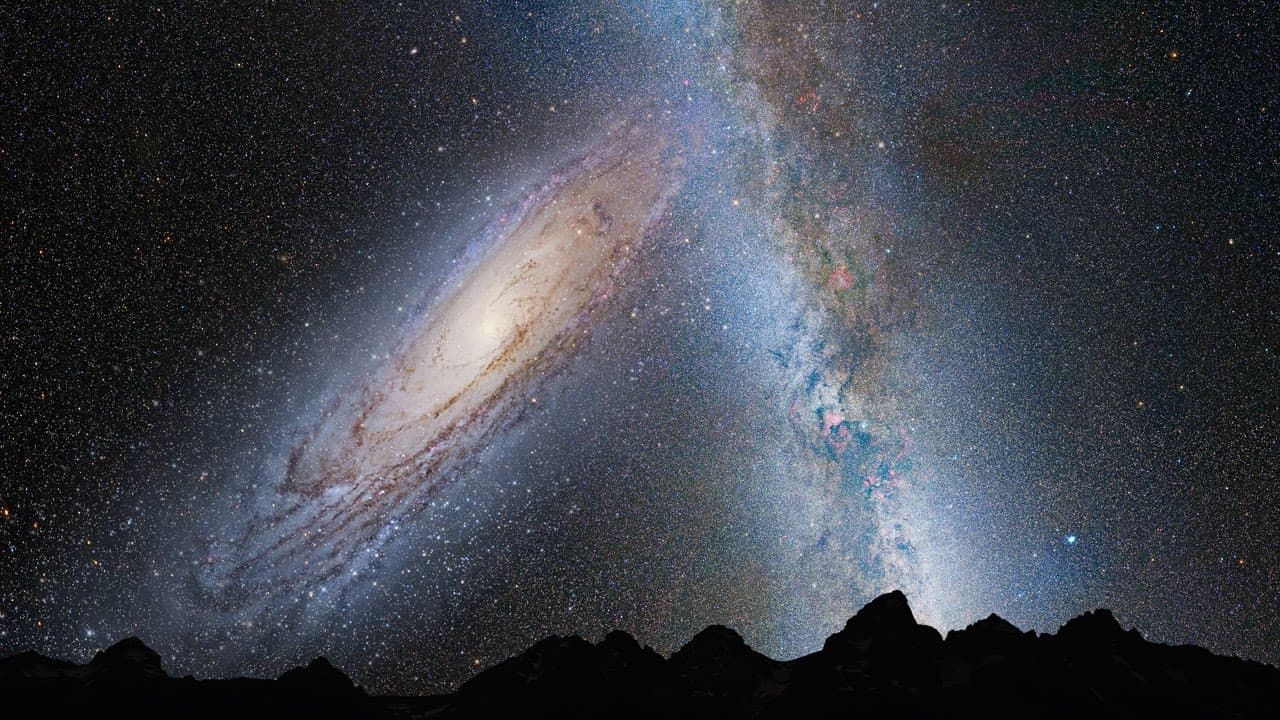
The Milky Way Galaxy only has about four billion years left and will eventually collide with the Andromeda Galaxy, resulting in a new galaxy formation called Milkdromeda or Milkomeda.
Transcript
On this channel, we often think in terms of geologic time rather than time as it is in relation to an average human lifespan. Here, we're more like rocks in our perception of time, or at least I am, thinking ahead billions of years. When trying to think in terms of ten trillion chess moves ahead, there is one, huge white elephant in the room as far... Read More
Key Insights
- 🌌 The Milky Way Galaxy has about four billion years left before it collides with the Andromeda Galaxy.
- 🤩 The Andromeda Galaxy is significantly larger than the Milky Way, with a trillion stars compared to our galaxy's 300 billion.
- 👶 The merger will result in the formation of a new galaxy, potentially named Milkdromeda or Milkomeda.
- 🤩 Individual star collisions are unlikely, but gravitational interactions will cause some stars to be ejected from the merging galaxies.
- 🖤 The supermassive black holes at the cores of both galaxies will merge into one.
- 😎 The collision between the two galaxies will have little effect on the solar system, even if the sun gets caught up in the gravitational upheaval.
- 😎 The increasing luminosity of the sun will eventually lead to catastrophic changes on Earth, including the boiling away of oceans and a runaway greenhouse effect.
Install to Summarize YouTube Videos and Get Transcripts
Explore YouTube Video Summarizer or Get YouTube Transcript Extractor
Questions & Answers
Q: How long does the Milky Way Galaxy have until its demise?
The Milky Way Galaxy has approximately four billion years left before it collides with the Andromeda Galaxy.
Q: What will happen during the collision between the Milky Way and Andromeda Galaxies?
The two galaxies will merge, resulting in the formation of a new galaxy, possibly called Milkdromeda or Milkomeda.
Q: Will individual stars collide during the merger?
While individual star collisions are unlikely due to the vast distances between them, the gravitational interactions will cause some stars to be ejected from the merging galaxies.
Q: What will happen to the supermassive black holes at the center of each galaxy?
The supermassive black holes in the Milky Way and Andromeda Galaxies will eventually merge into a single, supermassive black hole.
Summary & Key Takeaways
-
The Milky Way Galaxy is expected to merge with the Andromeda Galaxy in about four billion years, resulting in a new galaxy formation.
-
The Andromeda Galaxy is much larger than the Milky Way, with a trillion stars compared to our galaxy's 300 billion.
-
While individual star collisions are unlikely during the merger, the gravitational chaos will cause some stars to be ejected, and the black holes at the core of each galaxy will eventually merge.
Read in Other Languages (beta)
Share This Summary 📚
Summarize YouTube Videos and Get Video Transcripts with 1-Click
Try YouTube Summary with ChatGPT & Claude or YouTube Transcript Generator
Explore More Summaries from John Michael Godier 📚

Summarize YouTube Videos and Get Video Transcripts with 1-Click
Try YouTube Summary with ChatGPT & Claude or YouTube Transcript Generator