How does this all-female species reproduce? - Susana Freitas and Darren Parker
TL;DR
Some species reproduce asexually through parthenogenesis, potentially leading to genetic diversity and extinction risks.
Transcript
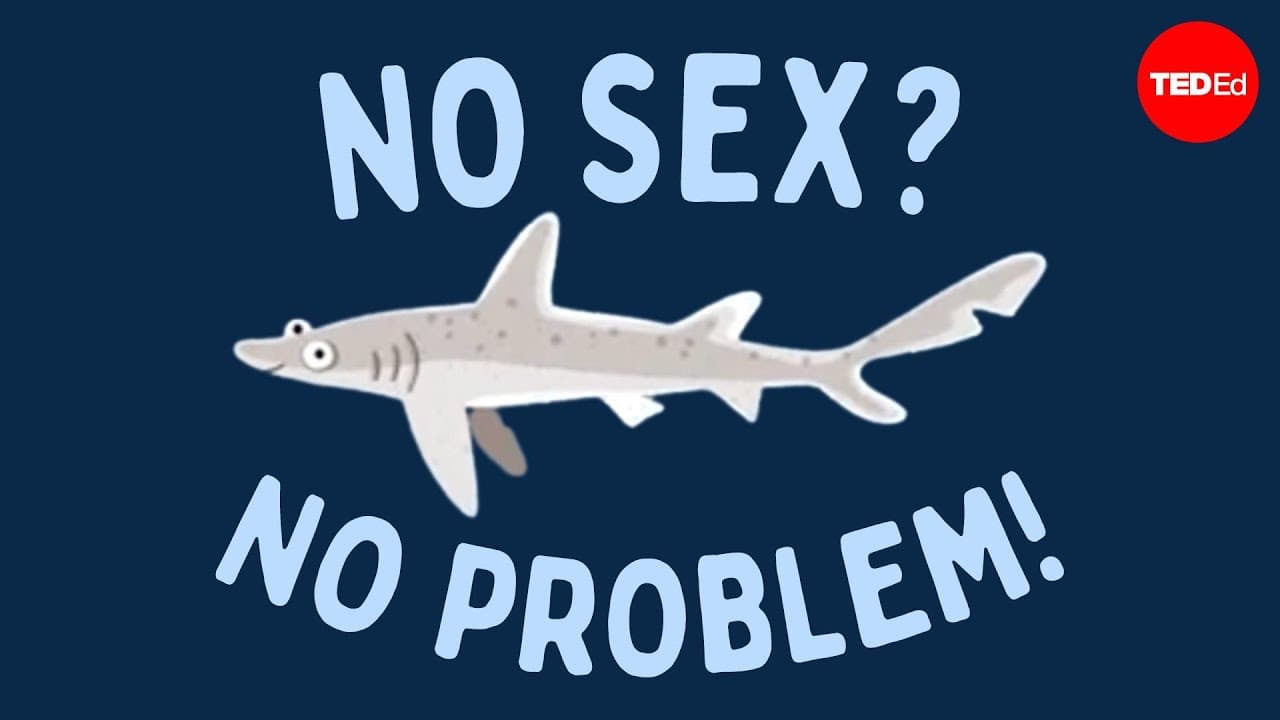
In 2021, workers at a Sardinian aquarium were stunned by the birth of a smoothhound shark, who they called Ispera. What shocked them was that, for the last decade, Ispera’s mother had been living only with other females. But it’s actually entirely possible that Ispera had no father— and the reason why that is also explains other biological curiosi... Read More
Key Insights
- 👻 Parthenogenesis allows for asexual reproduction in various species, including sharks and snakes, bypassing the need for a father.
- 🥺 While parthenogenesis can lead to rapid population expansion, it may also result in harmful mutations and eventual extinction.
- 🍉 Genetic diversity and survival strategies vary among parthenogenetic species, impacting their long-term evolutionary success.
- 🥺 Muller's ratchet theory predicts harmful mutations in parthenogenetic lineages, potentially leading to mutational meltdown and extinction.
- 🦎 Some species, like bdelloid rotifers and New Mexico whiptail lizards, have mechanisms to maintain genetic diversity and potentially avoid negative consequences of parthenogenesis.
Install to Summarize YouTube Videos and Get Transcripts
Explore YouTube Video Summarizer or Get YouTube Transcript Extractor
Questions & Answers
Q: What is parthenogenesis and how does it work?
Parthenogenesis is a type of asexual reproduction where an embryo develops from an unfertilized egg cell that doubles its chromosome count. It bypasses the need for a father and is observed in various species.
Q: What are the potential advantages of parthenogenesis for certain species?
Parthenogenesis can be evolutionarily beneficial as it requires only one parent, saves time and energy spent on mating rituals, and can rapidly expand a population under favorable conditions.
Q: What are the risks associated with parthenogenesis in terms of genetic diversity?
Parthenogenetic lineages may accumulate harmful mutations over time due to lack of genetic mixing, potentially leading to mutational meltdown and extinction of the population.
Q: How do some species manage to avoid the negative effects of parthenogenesis?
Species like New Mexico whiptail lizards maintain genetic diversity through hybridization of different lizard species, while bdelloid rotifers incorporate foreign genetic material from other organisms.
Summary & Key Takeaways
-
Ispera the smoothhound shark was born through parthenogenesis, the development of an embryo from an unfertilized egg cell.
-
Parthenogenesis occurs in various species, including turkeys, pythons, and Komodo dragons, bypassing the need for a father.
-
While parthenogenesis can rapidly expand a population, it may also lead to harmful mutations and eventual extinction risks.
Read in Other Languages (beta)
Share This Summary 📚
Summarize YouTube Videos and Get Video Transcripts with 1-Click
Try YouTube Summary with ChatGPT & Claude or YouTube Transcript Generator
Explore More Summaries from TED-Ed 📚




Summarize YouTube Videos and Get Video Transcripts with 1-Click
Try YouTube Summary with ChatGPT & Claude or YouTube Transcript Generator