How to Use Demonstration in Sports Coaching
TL;DR
Demonstration and imagery are powerful tools in sports coaching. By combining observation with imagery, coaches can enhance athletes' learning and performance. This approach allows athletes to visualize and mentally rehearse movements, improving confidence and skill acquisition. The RIO group explores these techniques to optimize coaching strategies and athlete development.
Transcript
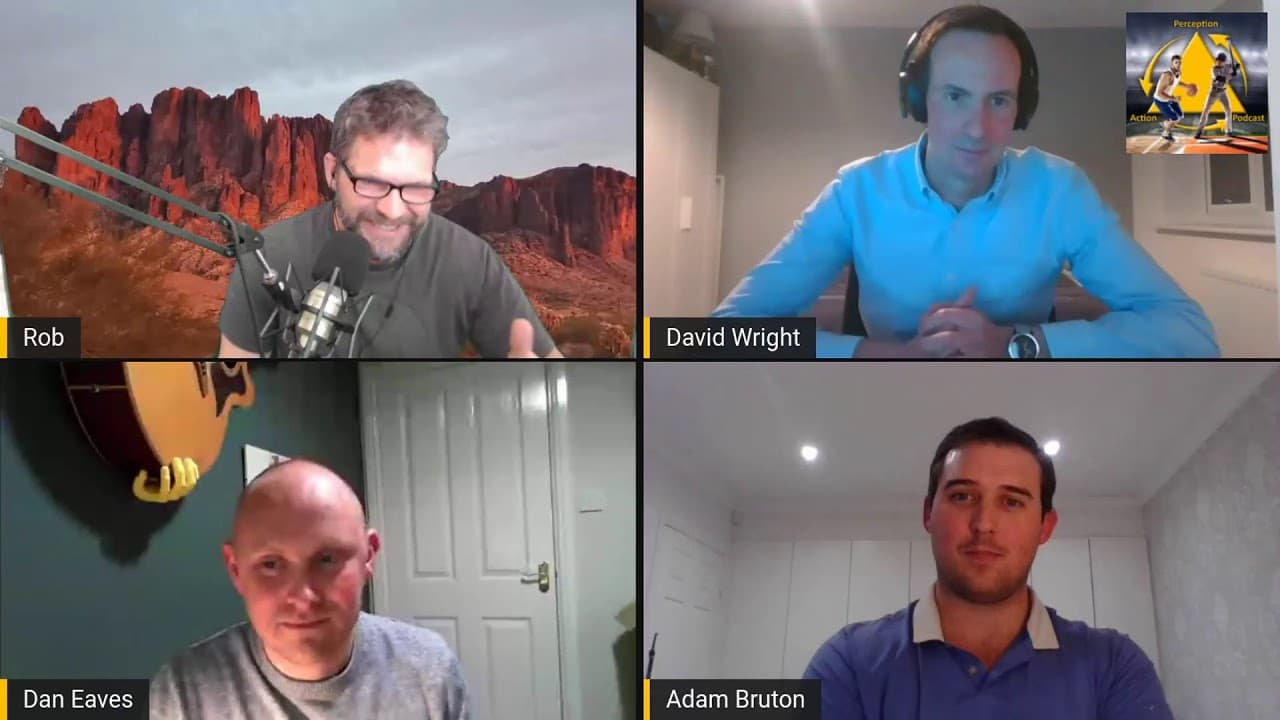
okay i think we're live welcome everyone to another edition of the perception action journal club today it's my real pleasure to be joined by three members of the real rio group which is a research and imagery and observation adam dan and dave and what we're going to do is talk a little bit about using these tools observation demonstration imagery ... Read More
Key Insights
- Demonstration and imagery together enhance learning by allowing athletes to visualize and rehearse movements.
- Observation of expert models can be motivating but may also be demotivating if the skill level is too high.
- Self-modeling typically involves positive self-review to reinforce successful performances.
- Imagery ability varies among individuals and can be influenced by factors like depression.
- Combining observation and imagery can lead to increased brain activity and better performance outcomes.
- Directing attention to external objects during observation can enhance neurophysiological responses.
- Imagery instructions can be varied to promote adaptability and individual movement strategies.
- Research in imagery and observation continues to explore mechanisms and applications in sports and rehabilitation.
Install to Summarize YouTube Videos and Get Transcripts
Explore YouTube Video Summarizer or Get YouTube Transcript Extractor
Questions & Answers
Q: How can demonstration and imagery be combined in sports coaching?
Demonstration and imagery can be combined by showing athletes a visual model of a movement and instructing them to imagine the kinesthetic sensations they would experience if performing the movement themselves. This method enhances visualization and mental rehearsal, improving learning and performance.
Q: What is the role of expert models in demonstration?
Expert models can serve as a motivational tool by providing a high standard for athletes to aspire to. However, if the skill level is too advanced, it may demotivate athletes. Balancing expert models with peer models can provide a more relatable and achievable target for athletes.
Q: How does self-modeling work in sports coaching?
Self-modeling involves athletes reviewing positive performances to reinforce successful techniques and build confidence. It typically focuses on displaying successful trials, aligning with the knowledge of performance literature, to encourage athletes to replicate these successful movements.
Q: What factors influence imagery ability in athletes?
Imagery ability can vary widely among individuals and is influenced by factors such as mental health conditions like depression. Depression can reduce the ability to focus internally and generate detailed mental representations, impacting the effectiveness of imagery in sports training.
Q: What are the benefits of combining observation and imagery?
Combining observation and imagery leads to increased brain activity and improved performance outcomes. This approach allows athletes to focus on kinesthetic sensations while observing a movement, enhancing their ability to mentally simulate and learn complex skills more effectively.
Q: How can attention be directed during observation to enhance learning?
Directing attention to external objects rather than body parts during observation can enhance neurophysiological responses. This aligns with the focus of attention literature, suggesting that an external focus can lead to better information pickup and improved learning outcomes.
Q: Can imagery instructions be varied to promote adaptability?
Yes, imagery instructions can be varied to encourage athletes to adapt and develop individual movement strategies. By altering imagery instructions, coaches can promote variability and adaptability, allowing athletes to explore different ways to achieve desired outcomes.
Q: What are the current research directions in imagery and observation?
Current research in imagery and observation focuses on understanding the neural mechanisms involved, exploring the effects of different models and perspectives, and investigating applications in sports and rehabilitation. The RIO group continues to study these areas to optimize coaching strategies and athlete development.
Summary & Key Takeaways
-
Combining demonstration with imagery in sports coaching enhances athletes' ability to visualize and mentally rehearse movements, leading to improved learning and performance. This approach provides a visual guide while allowing athletes to focus on the kinesthetic aspects of the movement.
-
Research shows that directing attention to external objects during observation can enhance neurophysiological responses, suggesting that focusing away from the body can be beneficial. This aligns with findings in focus of attention literature.
-
Imagery ability varies among individuals, and factors like depression can impact this ability. The RIO group continues to explore the mechanisms and applications of imagery and observation in both sports and rehabilitation settings.
Read in Other Languages (beta)
Share This Summary 📚
Summarize YouTube Videos and Get Video Transcripts with 1-Click
Try YouTube Summary with ChatGPT & Claude or YouTube Transcript Generator
Explore More Summaries from Rob Gray 📚
Summarize YouTube Videos and Get Video Transcripts with 1-Click
Try YouTube Summary with ChatGPT & Claude or YouTube Transcript Generator