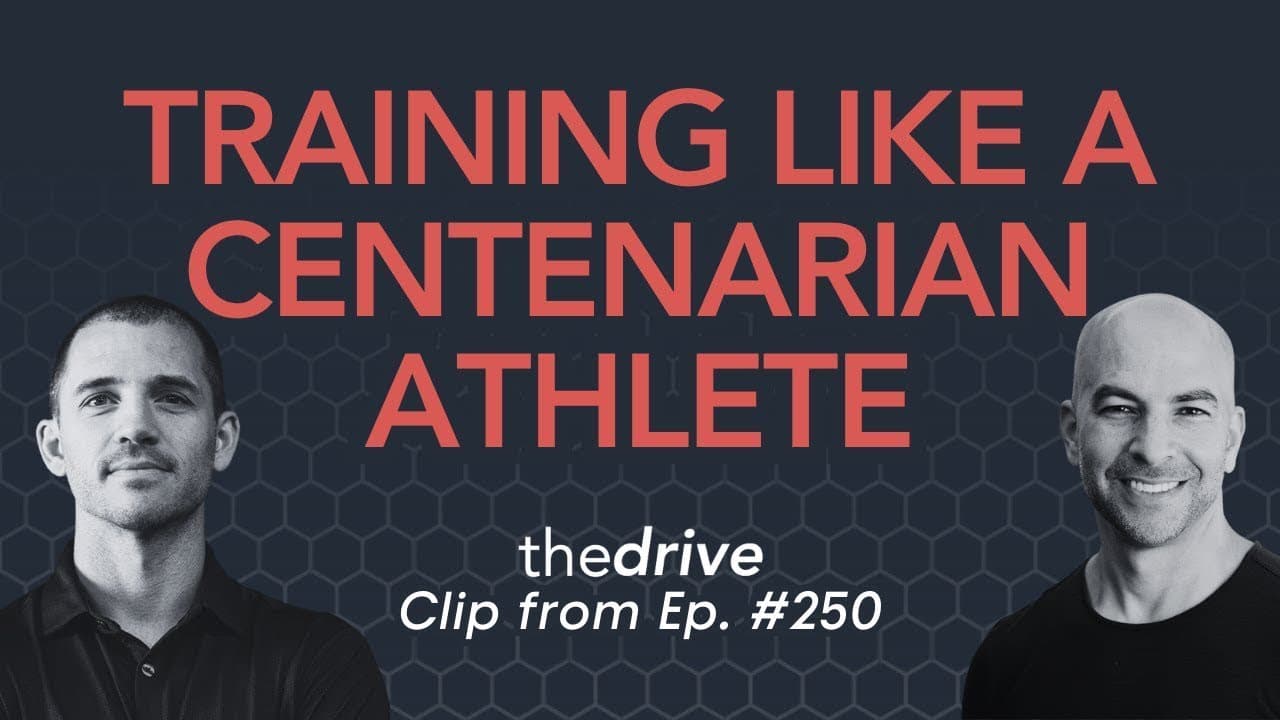
How to Train Like a Centenarian Athlete for Longevity
TL;DR
To train like a centenarian athlete, focus on optimizing muscle function, nervous system control, and cardiopulmonary health. Prioritize injury prevention by incorporating varied physical activities that promote high force production, sustained heart rate, and proprioceptive skills. Aim for consistent training without long breaks to maintain physical robustness well into old age.
Transcript
so let's kind of now tie this all together for a totally different type of athlete that most people aren't thinking about right which is the centenarian athlete um and I'm not assuming that we're starting from the standpoint of having been world-class Olympic cross-country skiers in our 20s who never stop I'm talking about somebody who's in their 4... Read More
Key Insights
- 🧑💼 Training for physical robustness in the last decade of life requires making trade-offs and prioritizing injury prevention.
- 🤩 Centenarian athletes should focus on three key areas: muscle tissue, nervous system control (including the brain), and cardiopulmonary conditioning.
- 🖐️ Proprioceptive innervation through uncontrolled physical activities plays a significant role in maintaining brain health.
- 👟 Different sports and activities, such as weightlifting, strength training, and running, can contribute to physical robustness in different ways.
- 🥰 Cardiovascular training should include sustained work output, max heart rate training, and recovery from high-intensity efforts.
- 💪 Muscle strength and size should be optimized to ensure overall physical health in centenarian athletes.
- 💪 Anthropometric measurements like ffmi and almi can be used as crude indicators of muscle size and overall health.
- 🎙️ More videos with Peter Attia / Andy Galpin:
Install to Summarize YouTube Videos and Get Transcripts
Explore YouTube Video Summarizer or Get YouTube Transcript Extractor
Questions & Answers
Q: What type of athletes are the centenarian athletes being compared to in the article?
The centenarian athletes being discussed in the article are not world-class Olympic athletes but individuals in their 40s who aim to be physically robust in their last decade of life.
Q: Why is avoiding injuries important when training for optimal physical robustness in centenarian athletes?
Avoiding injuries is crucial because the compounding effect of training is strong, and a three-month injury layoff can have a significant negative impact on overall performance. It is important to prioritize injury prevention even if it means sacrificing some peak performance.
Q: What are the three key areas that need to be trained for optimal performance in centenarian athletes?
The three key areas to focus on are high-quality functioning muscle tissue, a well-functioning nervous system (including the brain), and a strong cardiopulmonary system.
Q: How can centenarian athletes incorporate uncontrolled physical activities into their training?
Centenarian athletes should include physical activities that involve reacting to the environment, such as outdoor hikes with varied terrains or sports like surfing or badminton. These activities enhance proprioceptive innervation, which is crucial for maintaining brain function throughout life.
Key Insights:
- Training for physical robustness in the last decade of life requires making trade-offs and prioritizing injury prevention.
- Centenarian athletes should focus on three key areas: muscle tissue, nervous system control (including the brain), and cardiopulmonary conditioning.
- Proprioceptive innervation through uncontrolled physical activities plays a significant role in maintaining brain health.
- Different sports and activities, such as weightlifting, strength training, and running, can contribute to physical robustness in different ways.
- Cardiovascular training should include sustained work output, max heart rate training, and recovery from high-intensity efforts.
- Muscle strength and size should be optimized to ensure overall physical health in centenarian athletes.
- Anthropometric measurements like ffmi and almi can be used as crude indicators of muscle size and overall health.
- The idea that too much muscle mass is detrimental to health in older age is a misconception.
Summary & Key Takeaways
-
The article discusses the concept of training for physical robustness in the last decade of life, focusing on centenarian athletes.
-
The author emphasizes the importance of avoiding injuries and making trade-offs to optimize performance in activities such as running, lifting, and playing sports.
-
The article highlights three key areas of training: high-quality muscle tissue, a well-functioning nervous system, and a strong cardiopulmonary system.
Read in Other Languages (beta)
Share This Summary 📚
Summarize YouTube Videos and Get Video Transcripts with 1-Click
Try YouTube Summary with ChatGPT & Claude or YouTube Transcript Generator
Explore More Summaries from Peter Attia MD 📚


Summarize YouTube Videos and Get Video Transcripts with 1-Click
Try YouTube Summary with ChatGPT & Claude or YouTube Transcript Generator