How Will the World End?
TL;DR
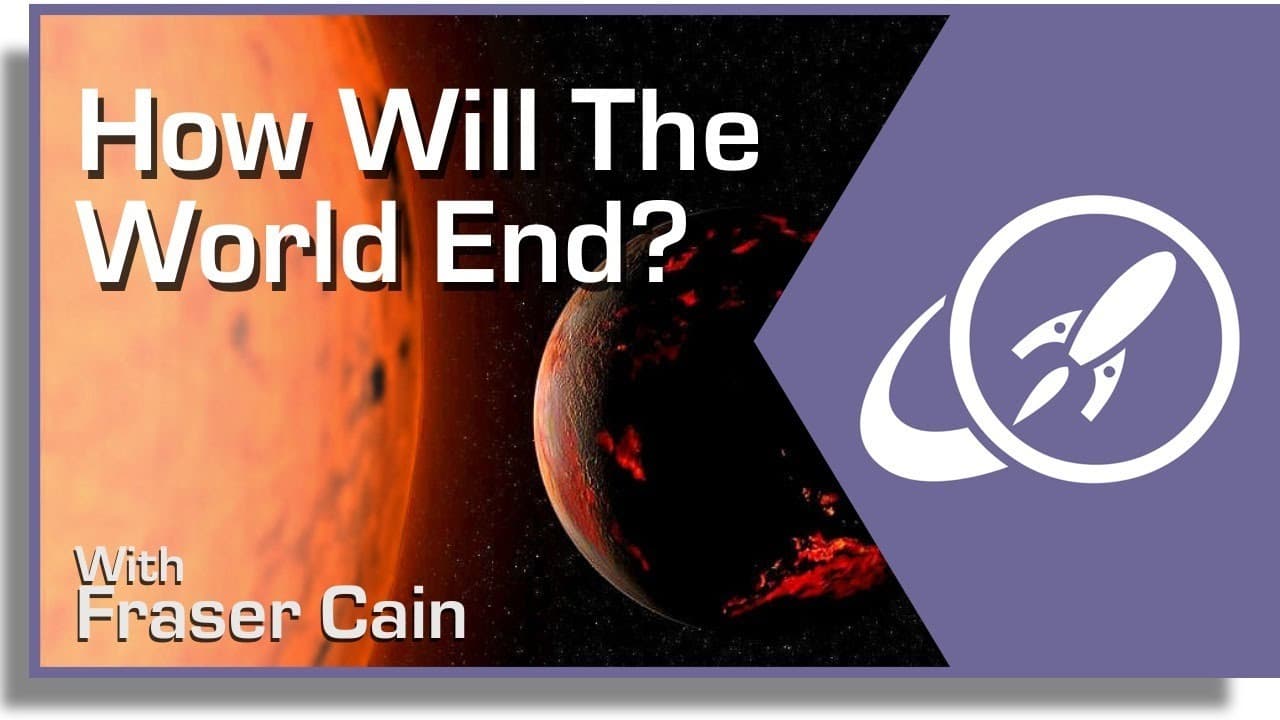
Earth's possible fates include consumption by the expanding Sun, orbiting as a white dwarf, or potential collision in trillions of years.
Transcript
I'm Fraser Cain, the publisher of Universe Today. There is almost nothing that could completely destroy the earth. Follow your instincts and ignore anyone raising alarms about its imminent demise. Oh sure, there's a pile of events that could make life more difficult, and a laundry list of things that could wipe out all of humanity. Including: aster... Read More
Key Insights
- 🖐️ The Sun's evolution will play a crucial role in determining Earth's fate.
- 😪 Possible scenarios for Earth's end include consumption by the Sun as a red giant, collision with other celestial bodies, or eventual decay.
- 🤩 Earth could potentially have a second chance at life if gravitational interactions with other stars occur.
- ❓ If protons do not decay, the Earth could theoretically last forever.
- 💥 The Earth's longevity depends on various factors such as the Sun's evolution and potential collisions.
- 🏛️ Despite potential risks, Earth was built to last against various cosmic threats.
- ❓ The Earth's fate is intertwined with the Sun's future as it evolves through different stages.
Install to Summarize YouTube Videos and Get Transcripts
Explore YouTube Video Summarizer or Get YouTube Transcript Extractor
Questions & Answers
Q: What are some events that could potentially destroy the Earth?
Events like asteroid strikes, rising temperatures, global plagues, the Sun becoming a red giant, or collisions with other celestial bodies could potentially end life on Earth.
Q: What will happen to Earth if the Sun enters its red giant phase?
If the Sun does consume the Earth during its red giant phase, our planet will get caught up inside the Sun and spiral inward towards its destruction.
Q: What are the possible long-term fates of the Earth in the distant future?
Potential long-term fates for the Earth include orbiting as a white dwarf, colliding with other celestial bodies, spiraling inward towards the Sun, or drifting towards the supermassive black hole at the center of the Milky Way.
Q: Could the Earth theoretically last forever?
If protons do not decay, the Earth could theoretically last forever, remaining intact against potential risks like collisions or eventual decay into smaller particles and energy.
Summary & Key Takeaways
-
Earth faces various potential scenarios for its demise, ranging from consumption by the Sun as a red giant to collisions or decay over immense time scales.
-
The Sun's evolution will determine Earth's fate, with possibilities ranging from consumption to a second chance at life from gravitational interactions.
-
Despite risks like collisions or decay, the Earth could theoretically last forever if protons do not decay.
Read in Other Languages (beta)
Share This Summary 📚
Summarize YouTube Videos and Get Video Transcripts with 1-Click
Try YouTube Summary with ChatGPT & Claude or YouTube Transcript Generator
Explore More Summaries from Fraser Cain 📚
Summarize YouTube Videos and Get Video Transcripts with 1-Click
Try YouTube Summary with ChatGPT & Claude or YouTube Transcript Generator