Products
Features
YouTube Video Summarizer
Summarize YouTube videos
Web & PDF Highlighter
Highlight web pages & PDFs
Chat with PDF
Ask any PDF questions with AI
Ask AI Clone
Chat with your highlights & memories
Audio Transcriber
Transcribe audio files to text
Glasp Reader
Read and highlight articles
Kindle Highlight Export
Export your Kindle highlights
Idea Hatch
Hatch ideas from your highlights
Integrations
Obsidian Plugin
Notion Integration
Pocket Integration
Instapaper Integration
Medium Integration
Readwise Integration
Snipd Integration
Hypothesis Integration
Apps & Extensions
Chrome Extension
Safari Extension
Edge Add-ons
Firefox Add-ons
iOS App
Android App
Discover
Discover
Ideas
Discover new ideas and insights
Articles
Curated articles and insights
Books
Book recommendations by great minds
Posts
Essays and notes from readers
Quotes
Inspiring quotes collection
Videos
Curated videos and summaries
Explore Glasp
Glasp Newsletter
Weekly insights and updates
Glasp Talk
Interview series with great minds
Glasp Blog
Latest news and articles
Glasp Use Cases
Learn how others use Glasp
Build & Support
Glasp API
Access Glasp's API for developers
MCP Connector
Connect Glasp to Claude & ChatGPT
Community
Glasp Reddit Community
Students
Student discount and benefits
FAQs
Frequently Asked Questions
AboutPricing
DashboardLog inSign up

Lecture 5: Life Cycle Analysis
August 24, 2015
by
MIT OpenCourseWare
YouTube video player
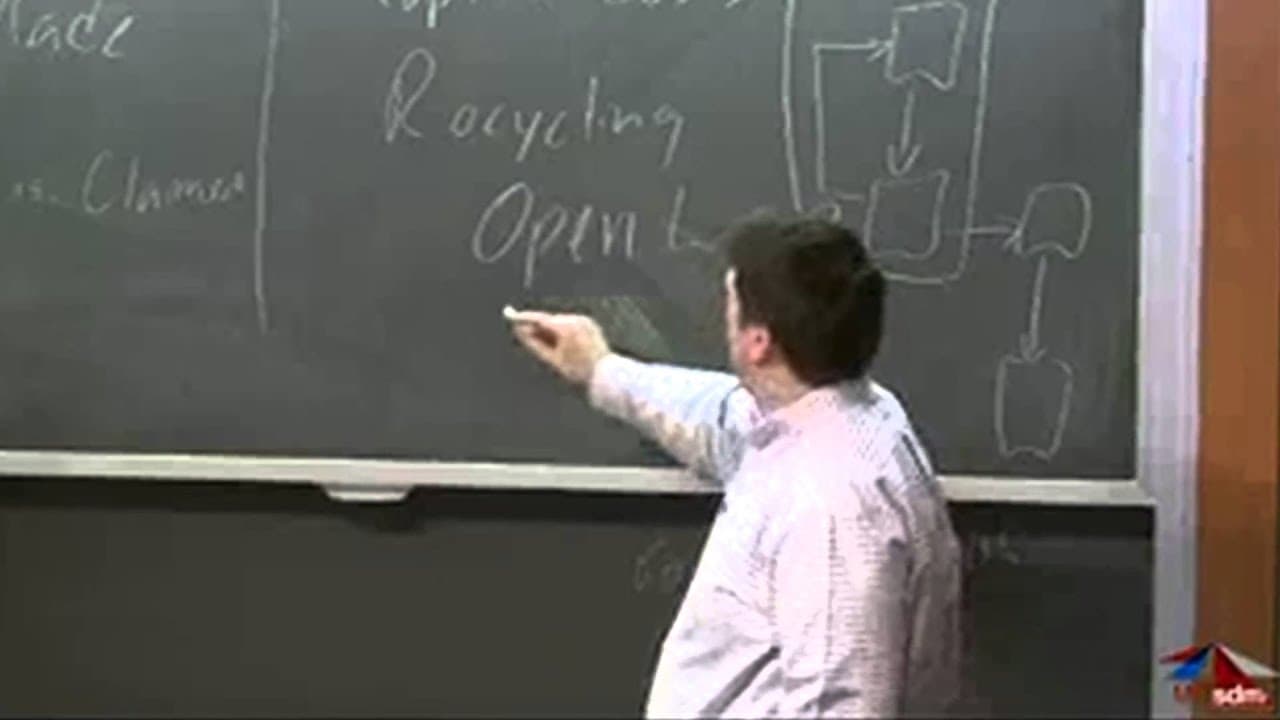
Lecture 5: Life Cycle Analysis

TL;DR

A comprehensive analysis of different hand drying systems using life cycle assessment to quantify their environmental impacts.

Transcript

The following content is provided under a Creative Commons license. Your support will help MIT OpenCourseWare continue to offer high quality educational resources for free. To make a donation or view additional materials from hundreds of MIT courses, visit MIT OpenCourseWare at ocw.mit.edu. PROFESSOR: OK, let's go ahead and get started. We're actua... Read More

Key Insights

  • 🏍️ Life cycle assessment is a valuable tool for quantifying the environmental impacts of products throughout their entire life cycle.
  • ℹ️ The choice of functional unit, system boundary, and data sources strongly affect the results and conclusions of an LCA study.
  • 👏 Comparing hand drying systems involves examining various factors, including production processes, energy use, and waste management.

Install to Summarize YouTube Videos and Get Transcripts

Explore YouTube Video Summarizer or Get YouTube Transcript Extractor

Questions & Answers

Q: What is life cycle assessment (LCA)?

LCA is a technique used to assess the environmental impacts of products by compiling an inventory of inputs and outputs, evaluating potential impacts, and interpreting the results in relation to study goals.

Q: What is the goal of the study?

The goal is to understand the steps and methodology of LCA, as well as the decisions and uncertainties involved in assessing the environmental impacts of hand drying systems.

Q: What factors were considered in the analysis of hand drying systems?

The study analyzed different hand drying systems, including paper towels and hand dryers, and evaluated their environmental impacts based on factors such as production, use, and disposal.

Q: What are some challenges in comparing different hand drying systems?

The study faced challenges in terms of data availability, particularly for different supply chains and product configurations. Additionally, assumptions had to be made regarding factors like hand drying time and product lifespan.

Summary & Key Takeaways

  • Life cycle assessment (LCA) is a technique used to assess the environmental impacts of products by analyzing their entire life cycle from raw materials to end of life.

  • The goal of this analysis is to understand the steps and methodology of LCA, as well as the decisions and uncertainties involved in assessing environmental impacts.

  • The study focuses on comparing different hand drying systems, including paper towels and hand dryers, and evaluating their environmental impacts from production to disposal.


Read in Other Languages (beta)

English

Share This Summary 📚

Summarize YouTube Videos and Get Video Transcripts with 1-Click

Download browser extensions on:

Try YouTube Summary with ChatGPT & Claude or YouTube Transcript Generator

Explore More Summaries from MIT OpenCourseWare 📚
17. Motor systems and brain states, part 3 thumbnail
17. Motor systems and brain states, part 3
MIT OpenCourseWare
Lecture 14: Radar and the Manhattan Project thumbnail
Lecture 14: Radar and the Manhattan Project
MIT OpenCourseWare
L08.8 Normal Random Variables thumbnail
L08.8 Normal Random Variables
MIT OpenCourseWare
Lecture 17: State-Dependent Preferences, Projection, and Attribution Bias thumbnail
Lecture 17: State-Dependent Preferences, Projection, and Attribution Bias
MIT OpenCourseWare
5. Amortization: Amortized Analysis thumbnail
5. Amortization: Amortized Analysis
MIT OpenCourseWare
6. Electron Shell Model, Quantum Numbers, and PES (Intro to Solid-State Chemistry) thumbnail
6. Electron Shell Model, Quantum Numbers, and PES (Intro to Solid-State Chemistry)
MIT OpenCourseWare

Summarize YouTube Videos and Get Video Transcripts with 1-Click

Download browser extensions on:

Try YouTube Summary with ChatGPT & Claude or YouTube Transcript Generator

Apps & Extensions

  • Chrome Extension
  • Safari Extension
  • Edge Add-ons
  • Firefox Add-ons
  • iOS App
  • Android App

Key Features

  • YouTube Video Summarizer
  • Web & PDF Summarizer
  • Web & PDF Highlighter
  • Chat with PDF
  • Ask AI Clone
  • Audio Transcriber
  • Glasp Reader
  • Kindle Highlight Export
  • Idea Hatch

Integrations

  • Obsidian Plugin
  • Notion Integration
  • Pocket Integration
  • Instapaper Integration
  • Medium Integration
  • Readwise Integration
  • Snipd Integration
  • Hypothesis Integration

More Features

  • APIs
  • MCP Connector
  • Blog & Post
  • Embed Links
  • Image Highlight
  • Personality Test
  • Quote Shots

Company

  • About us
  • Blog
  • Community
  • FAQs
  • Job Board
  • Newsletter
  • Pricing
Terms

•

Privacy

•

Guidelines

© 2026 Glasp Inc. All rights reserved.