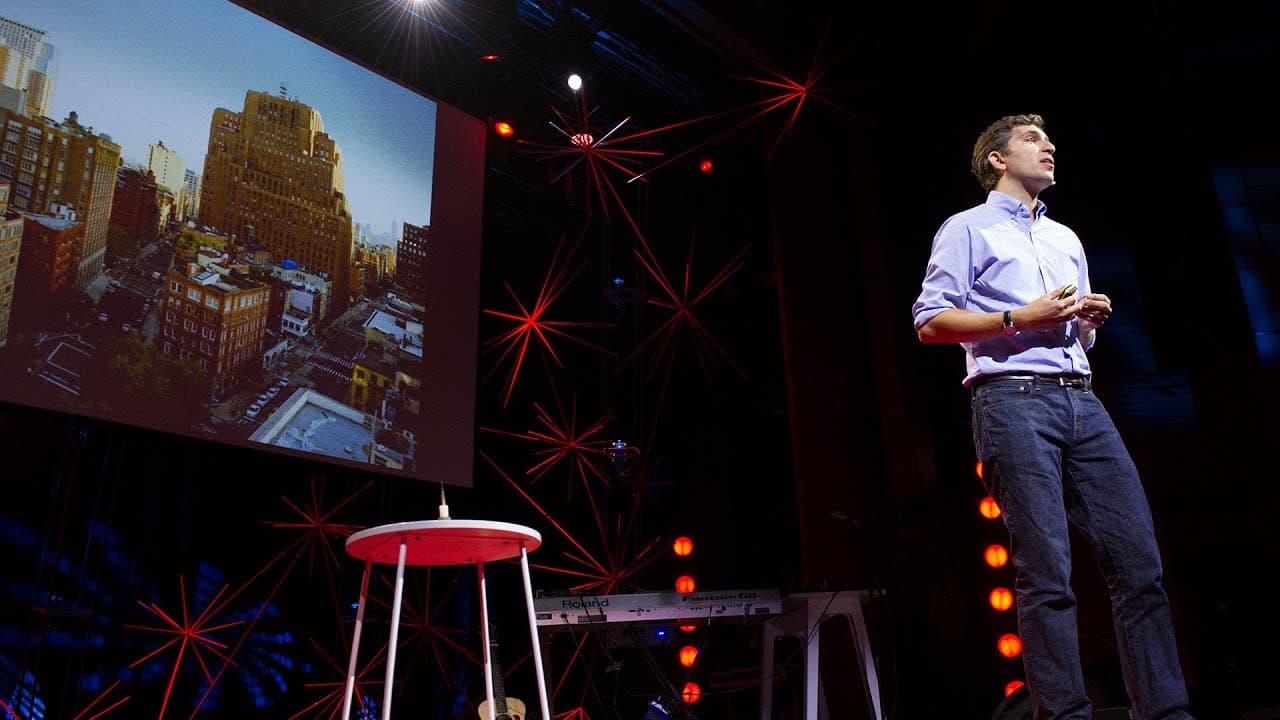
What is the Internet, really? - Andrew Blum
TL;DR
Our relationship to the physical and digital worlds has shifted, prompting exploration of the tangible infrastructure behind the internet.
Transcript
I've always written primarily about architecture about buildings and writing about architecture is based on certain assumptions and architect designs a building and it becomes a place where many architects design many buildings it becomes the city and regardless of this complicated mix of forces of politics and culture and economics that shapes the... Read More
Key Insights
- 🥺 Our reliance on digital devices has reshaped our interactions with physical spaces, leading to a disconnect from our surroundings.
- 🚠 Despite the abstract nature of the internet, there is a tangible physical infrastructure comprising data centers, cables, and network hubs.
- 🖐️ Undersea cables play a critical role in global connectivity, with advancements in technology enhancing data transmission speeds.
- 💦 The undersea cable industry is supported by a network of professionals, like Simon Cooper, who work to ensure seamless international connectivity.
- 🖐️ The physical process of laying and repairing undersea cables showcases the labor-intensive and meticulous nature of maintaining global internet infrastructure.
- 🚠 Geographic imagination and strategic planning drive the expansion of undersea cables to connect previously underserved regions.
- 🛟 Data centers, like the one at 60 Hudson Street, serve as crucial hubs for network connections, demonstrating the physical interconnectedness of the internet.
Install to Summarize YouTube Videos and Get Transcripts
Explore YouTube Video Summarizer or Get YouTube Transcript Extractor
Questions & Answers
Q: How has our relationship with physical spaces changed in the digital age?
Our focus has shifted from exploring physical environments to spending more time in front of screens, altering how we engage with the world around us.
Q: What prompted a deeper exploration of the physical reality of the internet?
A squirrel interfering with the speaker's internet connection sparked curiosity about the tangible infrastructure behind the seemingly intangible concept of the internet.
Q: What physical components make up the internet's infrastructure?
Data centers, undersea cables spanning oceans, network hubs like 60 Hudson Street, and landing stations where cables connect continents form the physical backbone of the internet.
Q: How has the expansion of undersea cables impacted global connectivity?
The proliferation of undersea cables has increased connectivity across continents, allowing for more robust and reliable internet access for regions previously underserved.
Summary & Key Takeaways
-
The speaker reflects on the changing nature of our interactions with physical spaces due to increased digital reliance.
-
An encounter with a squirrel chewing an internet cable prompts curiosity about the tangible reality of the internet.
-
Exploring data centers, undersea cables, and network hubs unveils the intricate physical infrastructure supporting the internet.
Read in Other Languages (beta)
Share This Summary 📚
Summarize YouTube Videos and Get Video Transcripts with 1-Click
Try YouTube Summary with ChatGPT & Claude or YouTube Transcript Generator
Explore More Summaries from TED-Ed 📚





Summarize YouTube Videos and Get Video Transcripts with 1-Click
Try YouTube Summary with ChatGPT & Claude or YouTube Transcript Generator