How Do Legged Robots Navigate Using AI Controls?
TL;DR
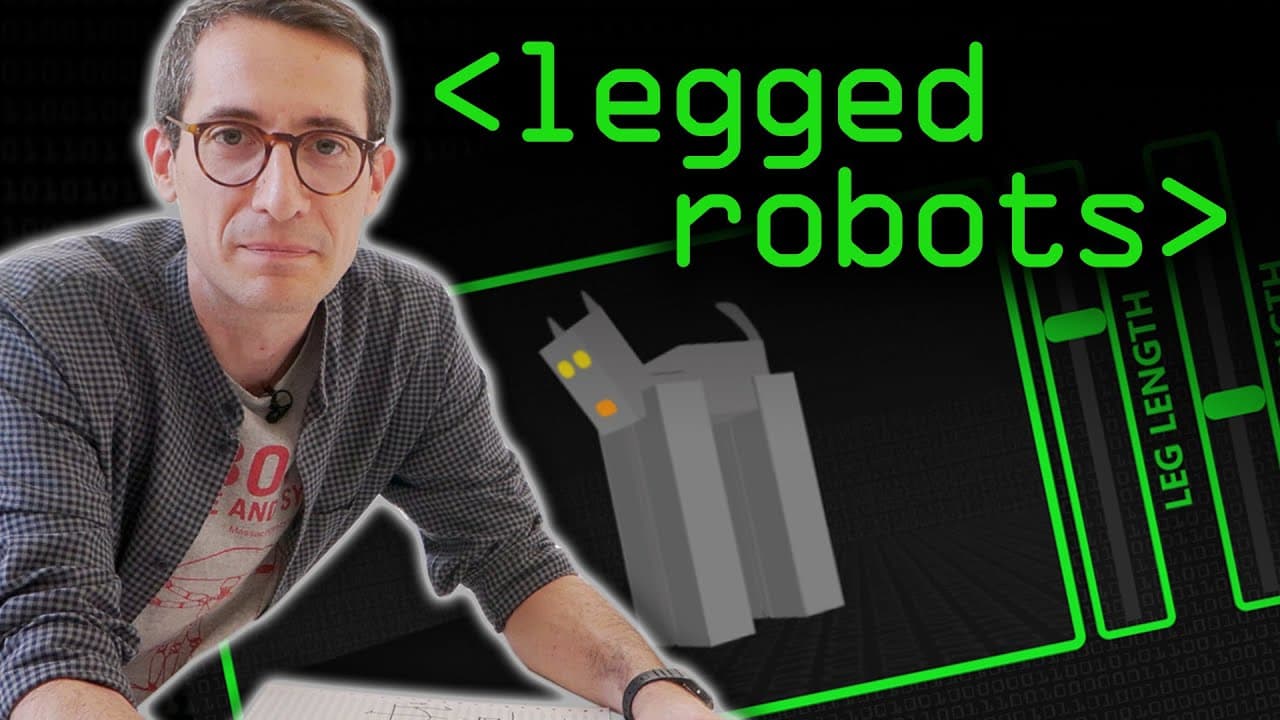
Legged robots utilise two primary control methods for navigation: Model Predictive Control (MPC), which requires accurate models for effective functioning, and Reinforcement Learning (RL), which allows robots to learn from data. The combination of these techniques enhances robots' adaptability in complex environments, enabling better obstacle negotiation and dynamic movement.
Transcript
this is animal in its version sea this is built by a company in Zurich and we've been working with for quite some time now that is a spin-off of the eth university in Zurich one of the main difference between working with animal and the spot robot is that we have we have access to the low level controllers in this robot well for uh for spots we don... Read More
Key Insights
- 🤖 Animal, a Zurich-based robot, has more control capabilities compared to Boston Dynamics' Spot robot due to access to low-level controllers.
- 😂 Model Predictive Control relies on accurate system models but struggles with wear and tear, vibrations, and uncertainties in dynamic environments.
- 👻 Reinforcement Learning allows for training a neural network using data, enabling simulation-based training and potential robustness to external perturbations.
- 🤖 Sim-to-real transfer is a challenge when applying Reinforcement Learning to real robots.
- 👨🔬 Future research aims to incorporate online experience into ongoing learning systems for improved control.
- 🎮 Legged locomotion control methods are experiencing convergence, combining model predictive control and learned aspects.
- 🤖 Perception information, including lidar and depth sensors, helps the robot estimate its surroundings and make decisions about leg placement.
Install to Summarize YouTube Videos and Get Transcripts
Explore YouTube Video Summarizer or Get YouTube Transcript Extractor
Questions & Answers
Q: What is the main difference between working with Animal and Spot robots?
Animal has access to low-level controllers, while Spot does not. This allows for more control in the robot's movements and capabilities.
Q: What are the two prevalent approaches to controlling legged locomotion?
The two approaches are Model Predictive Control (MPC) and Reinforcement Learning (RL).
Q: What are the drawbacks of using Model Predictive Control?
MPC requires accurate models of the system, which can be challenging in dynamic environments with factors like wear and tear, vibrations, and estimation uncertainties.
Q: How does Reinforcement Learning differ from Model Predictive Control?
RL involves training a neural network using data, allowing the robot to learn control inputs that achieve a specific target. It uses simulations to collect data for training and faces sim-to-real transfer challenges when applied to real robots.
Summary & Key Takeaways
-
Animal, a sea version robot developed by a company in Zurich, has access to low-level controllers, unlike Boston Dynamics' Spot robot.
-
Model Predictive Control (MPC) uses system models to simulate the robot's movements and determine control inputs, but it requires accurate models and struggles with dynamic environments.
-
Reinforcement Learning (RL) trains a neural network to control the robot by learning from data, allowing for simulation-based training and potential sim-to-real transfer challenges.
Read in Other Languages (beta)
Share This Summary 📚
Summarize YouTube Videos and Get Video Transcripts with 1-Click
Try YouTube Summary with ChatGPT & Claude or YouTube Transcript Generator
Explore More Summaries from Computerphile 📚

Summarize YouTube Videos and Get Video Transcripts with 1-Click
Try YouTube Summary with ChatGPT & Claude or YouTube Transcript Generator