Q&A 106: Do Geostationary Satellites Reenter The Atmosphere? And More...
TL;DR
Expert discusses the spin alignment of the supermassive black hole at the Milky Way's center, along with intriguing questions about space phenomena.
Transcript
everyone welcome back to my question show once again you write down questions anywhere across any of my videos I see everything I gather bunch of them up and I'll answer them here people asked if I could see questions that you crumpled up and throw in your garden I cannot but I can see the ones in your dreams so now last week we talked about this i... Read More
Key Insights
- 😇 Galactic mass distribution highlights the minor presence of supermassive black holes compared to dark matter halos.
- 🦠 Spacecraft resilience against micro meteorite impacts reveals the importance of shielding and repair mechanisms.
- 🎁 Timekeeping challenges on Mars present intriguing concepts for Martian colonists adapting to the planet's unique day length.
- 🙂 Innovative space exploration concepts like the light-dipping technique and occultation events offer novel ways to study celestial phenomena.
- 🛰️ Sci-fi realism in space travel discussions delves into the complexities of inertial frames and practical application in spacecraft operations.
- 🖤 Uncertainty in black hole evaporation emphasizes the irreversible transformation of black holes once formed.
Install to Summarize YouTube Videos and Get Transcripts
Explore YouTube Video Summarizer or Get YouTube Transcript Extractor
Questions & Answers
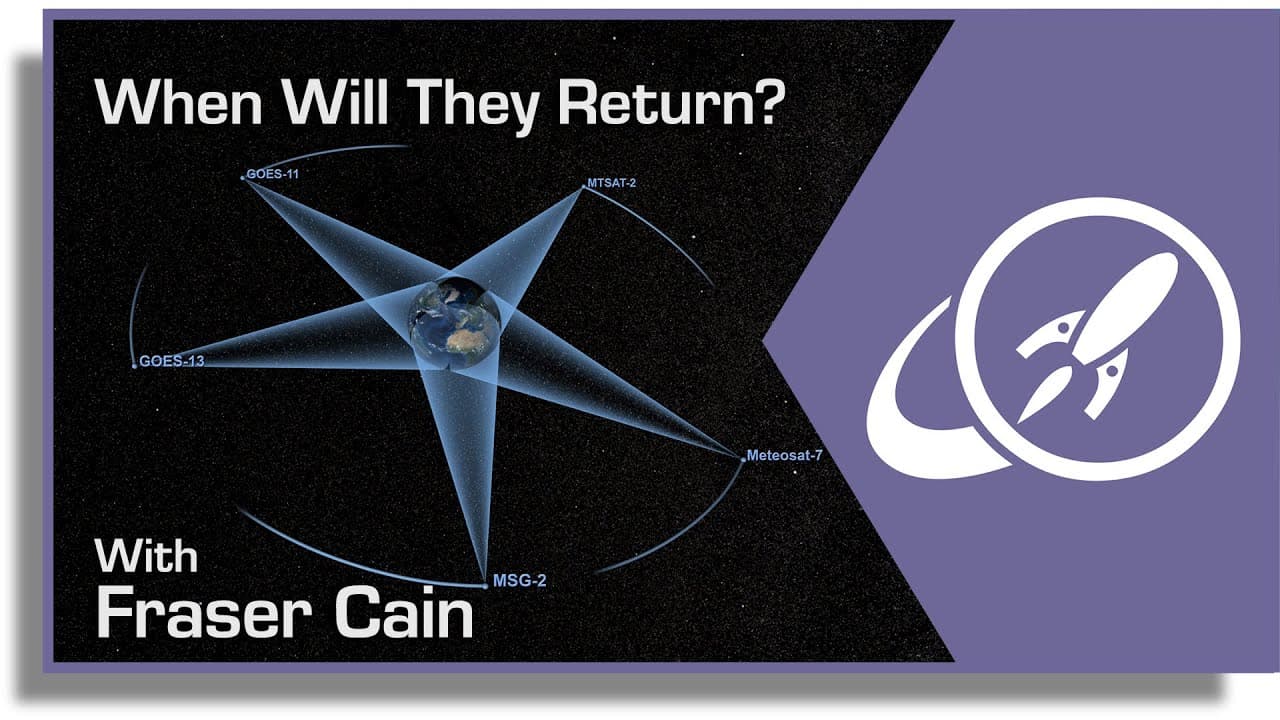
Q: Can geostationary satellites maintain stability for millions of years?
Geostationary satellites can stay put due to having no drag effects but need fuel to counteract orbital perturbations, ensuring long-term stability.
Q: Why can't heat from Venus be harnessed for powering spacecraft?
Venus' uniform temperature lacks a heat gradient for energy production, hindering its potential as a power source for spacecraft.
Q: Are alien civilizations likely to have multicellular organisms?
The Fermi paradox highlights the contradiction between immense cosmic opportunities for life and the lack of observable extraterrestrial civilizations, posing a perplexing question.
Q: What is the geological composition of Mars, and can granite countertops be found there?
Mars predominantly consists of igneous and sedimentary rocks with scarce metamorphic rocks, limiting the presence of materials like granite on the planet's surface.
Summary & Key Takeaways
-
Dr. Abby Loeb reveals uncertainty about Sagittarius A*'s spin direction, challenging current understanding of supermassive black holes.
-
Geostationary satellites could hold traces of civilization for millions of years due to stability but require fuel for position control.
-
Mars exploration concepts, unique inclinations of alien planets, and futuristic technologies like printed solar panels are explored.
Read in Other Languages (beta)
Share This Summary 📚
Summarize YouTube Videos and Get Video Transcripts with 1-Click
Try YouTube Summary with ChatGPT & Claude or YouTube Transcript Generator
Explore More Summaries from Fraser Cain 📚

Summarize YouTube Videos and Get Video Transcripts with 1-Click
Try YouTube Summary with ChatGPT & Claude or YouTube Transcript Generator