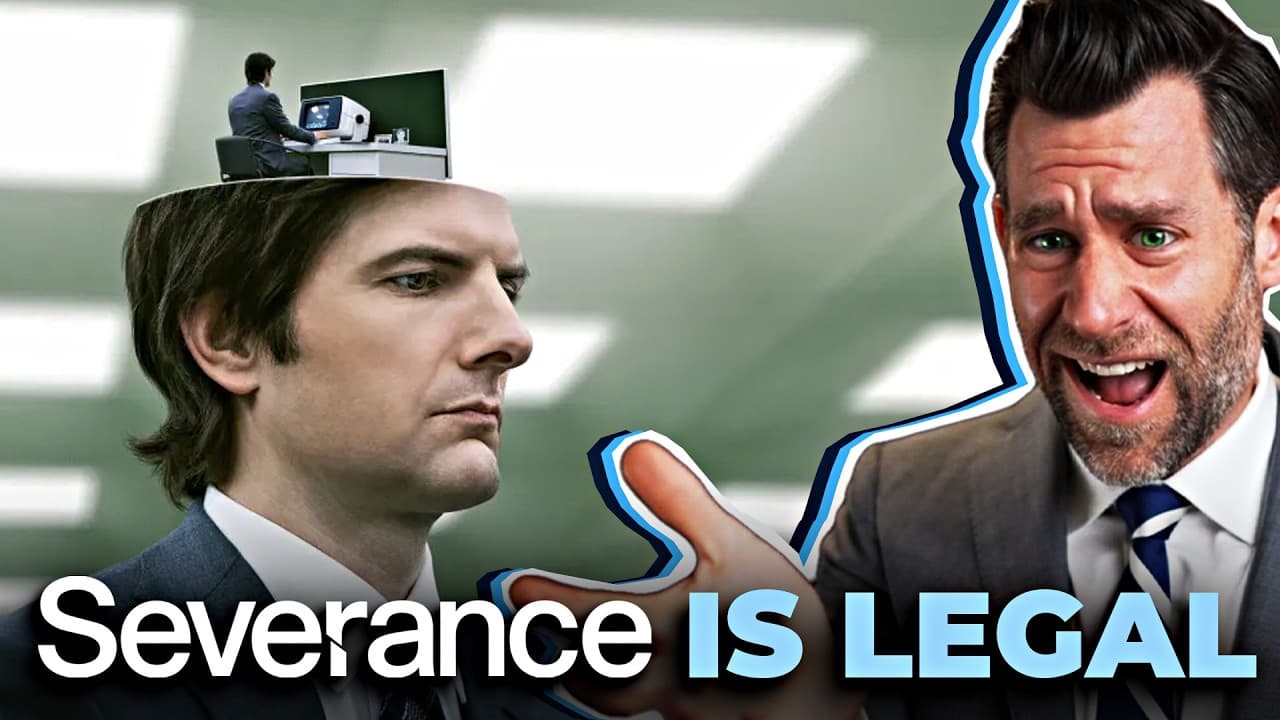
Severance Is Legal?
TL;DR
Severance raises complex legal questions on personhood and consent.
Transcript
This is a five alarm code red deploying the Marines in third terms. This might be the most staggering arguably worse than any president. Open corruption is on. Things have gotten worse. Things have gotten much much worse. I wonder what my Audi is doing right now. If you create a person who only exists to work, do they have rights as we understand t... Read More
Key Insights
- Severance explores the concept of splitting work and personal life through a surgical procedure, raising questions about personhood and consent.
- The legal system recognizes bodily autonomy, but severance could challenge existing regulations on brain modification and neural implants.
- The show suggests a blurred line between corporate power and government, with Lumen Industries controlling employees' work identities.
- Severance raises questions about whether 'innies' could be considered separate legal persons with independent rights.
- The 13th Amendment's prohibition on involuntary servitude could apply to Lumen's control over severed employees.
- Involuntary servitude includes psychological coercion, and Lumen's practices may violate this through forced work and confinement.
- Legal remedies for severed employees could include false imprisonment, emotional distress, and lack of informed consent claims.
- The concept of personhood is central to the show's legal issues, challenging traditional views on consciousness and identity.
Install to Summarize YouTube Videos and Get Transcripts
Explore YouTube Video Summarizer or Get YouTube Transcript Extractor
Questions & Answers
Q: What is the central legal question posed by Severance?
The central legal question posed by Severance is whether individuals who undergo a procedure to split their work and personal memories into separate consciousnesses retain their legal rights, and if the 'innies' created by this procedure can be considered separate legal persons with their own rights.
Q: How does the show Severance challenge existing legal regulations?
Severance challenges existing legal regulations by presenting a scenario where a surgical procedure modifies the brain to create separate consciousnesses. This raises questions about the legality of such procedures, the regulation of neural implants, and the extent of bodily autonomy and consent within the legal system.
Q: What potential legal issues arise from Lumen Industries' control over employees?
Lumen Industries' control over severed employees raises potential legal issues such as involuntary servitude, as the employees are confined to work without full knowledge or consent. This challenges the 13th Amendment's prohibition on forced labor and raises questions about psychological coercion and false imprisonment.
Q: Could 'innies' be considered separate legal persons?
The show raises the possibility that 'innies,' the work identities created by the severance procedure, could be considered separate legal persons. This would grant them independent rights and challenge traditional legal views on personhood, as they possess distinct memories, perceptions, and wills from their 'outies.'
Q: What are the implications of the 13th Amendment in Severance?
The 13th Amendment's prohibition on involuntary servitude is implicated in Severance, as Lumen Industries' control over severed employees could be seen as forced labor. The amendment covers psychological coercion, suggesting that Lumen's practices may violate it by confining employees and controlling their work identities.
Q: What legal remedies might severed employees have against Lumen Industries?
Severed employees might have legal remedies against Lumen Industries for false imprisonment, emotional distress, and lack of informed consent. They could argue that they are held against their will, subjected to psychological torture, and misled about the severance procedure's effects, challenging Lumen's exploitative practices.
Q: How does the concept of personhood affect the legal issues in Severance?
The concept of personhood is central to the legal issues in Severance, as it challenges traditional views by suggesting that 'innies' could be separate legal persons. This raises questions about rights, autonomy, and identity, complicating legal interpretations of consciousness and selfhood in the context of the show.
Q: What role does informed consent play in the legal analysis of Severance?
Informed consent is crucial in the legal analysis of Severance, as the severance procedure's legality hinges on whether employees fully understand and agree to its effects. If Lumen misrepresented or omitted key information, employees could claim lack of informed consent, leading to potential legal challenges against the company.
Summary & Key Takeaways
-
Severance is a science fiction show exploring the legal implications of splitting work and personal memories through a surgical procedure. It raises questions about consent, personhood, and corporate control over employees.
-
The show suggests a world where corporate power blurs with government authority, questioning whether 'innies' have separate legal rights and if their work constitutes involuntary servitude.
-
Legal remedies for severed employees could involve claims of false imprisonment, emotional distress, and lack of informed consent, challenging traditional legal views on consciousness and identity.
Read in Other Languages (beta)
Share This Summary 📚
Summarize YouTube Videos and Get Video Transcripts with 1-Click
Try YouTube Summary with ChatGPT & Claude or YouTube Transcript Generator
Explore More Summaries from LegalEagle 📚




Summarize YouTube Videos and Get Video Transcripts with 1-Click
Try YouTube Summary with ChatGPT & Claude or YouTube Transcript Generator