Dog Training Tips and Tricks | Q&A With Professional Dog Trainer Nate Schoemer | Part 5
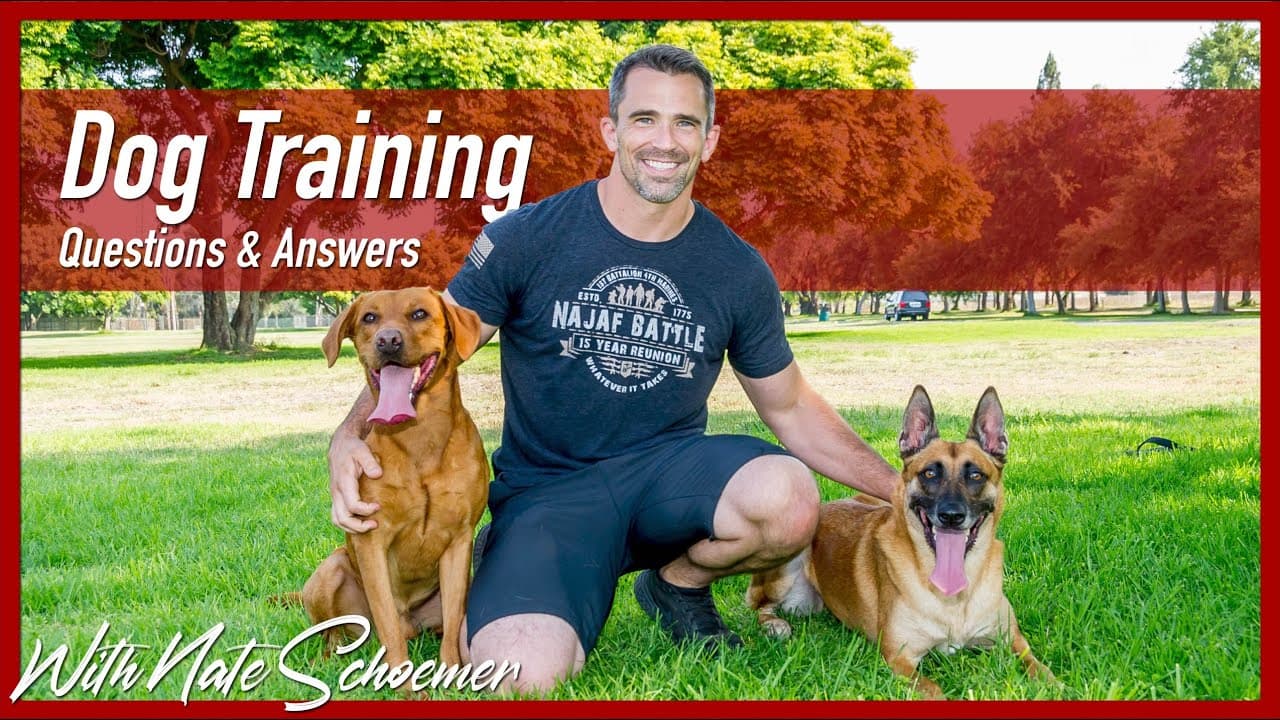
TL;DR
Engagement training and motivation are key to dog obedience.
Transcript
hey everyone and welcome back to another episode today we are doing a q a video make sure you check the description for your question so you could jump to that portion of the video let's go ahead and get started how do you transfer the focus that you have in the house to outside one of the first things we do with any dog that we train is known as e... Read More
Key Insights
- Engagement training is crucial for teaching dogs to focus on their owners both indoors and outdoors. It involves rewarding dogs for eye contact and using markers to predict rewards or corrections.
- Markers are essential in dog training, serving as cues that predict either a reward or a correction. They help dogs understand what is expected of them during training sessions.
- To maintain a dog's focus outside, increase the reward's value or use leash pressure to cue attention. This ensures the dog associates focusing on you with positive outcomes.
- Addressing reactive behavior requires a foundation of engagement training and understanding the dog's motivations. Counter conditioning and desensitization can help manage fear-based reactivity.
- When cutting a dog's nails, either use a groomer or gradually desensitize the dog to the clippers. Consistency and patience are key to overcoming resistance.
- Teaching fetch involves building toy drive and using value transfer with identical toys. This encourages the dog to chase and return the toy for continued play.
- Increasing a dog's focus requires controlling their food access. Training sessions should be the only time the dog receives food, reinforcing the importance of engagement.
- Understanding motivation is crucial in dog training. Dogs are motivated by rewards, the prevention of unpleasant experiences, or the inherent fun of a behavior.
Install to Summarize YouTube Videos and Get Transcripts
Explore YouTube Video Summarizer or Get YouTube Transcript Extractor
Questions & Answers
Q: How do you transfer the focus that you have in the house to outside?
Transferring focus from indoors to outdoors involves engagement training, where the dog learns to value looking at their owner. Start with minimal distractions and gradually increase them. If focus is lost, use higher value rewards or leash pressure to regain attention. Consistent practice helps reinforce focus.
Q: How do you recommend managing a reactive dog?
Managing a reactive dog requires understanding the root of the reactivity, whether it's fear or prey drive. Begin with engagement training to establish communication. Use counter conditioning and desensitization for fear-based reactions, and corrections or leash pressure for prey-driven behaviors. Consistent training is key.
Q: How do I cut my dog's nails without having to do a sneak attack?
To cut a dog's nails without sneaking, consider taking them to a groomer or gradually desensitizing them to the clippers. Introduce the clippers slowly, pairing them with positive experiences. If the dog isn't afraid, simply assertively cut the nails to show there's no option to resist.
Q: How do you train fetch and retrieve with an adult dog?
Training fetch with an adult dog involves building toy drive and using value transfer. Start by ensuring the dog chases and holds the toy. Use two identical toys to teach the 'drop it' command, rewarding the dog by throwing the second toy. Consistent practice helps establish the game.
Q: How can I make my dog more focused and enthusiastic during training?
To increase focus and enthusiasm, use food deprivation by only feeding the dog during training sessions. This increases the value of the food reward, motivating the dog to engage. Ensure no free feeding occurs, and maintain consistency to reinforce the importance of focus during training.
Q: What is engagement training and why is it important?
Engagement training is the process of teaching a dog to value and focus on their owner by rewarding eye contact. It's important because it establishes a foundation for communication and obedience, making it easier to train the dog in various commands and behaviors.
Q: How do markers function in dog training?
Markers are cues that predict a reward or correction, helping dogs understand expectations. They are essential in training as they provide clear communication about what behavior is desired or discouraged, facilitating learning and obedience in dogs.
Q: How do you address a dog's lack of focus outdoors?
To address a lack of focus outdoors, increase the reward's value or use leash pressure to regain attention. Training should start in low-distraction environments and gradually introduce more distractions. Consistent reinforcement of engagement training helps maintain the dog's focus in various settings.
Summary & Key Takeaways
-
Engagement training is a foundational element in dog training, focusing on teaching dogs to value looking at their owners. This is achieved through a system of markers predicting rewards or corrections.
-
Reactive dogs require a structured training approach, beginning with engagement training and progressing to counter conditioning and desensitization. This helps manage behaviors driven by fear or high prey drive.
-
To improve a dog's focus and enthusiasm, trainers should use food deprivation techniques, ensuring that food is only given during training sessions, thereby increasing the dog's motivation to engage.
Read in Other Languages (beta)
Share This Summary 📚
Summarize YouTube Videos and Get Video Transcripts with 1-Click
Try YouTube Summary with ChatGPT & Claude or YouTube Transcript Generator
Explore More Summaries from Nate Schoemer 📚




Summarize YouTube Videos and Get Video Transcripts with 1-Click
Try YouTube Summary with ChatGPT & Claude or YouTube Transcript Generator