What Happened to the Japanese Schoolchild in Shenzhen?
TL;DR
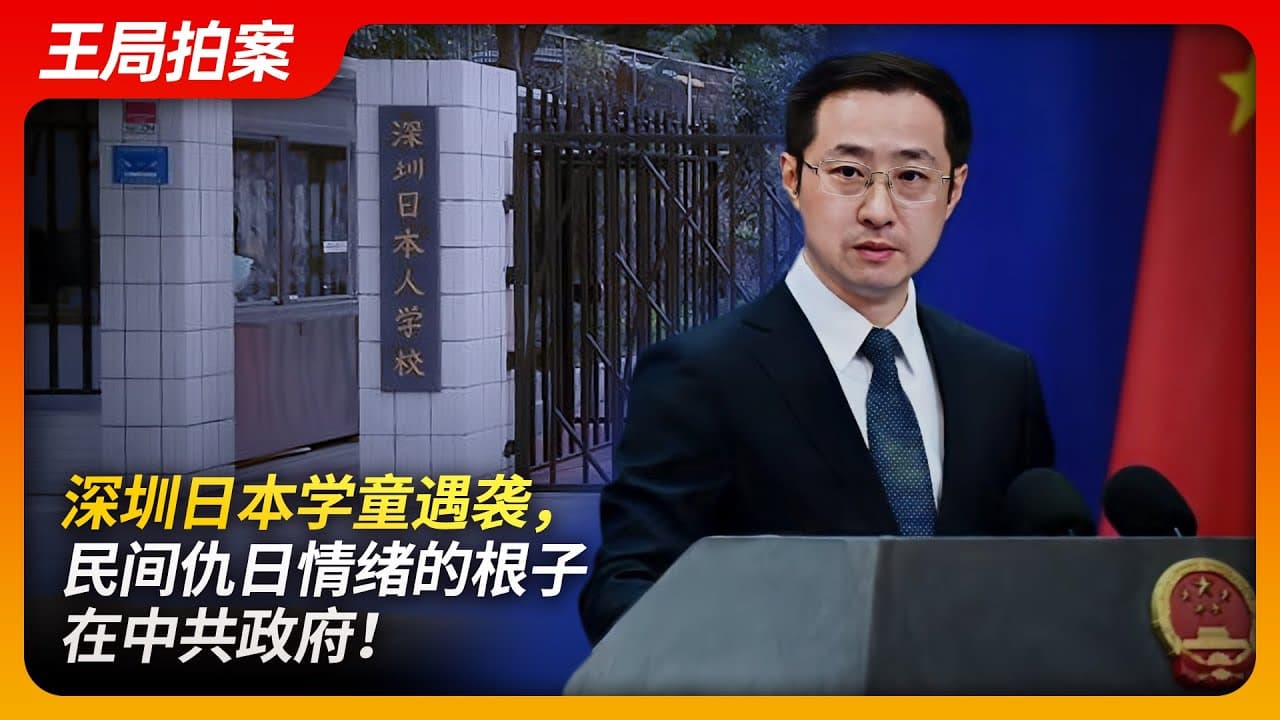
On September 18, a 10-year-old Japanese schoolchild was fatally attacked in Shenzhen, China, leading to heightened diplomatic tensions between China and Japan. The incident has raised concerns about growing anti-Japanese sentiment and transparency issues, with Japan demanding more information and assurances about the safety of its nationals in China.
Transcript
Yesterday, September 18, the National Humiliation Day, yesterday morning at 8 o'clock A student from the Japanese school in Shenzhen was going to school with their classmate When they were just 200 meters away from the school, they were suddenly attacked by an assailant with a knife The police arrived at the scene and arrested the suspect, ... Read More
Key Insights
- A Japanese schoolchild was attacked in Shenzhen on National Humiliation Day, raising diplomatic concerns between China and Japan.
- The attack has been linked to growing anti-Japanese sentiment in China, fueled by historical and territorial disputes.
- China's handling of the case has been criticized for lack of transparency, with minimal information shared with Japan.
- The incident has prompted discussions on the deteriorating China-Japan relations, which are influenced by broader geopolitical dynamics.
- Historical issues, such as visits to the Yasukuni Shrine and the Diaoyu Islands dispute, are seen as surface-level tensions masking deeper strategic conflicts.
- China's pragmatic approach to international relations is seen as prioritizing short-term gains over long-term diplomatic values.
- The incident has led to increased security measures at Japanese schools in China, though their effectiveness is questioned.
- The story of the crested ibis symbolizes past cooperation between China and Japan, highlighting the potential for positive relations.
Install to Summarize YouTube Videos and Get Transcripts
Explore YouTube Video Summarizer or Get YouTube Transcript Extractor
Questions & Answers
Q: What happened to the Japanese schoolchild in Shenzhen?
A Japanese schoolchild was attacked with a knife by a 44-year-old man in Shenzhen while on his way to school. Despite efforts by medical experts, the child succumbed to his injuries. The incident occurred on September 18, coinciding with National Humiliation Day, and has raised concerns about anti-Japanese sentiment.
Q: How has China responded to the incident?
China's response to the incident has been criticized for its lack of transparency. The police briefing provided minimal information, omitting details about the attack and the assailant's motive. This has led to demands from Japan for more information and assurances of safety for Japanese nationals in China.
Q: What is the significance of the timing of the attack?
The attack occurred on September 18, known as National Humiliation Day in China, which commemorates the 1931 Mukden Incident that led to Japan's invasion of Manchuria. The timing has led to speculation that the attack was motivated by anti-Japanese sentiment, further straining diplomatic relations between China and Japan.
Q: How does this incident relate to broader China-Japan relations?
The incident is part of a pattern of tensions between China and Japan, influenced by historical grievances and territorial disputes. While issues like the Diaoyu Islands and visits to the Yasukuni Shrine are often cited, the root cause is seen as strategic competition, particularly in the context of China's rivalry with the U.S.
Q: What measures have been taken to ensure the safety of Japanese nationals in China?
In response to the incident, Japanese schools in China have suspended classes, and Japan's Ministry of Education is considering deploying security guards. However, the effectiveness of increased security measures is questioned, as attacks targeting ordinary people are difficult to prevent through such means alone.
Q: What historical context influences current China-Japan relations?
China-Japan relations are influenced by historical issues such as the Diaoyu Islands dispute and visits to the Yasukuni Shrine. However, these are seen as surface-level tensions, with the real conflict rooted in geopolitical dynamics and China's strategic competition with the U.S., affecting its relations with Japan.
Q: What is the role of anti-Japanese sentiment in this incident?
Anti-Japanese sentiment in China, driven by historical grievances and propaganda, is seen as a contributing factor to the attack. The incident reflects the growing tensions between the two countries, with public sentiment influenced by government narratives and broader geopolitical conflicts.
Q: How can China and Japan improve their diplomatic relations?
Improving China-Japan relations requires a strategic approach that transcends short-term interests and focuses on long-term diplomatic values. Reciprocal visits by heads of state and a commitment to dialogue and consultation can help address underlying tensions and promote mutual understanding and cooperation.
Summary & Key Takeaways
-
A Japanese schoolchild was fatally attacked in Shenzhen, China, on National Humiliation Day, leading to diplomatic tensions between China and Japan. The attack is seen as part of a pattern of incidents targeting foreigners, raising concerns about anti-Japanese sentiment.
-
The case has been criticized for lack of transparency, with Chinese authorities providing minimal information. This has led to demands from Japan for more details and assurances of safety for Japanese nationals in China.
-
The incident has sparked discussions on the broader state of China-Japan relations, which are influenced by historical grievances and geopolitical dynamics. The story of the crested ibis serves as a reminder of the potential for positive cooperation between the two countries.
Read in Other Languages (beta)
Share This Summary 📚
Summarize YouTube Videos and Get Video Transcripts with 1-Click
Try YouTube Summary with ChatGPT & Claude or YouTube Transcript Generator
Explore More Summaries from 王志安 📚



Summarize YouTube Videos and Get Video Transcripts with 1-Click
Try YouTube Summary with ChatGPT & Claude or YouTube Transcript Generator