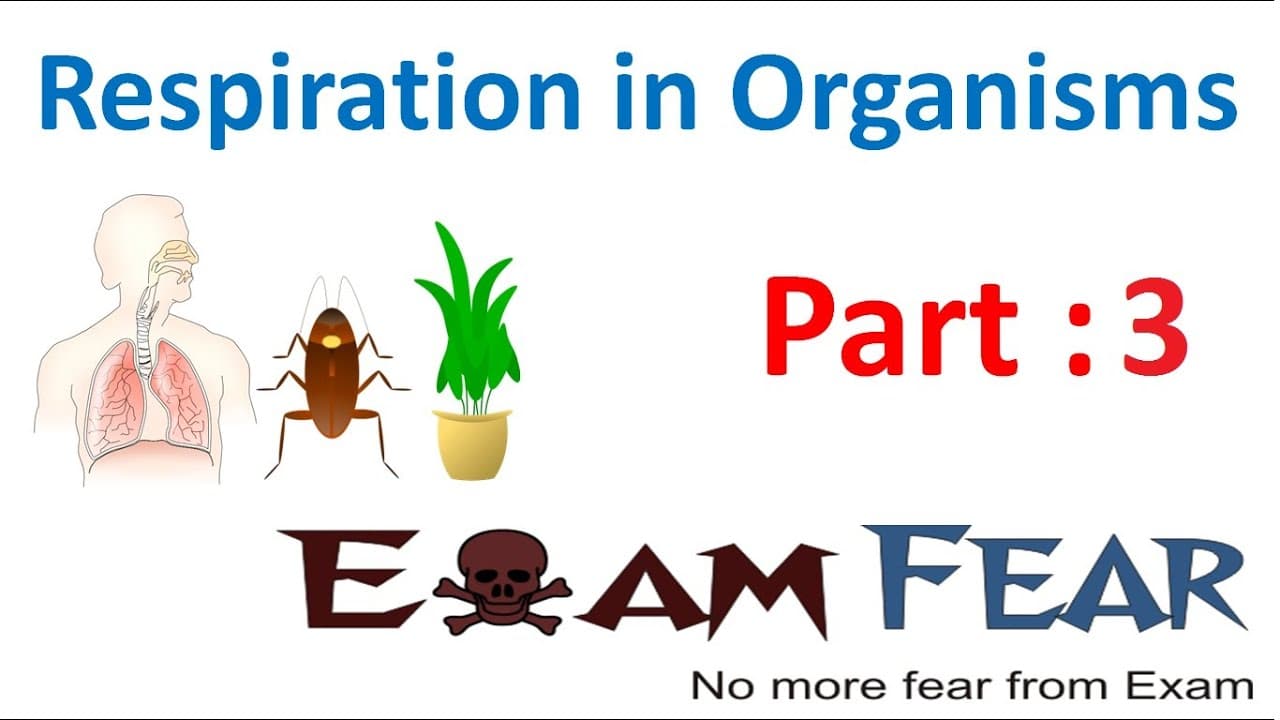
Biology Respiration in Organisms Part 3 (Aerobic Respiration) Class 7 VII
TL;DR
Respiration in organisms can occur in two ways: aerobic, which requires oxygen, and anaerobic, which occurs in the absence of oxygen.
Transcript
hello friends this video on respiration in organisms part three is brought to you by example.com no more fear from exam so now that we have got an idea about what is respiration let us look at the various types of respiration so there are broadly two types of respiration aerobic respiration and an aerobic respiration so what do you think can be aer... Read More
Key Insights
- 🅰️ There are two main types of respiration in organisms: aerobic respiration and anaerobic respiration.
- ❓ Aerobic respiration requires oxygen, while anaerobic respiration occurs without oxygen.
- ❓ Facultative anaerobes can respire in both the presence and absence of oxygen, while obligate anaerobes can only respire in the absence of oxygen.
- 💦 Aerobic respiration involves the complete breakdown of glucose into carbon dioxide, water, and energy stored in ATP molecules.
- 🍉 Anaerobic respiration is less efficient than aerobic respiration in terms of energy production.
- 🥦 Examples of facultative anaerobes include E. coli bacteria, while obligate anaerobes like Clostridium tetani can cause diseases like tetanus.
- ❓ Without respiration and energy production, organisms cannot survive.
Install to Summarize YouTube Videos and Get Transcripts
Explore YouTube Video Summarizer or Get YouTube Transcript Extractor
Questions & Answers
Q: What are the two types of respiration in organisms?
The two types of respiration in organisms are aerobic respiration, which requires oxygen, and anaerobic respiration, which occurs in the absence of oxygen.
Q: Can organisms respire without oxygen?
Yes, some organisms can undergo anaerobic respiration, where respiration occurs without the presence of oxygen.
Q: What is the difference between facultative anaerobes and obligate anaerobes?
Facultative anaerobes are capable of respiration in both the presence and absence of oxygen, while obligate anaerobes can only respire in the absence of oxygen.
Q: Why is oxygen necessary for aerobic respiration?
Oxygen is needed for the oxidation of food during aerobic respiration, which ultimately produces energy for the organism.
Summary & Key Takeaways
-
Respiration in organisms can be classified into two types: aerobic respiration, which requires oxygen, and anaerobic respiration, which occurs without oxygen.
-
Some organisms, like humans, undergo aerobic respiration, where oxygen is needed for the oxidation of food to produce energy.
-
Anaerobic respiration can be further categorized into facultative anaerobes, which can respire in both the presence and absence of oxygen, and obligate anaerobes, which can only respire in the absence of oxygen.
Read in Other Languages (beta)
Share This Summary 📚
Summarize YouTube Videos and Get Video Transcripts with 1-Click
Try YouTube Summary with ChatGPT & Claude or YouTube Transcript Generator
Explore More Summaries from LearnoHub - Class 11, 12 📚




Summarize YouTube Videos and Get Video Transcripts with 1-Click
Try YouTube Summary with ChatGPT & Claude or YouTube Transcript Generator