How Does Acetoacetic Ester Synthesis Create Ketones?
TL;DR
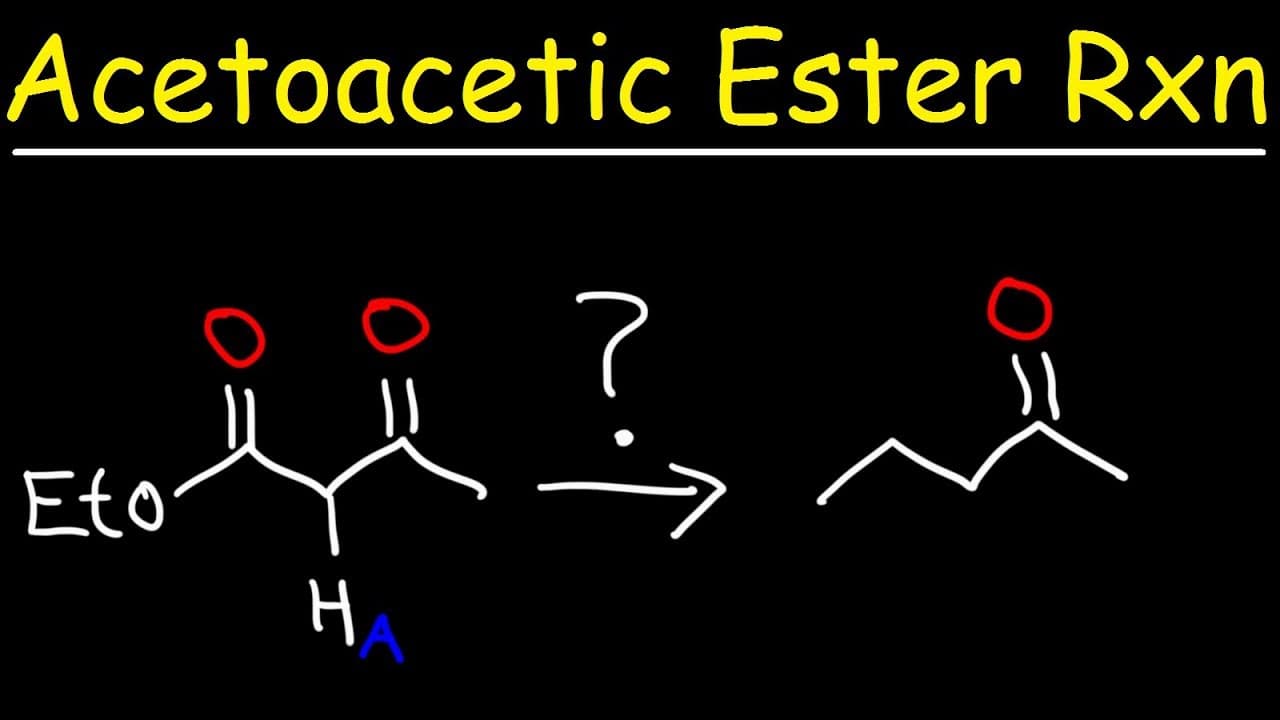
The acetoacetic ester synthesis transforms ethyl acetoacetate into ketones through a series of steps: deprotonation, alkylation with an alkyl halide, acidification to convert to a carboxylic acid, and decarboxylation with heat. This method allows for the production of various ketones by modifying alkyl groups on the alpha carbon.
Transcript
in this lesson we're going to go over the acetoacetic ester synthesis reaction and so in this case we have this molecule ethyl acetoacetate or ethyl acetoacetate and we're going to react it with ethoxide now i don't know if you saw the last video in my playlist it was entitled the melonic ester synthesis reaction and the melonic ester is used to cr... Read More
Key Insights
- 🇪🇭 The acetoacetic ester synthesis reaction is similar to the melonic ester synthesis reaction, but it produces ketones instead of carboxylic acids.
- ❓ The reaction involves multiple steps, including deprotonation, alkylation, acidification, and decarboxylation.
- 👻 The addition of different alkyl groups allows for the synthesis of various types of ketones.
- 🥵 Sodium ethoxide is used as a base in the reaction, and heat is necessary to facilitate decarboxylation.
- 👥 The alpha carbon of the ketone product is where the alkyl groups are attached.
Install to Summarize YouTube Videos and Get Transcripts
Explore YouTube Video Summarizer or Get YouTube Transcript Extractor
Questions & Answers
Q: What is the purpose of the acetoacetic ester synthesis reaction?
The acetoacetic ester synthesis reaction is used to produce ketones from ethyl acetoacetate, allowing for the synthesis of various ketone compounds.
Q: How does the reaction proceed in the first step?
In the first step, the alpha hydrogen of the ethyl acetoacetate molecule is removed through deprotonation, resulting in the formation of a negatively charged carbon atom.
Q: What happens in the alkylation step of the mechanism?
The negatively charged carbon atom reacts with an alkyl halide, such as ethyl bromide, resulting in the addition of the alkyl group to the carbon chain.
Q: Why is heat applied in the last step of the reaction?
Heating the solution promotes decarboxylation, causing the loss of the carboxylic acid moiety and leaving behind the desired ketone product.
Summary & Key Takeaways
-
The acetoacetic ester synthesis reaction involves reacting ethyl acetoacetate with ethoxide, followed by the addition of an alkyl halide, conversion into a carboxylic acid, and then decarboxylation to obtain a ketone.
-
The reaction can be used to make ketones with one or two alkyl groups attached to the alpha carbon.
-
The mechanism of the reaction includes deprotonation, alkylation, and acidification steps.
-
Heat is applied in the final step to promote decarboxylation and achieve the desired ketone product.
Read in Other Languages (beta)
Share This Summary 📚
Summarize YouTube Videos and Get Video Transcripts with 1-Click
Try YouTube Summary with ChatGPT & Claude or YouTube Transcript Generator
Explore More Summaries from The Organic Chemistry Tutor 📚






Summarize YouTube Videos and Get Video Transcripts with 1-Click
Try YouTube Summary with ChatGPT & Claude or YouTube Transcript Generator