Connecting f, f', and f'' graphically | AP Calculus AB | Khan Academy
TL;DR
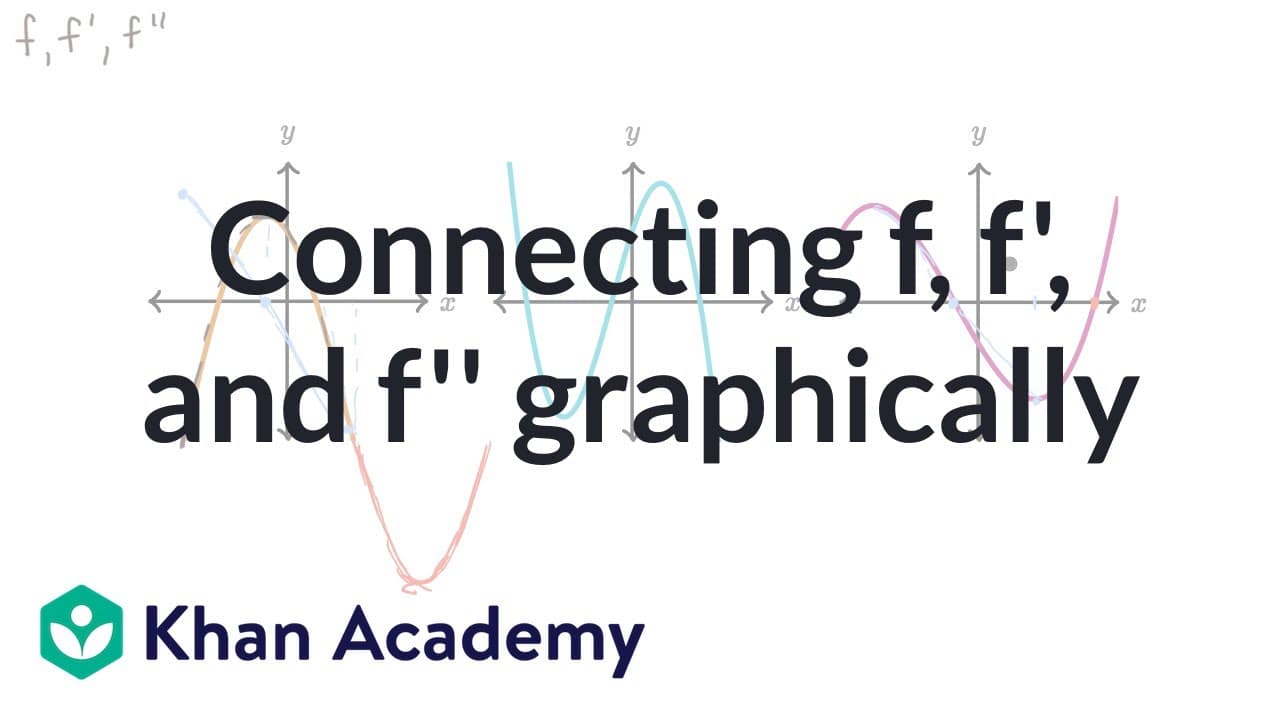
Analyzing three graphs of functions and their derivatives to determine which graph represents the original function, first derivative, and second derivative.
Transcript
- [Instructor] We have the graphs of three functions here, and what we know is that one of them is the function f, another is the first derivative of f, and then the third is the second derivative of f. And our goal is to figure out which function is which. Which one is f, which is the first derivative, and which is the second? Like always, pause t... Read More
Key Insights
- 💁 Analyzing the slopes of graphs can provide information about the behavior of functions and their derivatives.
- 📈 The derivative of a function should have a trend opposite to that of the original function.
- 👈 The intersection of a graph with the x-axis can indicate key points for determining the derivative.
Install to Summarize YouTube Videos and Get Transcripts
Explore YouTube Video Summarizer or Get YouTube Transcript Extractor
Questions & Answers
Q: How can we determine which graph represents the original function?
By analyzing the slopes of the graphs, we can observe that the first graph (orange) starts positively, reaches zero at the x-axis, and then becomes increasingly negative, indicating it is the original function.
Q: How do we know that the second graph (blue) is not the derivative of the first graph?
The second graph has an opposite trend, going from negative to positive, while the derivative of the original function should go from positive to negative. Thus, we can rule out the blue graph as the derivative.
Q: Why might the third graph (magenta) be the derivative of the first graph?
The magenta graph intersects the x-axis and is positive when the tangent line slope is positive, matching the behavior expected of the derivative. Though its additional extreme points seem unusual, it could be due to the unseen parts of the original function.
Q: How can we determine the second derivative of the original function?
The second derivative would be the derivative of the first derivative. By observing the slopes of the magenta graph, we can sketch the behavior of the second derivative, which would start with a positive slope, reach zero, and then become negative.
Summary & Key Takeaways
-
The first graph (orange) represents the original function, starting with a positive slope, crossing the x-axis with a zero slope, and then becoming increasingly negative.
-
The second graph (blue) does not represent the derivative of the first graph as its trend is opposite, going from negative to positive.
-
The third graph (magenta) has the correct trend, intersecting the x-axis at the right point, and is positive when the tangent line slope is positive, making it a potential candidate for the first derivative.
Read in Other Languages (beta)
Share This Summary 📚
Summarize YouTube Videos and Get Video Transcripts with 1-Click
Try YouTube Summary with ChatGPT & Claude or YouTube Transcript Generator
Explore More Summaries from Khan Academy 📚





Summarize YouTube Videos and Get Video Transcripts with 1-Click
Try YouTube Summary with ChatGPT & Claude or YouTube Transcript Generator