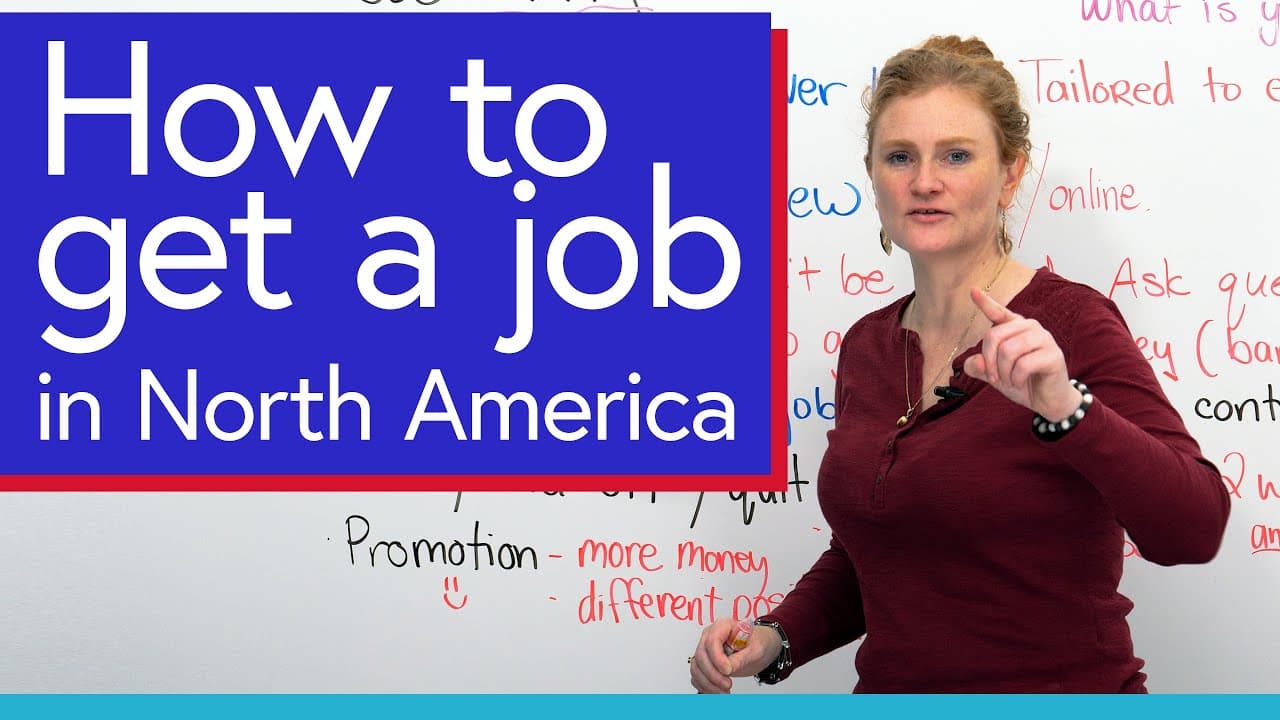
How to GET A JOB in North America
TL;DR
Learn essential tips and vocabulary for finding and securing a job in Canada and North America.
Transcript
Duh duh duh, duh duh duh, duh duh duh, I'm hunting for a job, duh duh duh duh duh. Job hunting. Welcome, my name's Ronnie. I'm going to teach you some things about getting a job in Canada, North America. Hopefully you get a job. Good luck. But there are some things that you need to know before you get your wonderful job, and I'm not talking about a... Read More
Key Insights
- ❓ "Career" and "major" have different meanings in English.
- 💌 Resumes and cover letters are crucial elements in the job application process.
- 🛟 Preliminary interviews serve as a screening process for employers.
- ✋ Negotiating for higher salaries and benefits is possible during the interview stage.
- 🗯️ Understanding your rights as an employee can protect you from wrongful dismissal.
- 🥺 Promotions can lead to increased responsibilities and higher pay.
- ❓ The importance of understanding contracts and seeking legal assistance when necessary.
Install to Summarize YouTube Videos and Get Transcripts
Explore YouTube Video Summarizer or Get YouTube Transcript Extractor
Questions & Answers
Q: What is the difference between a career and a major?
In English, a career refers to one's job, while a major is the field of study in university or college.
Q: What should I include in my resume?
Your resume should highlight your work experience and education. It is not necessary to include a picture of yourself in a resume in Canada and America.
Q: How can I tailor my resume for a specific job?
To tailor your resume, only include relevant information that is applicable to the job you are applying for. Omit unrelated work experiences or skills.
Q: What is a preliminary interview?
A preliminary interview is an initial assessment conducted via phone or online, aimed at checking the candidate's suitability for the job and determining whether to proceed with further interviews.
Q: How can I negotiate for a higher salary?
During the interview process, it is acceptable to ask about the salary and negotiate for a higher rate based on your qualifications and experience.
Q: What should I do if I don't like my job?
If you are unhappy with your job, you have the option to quit. However, if you have been fired or laid off, make sure you are aware of your rights, such as termination pay and vacation pay.
Summary & Key Takeaways
-
The term "career" in English refers to one's job, not what they studied in university or college, which is referred to as a major.
-
Preparing a resume, also known as a CV, is crucial when applying for jobs in Canada and America, and a well-written cover letter can help make a good impression.
-
Preliminary interviews help employers assess candidates and potentially weed out unsuitable applicants, and subsequent interviews provide opportunities for further evaluation and negotiation.
Read in Other Languages (beta)
Share This Summary 📚
Summarize YouTube Videos and Get Video Transcripts with 1-Click
Try YouTube Summary with ChatGPT & Claude or YouTube Transcript Generator
Explore More Summaries from English with Ronnie · EnglishLessons4U with engVid 📚






Summarize YouTube Videos and Get Video Transcripts with 1-Click
Try YouTube Summary with ChatGPT & Claude or YouTube Transcript Generator