How Brexit could create a crisis at the Irish border
TL;DR
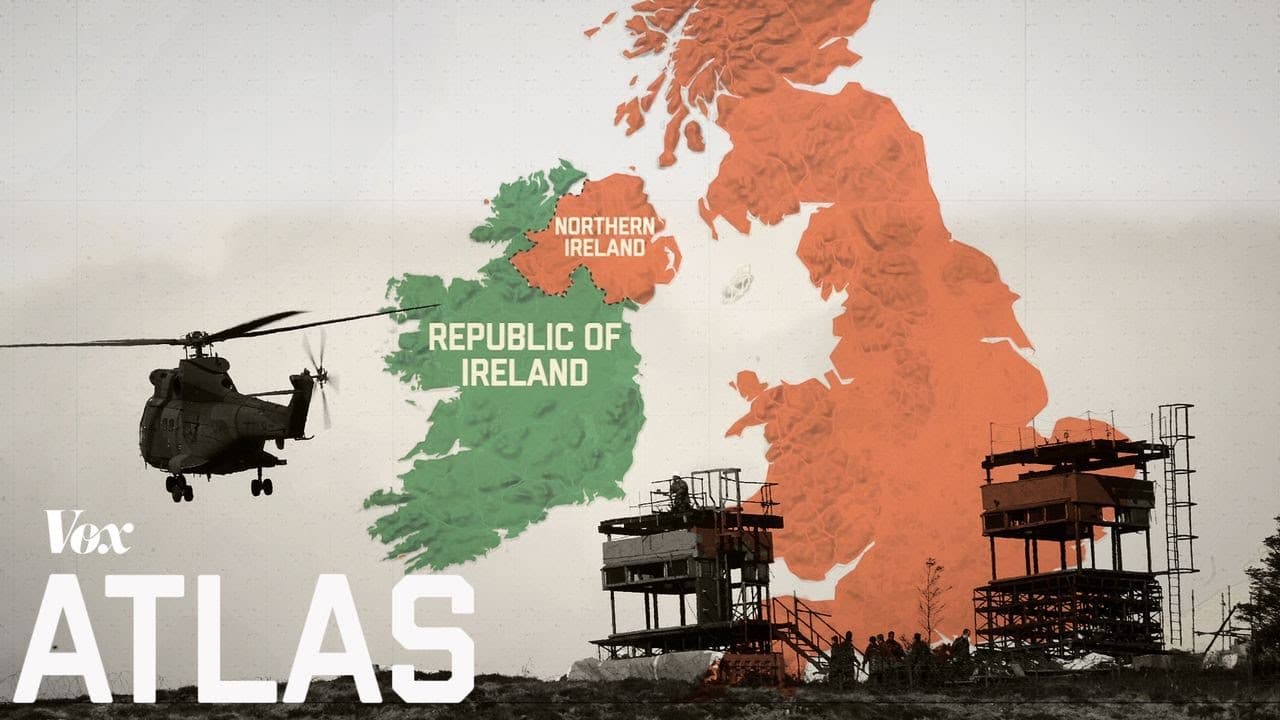
Brexit complicates the open Irish border, risking peace agreements.
Transcript
As part of the European Union, the United Kingdom's borders have been relatively open for years. Trade's carried out freely with other member countries and people coming through only need to show their EU passport. But in June 2016, the UK voted to leave the EU so that it could reassert control on its own borders - and decide who and what it wanted... Read More
Key Insights
- The UK's decision to leave the EU has complicated the status of the Irish border, which is crucial for maintaining peace in Northern Ireland.
- The border between Northern Ireland and the Republic of Ireland symbolizes a compromise that ended decades of conflict known as The Troubles.
- Imposing a hard border could violate the Good Friday Agreement, which has kept peace for over 20 years.
- Brexit negotiations have stalled due to the challenge of deciding where to place the border without isolating Nationalists or betraying Unionists.
- Reunification with the Republic of Ireland could be a potential solution, but it lacks unanimous support among Northern Ireland's population.
- The Good Friday Agreement allows Northern Ireland to be part of both the UK and the Republic of Ireland, maintaining an open border.
- The potential re-establishment of a hard border could reignite tensions and disrupt the fragile peace maintained since 1998.
- Brexit has shifted some public opinion in Northern Ireland, with a notable percentage now considering reunification with the Republic of Ireland.
Install to Summarize YouTube Videos and Get Transcripts
Explore YouTube Video Summarizer or Get YouTube Transcript Extractor
Questions & Answers
Q: What is the significance of the Irish border in the context of Brexit?
The Irish border is significant in the context of Brexit because it represents a compromise that ended decades of conflict in Northern Ireland. The open border is crucial for maintaining peace, as it allows for free movement and trade between Northern Ireland and the Republic of Ireland. Brexit threatens to impose a hard border, which could disrupt this delicate balance and reignite tensions.
Q: How did the Good Friday Agreement impact the Irish border?
The Good Friday Agreement, signed in 1998, significantly impacted the Irish border by allowing it to remain open, symbolizing peace and cooperation between Nationalists and Unionists. It ended decades of conflict known as The Troubles by enabling people in Northern Ireland to hold dual citizenship and ensuring that border controls were unnecessary. Brexit challenges this arrangement by necessitating border control, which could undermine the agreement's success.
Q: What are the potential consequences of a hard border between Northern Ireland and the Republic of Ireland?
A hard border between Northern Ireland and the Republic of Ireland could have severe consequences, including violating the Good Friday Agreement, disrupting trade, and isolating communities. It could reignite tensions between Nationalists and Unionists, potentially leading to renewed conflict. Economically, it would complicate trade and movement, affecting daily life and business operations across the border.
Q: What are the possible solutions to the Irish border issue post-Brexit?
Possible solutions to the Irish border issue post-Brexit include maintaining the open border by keeping Northern Ireland in the EU Customs Union, imposing a hard border, or considering reunification with the Republic of Ireland. Each option has significant political implications: maintaining the open border might not satisfy Brexiters, a hard border risks violating the Good Friday Agreement, and reunification lacks unanimous support.
Q: How has public opinion in Northern Ireland shifted regarding reunification with the Republic of Ireland?
Public opinion in Northern Ireland has shifted somewhat regarding reunification with the Republic of Ireland, especially in the context of Brexit. A recent poll indicates that 28% of respondents who previously supported Northern Ireland's place in the UK would now vote for reunification. This shift suggests that Brexit has altered perspectives, as reunification could be a way for Northern Ireland to remain in the EU.
Q: Why is the Irish border a critical issue in Brexit negotiations?
The Irish border is a critical issue in Brexit negotiations because it involves complex historical, political, and social factors. The border's status is crucial for maintaining the peace established by the Good Friday Agreement. Any changes could disrupt this peace, affect trade, and alter the relationship between Northern Ireland and the Republic of Ireland. The challenge lies in finding a solution that satisfies all parties involved.
Q: What historical events led to the current status of the Irish border?
The current status of the Irish border stems from a history of conflict and compromise. The border was first drawn in 1920, dividing the island into two parts. Decades of violence, known as The Troubles, ensued between Nationalists and Unionists. The Good Friday Agreement in 1998 ended the conflict by allowing an open border, symbolizing peace and cooperation. Brexit threatens to alter this fragile status quo.
Q: How does Brexit challenge the Good Friday Agreement?
Brexit challenges the Good Friday Agreement by potentially necessitating a hard border between Northern Ireland and the Republic of Ireland. The agreement allowed for an open border, crucial for peace and cooperation. A hard border could violate the agreement, reignite tensions, and disrupt trade and daily life. Finding a solution that respects the agreement while satisfying Brexit objectives is a significant challenge in negotiations.
Summary & Key Takeaways
-
The Irish border issue is a major sticking point in Brexit negotiations, as it risks undermining the Good Friday Agreement that ended decades of conflict in Northern Ireland. The open border has been crucial for peace, but Brexit threatens to reinstate a hard border, complicating trade and community relations.
-
The Good Friday Agreement allowed for an open border between Northern Ireland and the Republic of Ireland, symbolizing a compromise between Nationalists and Unionists. Brexit challenges this arrangement by necessitating border control, which could isolate Nationalists or betray Unionists, risking renewed conflict.
-
Potential solutions to the Irish border issue include maintaining the open border, imposing a hard border, or even considering reunification with the Republic of Ireland. However, each option has significant political and social implications, making it a complex and unresolved issue in Brexit talks.
Read in Other Languages (beta)
Share This Summary 📚
Summarize YouTube Videos and Get Video Transcripts with 1-Click
Try YouTube Summary with ChatGPT & Claude or YouTube Transcript Generator
Explore More Summaries from Vox 📚

![How did quietness become a sign of quality? [Advertiser content from 3M] thumbnail](/_next/image?url=https%3A%2F%2Fi.ytimg.com%2Fvi%2F4u-7BNRgESI%2Fhqdefault.jpg&w=750&q=75)



Summarize YouTube Videos and Get Video Transcripts with 1-Click
Try YouTube Summary with ChatGPT & Claude or YouTube Transcript Generator