What happens after ISIS falls?
TL;DR
ISIS's fall raises issues of returning fighters and ideological threats.
Transcript
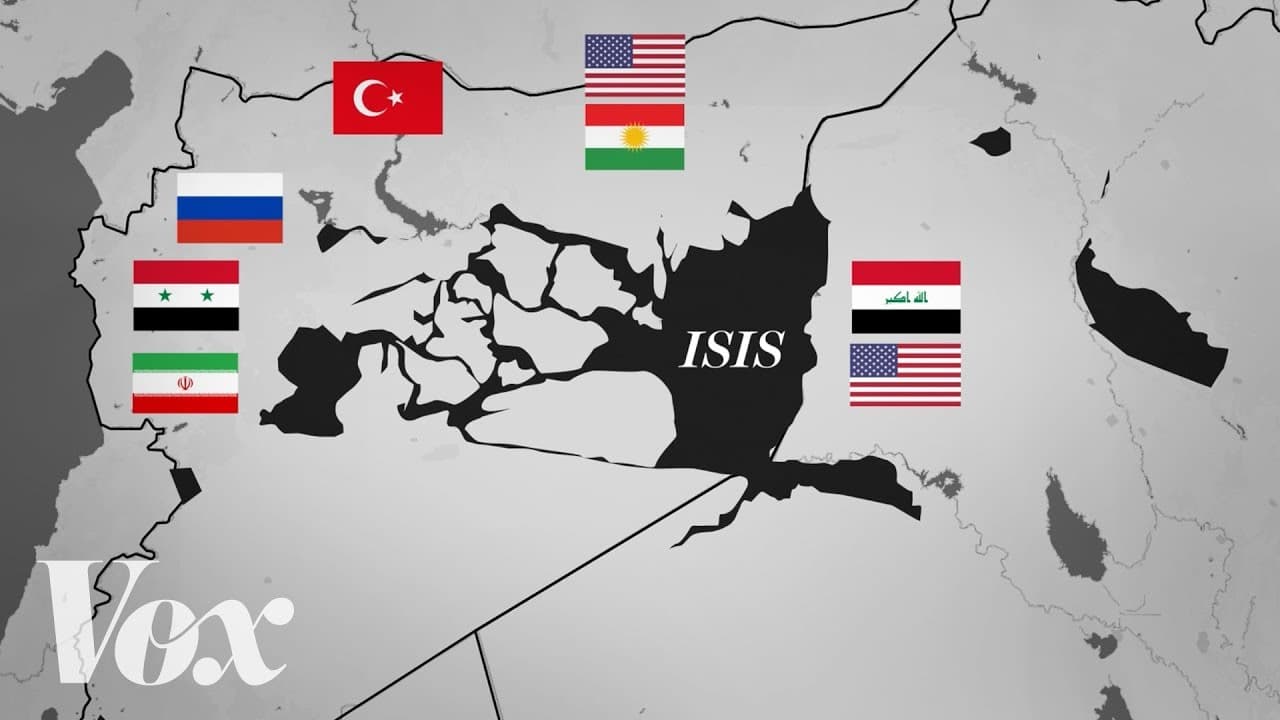
The terrorist group ISIS is losing. At the end of 2014 they claimed a territory the size of Great Britain and a population of 11 million people. But today it's lost about 60% of that and its population is down to about two and a half million. It's the result of fighting its enemies on all sides. To the west and north, ISIS is fighting armed rebel g... Read More
Key Insights
- ISIS's territorial control has significantly diminished, losing about 60% of its territory and reducing its population from 11 million to 2.5 million.
- The loss of Mosul, where ISIS declared its Caliphate, is a symbolic defeat and indicates the potential collapse of the ISIS Caliphate.
- Thousands of foreign fighters joined ISIS from various countries, and their return poses security threats due to their indoctrination and connections.
- The US military faces a dilemma: maintaining troops in Iraq and Syria risks political backlash, while withdrawing could lead to regional instability.
- ISIS is transitioning from a territorial entity to an ideological movement, which makes it harder to combat as it inspires lone-wolf attacks worldwide.
- ISIS's propaganda machine is highly effective, using slickly produced content to radicalize individuals globally, often leading to attacks without direct ISIS involvement.
- Historical parallels are drawn with the 1980s Afghan mujahideen, whose dispersed fighters formed networks that carried out attacks in the West.
- The ideological threat of ISIS persists even after territorial defeat, as defeating an idea is significantly more challenging than defeating a physical entity.
Install to Summarize YouTube Videos and Get Transcripts
Explore YouTube Video Summarizer or Get YouTube Transcript Extractor
Questions & Answers
Q: What is the significance of Mosul's fall for ISIS?
Mosul's fall is highly significant as it was the largest city under ISIS control in Iraq and the site where they declared their Caliphate in 2014. This loss is symbolic, marking the potential collapse of ISIS's territorial claims and signaling a major defeat in their governance aspirations.
Q: Why is the return of foreign fighters a concern?
The return of foreign fighters is concerning because many are indoctrinated and have developed networks capable of organizing and executing attacks. Their return could lead to increased security threats in their home countries, as they may spread extremist ideologies or engage in terrorism.
Q: What challenges does the US face post-ISIS defeat?
Post-ISIS defeat, the US faces the challenge of deciding whether to maintain troops in Iraq and Syria, risking political backlash, or withdraw, potentially leading to regional instability. Both options carry significant risks, including the resurgence of sectarian violence or the rise of new extremist groups.
Q: How has ISIS's strategy shifted after losing territory?
After losing territory, ISIS's strategy has shifted from maintaining a physical Caliphate to promoting an ideological movement. This shift enables them to inspire lone-wolf attacks globally through effective propaganda, making it challenging to combat as it becomes more of an idea than a physical entity.
Q: What role does ISIS propaganda play in its ongoing threat?
ISIS propaganda plays a critical role in its ongoing threat by using slickly produced content to radicalize individuals worldwide. This propaganda is effective in pushing individuals from merely sympathizing with ISIS's ideology to actively participating in attacks, often without direct organizational ties.
Q: How does the fall of ISIS compare to historical events?
The fall of ISIS is comparable to the 1980s Afghan mujahideen, where foreign fighters dispersed and formed networks that conducted attacks in the West. This historical parallel highlights the potential for ISIS fighters to form similar networks, posing long-term security threats even after territorial defeat.
Q: What makes combating ISIS's ideology challenging?
Combating ISIS's ideology is challenging because it is not confined to a physical location and can inspire individuals globally. Unlike a territorial entity, an idea cannot be defeated through military means alone, requiring comprehensive strategies that address the root causes of radicalization.
Q: What are the potential consequences of US troop withdrawal?
Withdrawing US troops could lead to regional instability, as seen in 2011 when the absence of US forces allowed sectarian violence to escalate, contributing to ISIS's rise. The absence of US troops might create a power vacuum that could be exploited by extremist groups, risking further conflict.
Summary & Key Takeaways
-
ISIS's territorial defeat is imminent with the loss of key cities like Mosul, but the aftermath presents challenges such as returning foreign fighters and ideological threats. The US faces difficult decisions regarding troop presence in the region, balancing political promises with security needs.
-
As ISIS transitions from a territorial entity to an ideological movement, it poses a new kind of threat. Its effective propaganda continues to radicalize individuals worldwide, inspiring attacks even without direct organizational ties, complicating efforts to combat terrorism.
-
The fall of ISIS mirrors historical patterns seen with the Afghan mujahideen, where dispersed fighters formed networks that conducted attacks in the West. The challenge now is addressing the ideological appeal of ISIS, which remains potent despite territorial losses.
Read in Other Languages (beta)
Share This Summary 📚
Summarize YouTube Videos and Get Video Transcripts with 1-Click
Try YouTube Summary with ChatGPT & Claude or YouTube Transcript Generator
Explore More Summaries from Vox 📚




Summarize YouTube Videos and Get Video Transcripts with 1-Click
Try YouTube Summary with ChatGPT & Claude or YouTube Transcript Generator