Is Pride and Prejudice Liberal or Conservative?
TL;DR
Pride and Prejudice explores themes of materialism and social hierarchy, questioning whether the novel endorses a conservative or liberal viewpoint. The story highlights the importance of personal happiness, as Elizabeth Bennet chooses her own joy over societal expectations, suggesting a progressive stance on individual rights, especially for women in Regency England.
Transcript
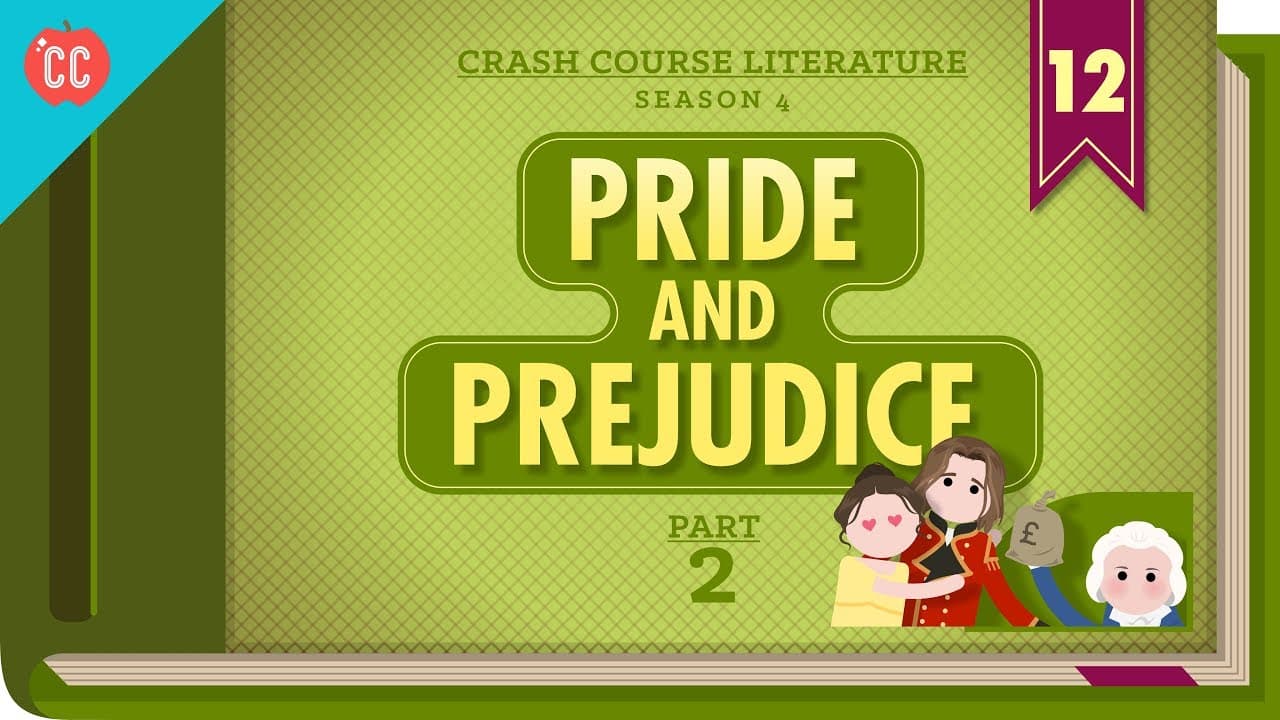
Hi I’m John Green, this is Crash Course Literature. And today we’ll continue our discussion of Jane Austen’s Pride and Prejudice, a book that reads like it was written by your funny and mean best friend, who also happens to be a brilliant novelist and a pretty interesting moral philosopher. / I mean, I love my best friend, but I REALLY wish Jane Au... Read More
Key Insights
- Epistemology is a central theme in Pride and Prejudice, focusing on the limitations of knowledge and the reliability of perception.
- The novel critiques both the wealthy and the poor for their materialism, suggesting that how money is spent is more important than how much one has.
- Elizabeth Bennet's journey is about self-discovery, as she learns to recognize her own prejudices and misunderstandings.
- Austen questions the social hierarchy by portraying characters like Mr. Darcy as both wealthy and morally superior, yet also highlighting the flaws in such assumptions.
- The novel presents a balance between personal happiness and familial duty, with Elizabeth prioritizing her own joy over societal norms.
- Pride and Prejudice can be viewed as both conservative and progressive, affirming traditional social structures while advocating for individual happiness.
- The depiction of Elizabeth's relationship with Mr. Darcy suggests the possibility of change within established systems through mutual understanding and respect.
- Austen's portrayal of money and marriage reflects the complexities of social status and personal fulfillment in Regency England.
Install to Summarize YouTube Videos and Get Transcripts
Explore YouTube Video Summarizer or Get YouTube Transcript Extractor
Questions & Answers
Q: How does Pride and Prejudice address the theme of knowledge?
Pride and Prejudice explores the theme of knowledge through the concept of epistemology, which examines the nature and limits of what characters know. The novel emphasizes how misunderstandings and limited information shape relationships and decisions. Characters often rely on gossip, letters, and observations, highlighting the challenges of discerning truth in a society without modern communication tools.
Q: What role does materialism play in Pride and Prejudice?
Materialism is a significant theme in Pride and Prejudice, where characters' wealth and social status are closely scrutinized. Austen critiques both the wealthy and the less affluent for their materialistic tendencies, suggesting that the way money is spent is more important than its amount. The novel portrays characters like Lady Catherine and Wickham as cautionary examples of materialism's moral pitfalls.
Q: How does Elizabeth Bennet's character develop in the novel?
Elizabeth Bennet's character development is central to Pride and Prejudice. Throughout the novel, she confronts her own prejudices and misconceptions, particularly regarding Mr. Darcy and Mr. Wickham. Her journey of self-awareness leads her to prioritize personal happiness and independence over societal expectations, ultimately choosing a path that aligns with her values and desires.
Q: Is Pride and Prejudice a conservative or liberal novel?
Pride and Prejudice can be interpreted as both conservative and liberal. It reinforces traditional social structures through marriage and wealth, yet it also advocates for individual happiness and personal choice. Elizabeth's defiance of societal norms and her focus on personal fulfillment suggest a progressive stance, especially in the context of women's rights in Regency England.
Q: How does Jane Austen use money to comment on social status?
Jane Austen uses money in Pride and Prejudice to comment on social status and character. The novel meticulously details the financial backgrounds of its characters, illustrating how wealth influences social standing and relationships. However, Austen critiques the moral implications of materialism, showing that true value lies in character and integrity rather than monetary wealth alone.
Q: What is the significance of Pemberley in the novel?
Pemberley, Mr. Darcy's estate, symbolizes wealth, stability, and integrity in Pride and Prejudice. Its description reflects Mr. Darcy's character, as Elizabeth's admiration for the estate parallels her growing affection for him. Pemberley represents the ideal of marrying for both love and financial security, highlighting the novel's exploration of personal happiness and social status.
Q: How does Austen portray social hierarchy in the novel?
Austen portrays social hierarchy in Pride and Prejudice by examining the interactions between characters of different social standings. The novel critiques the rigid class structures of Regency England, illustrating how characters navigate societal expectations. Through Elizabeth and Mr. Darcy's relationship, Austen suggests the potential for personal growth and change within established social systems.
Q: What message does Pride and Prejudice convey about personal happiness?
Pride and Prejudice conveys that personal happiness is a legitimate and important pursuit, even in the face of societal and familial pressures. Elizabeth Bennet embodies this message by prioritizing her own desires and happiness over traditional expectations. The novel argues for individual agency and the right to choose one's path, especially for women, challenging the norms of Regency society.
Summary & Key Takeaways
-
Pride and Prejudice examines the epistemological challenges of knowing oneself and others, highlighting how characters rely on limited information and social cues. Elizabeth Bennet's journey of self-discovery reveals her own prejudices and the importance of personal happiness over societal expectations.
-
The novel critiques materialism across social classes, suggesting that the value of money lies in its use rather than its abundance. Austen satirizes both the wealthy and the less affluent for their obsession with status and possessions.
-
Austen's work navigates the tension between conservative and progressive ideals. While the story reaffirms social hierarchies through marriage and wealth, it also champions individual happiness and personal choice, especially for women, as seen in Elizabeth's defiance of societal norms.
Read in Other Languages (beta)
Share This Summary 📚
Summarize YouTube Videos and Get Video Transcripts with 1-Click
Try YouTube Summary with ChatGPT & Claude or YouTube Transcript Generator
Explore More Summaries from CrashCourse 📚






Summarize YouTube Videos and Get Video Transcripts with 1-Click
Try YouTube Summary with ChatGPT & Claude or YouTube Transcript Generator