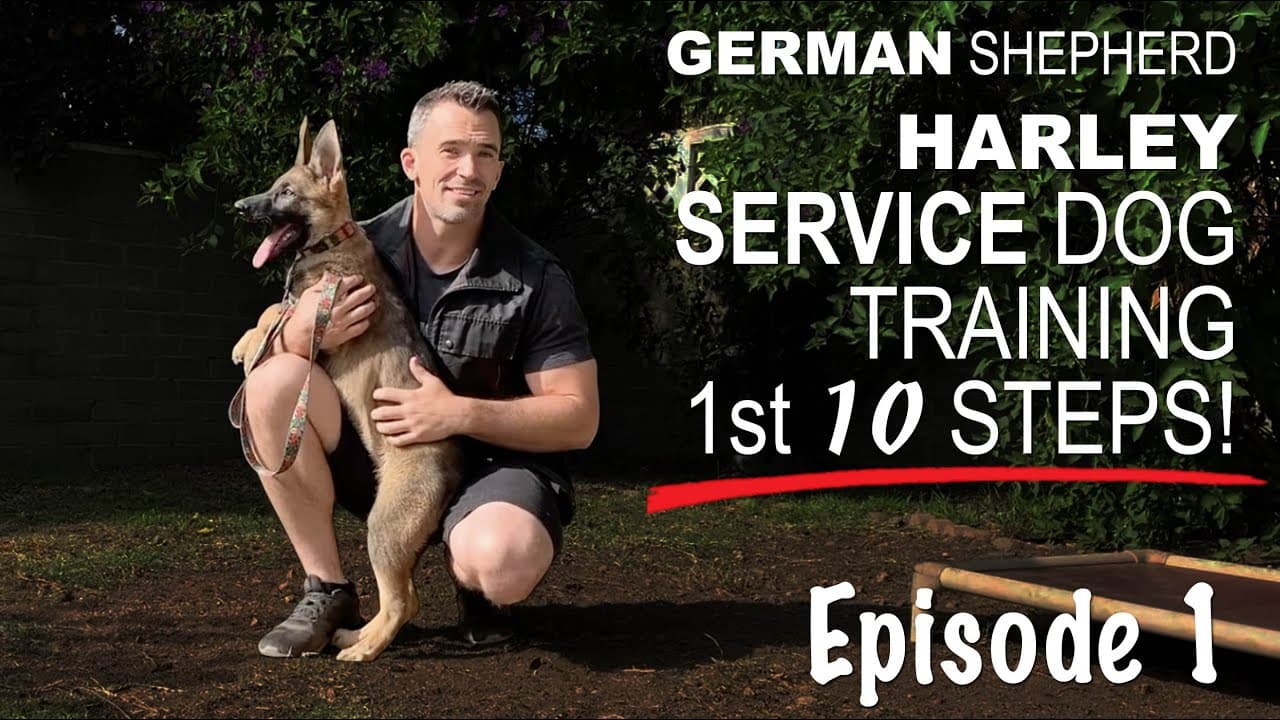
First Ten Steps When Training A Service Dog!
TL;DR
Learn the first steps in training a service dog.
Transcript
hey guys nate shomer here and i have this amazing german shepherd puppy named harley we're going to be training her to be a service dog this is going to be approximately a six to nine month program so one of the first things you want to keep in mind is having the proper training equipment the basics that you want to have as a collar you can have a ... Read More
Key Insights
- Marker training is essential for service dogs, using sounds like 'yes' and 'free' to indicate correct behavior and reward anticipation.
- Luring is a key technique, using food to guide dogs into desired positions such as sit, down, and heel.
- Understanding classical conditioning can enhance training effectiveness, aligning with Pavlov's principles of predictability.
- Engagement and fun are crucial in training, ensuring the dog remains motivated and enjoys the learning process.
- Precision in commands is not paramount for service dogs, but consistency in cues and rewards is vital for effective learning.
- The introduction of verbal commands should follow physical cues, with the goal of the dog responding to verbal cues alone.
- Backward walking and paw placement on objects are exercises that enhance a dog's body awareness and obedience skills.
- Training should be varied and engaging, incorporating multiple commands and ensuring the dog is eager to learn.
Install to Summarize YouTube Videos and Get Transcripts
Explore YouTube Video Summarizer or Get YouTube Transcript Extractor
Questions & Answers
Q: What is the significance of marker training in service dog training?
Marker training is crucial in service dog training as it uses specific sounds to indicate correct behavior and reward anticipation. This method is based on classical conditioning principles, creating a clear communication channel between the trainer and the dog. It helps the dog understand when they have performed a desired action correctly.
Q: How does luring aid in training a service dog?
Luring is a technique that involves using food to guide a dog into desired positions, such as sit, down, or heel. This method is effective in shaping a dog's behavior, making it easier for them to understand and perform the required actions. Luring builds a foundation for more complex commands and behaviors.
Q: Why is engagement and fun important in service dog training?
Engagement and fun are vital in service dog training to keep the dog motivated and eager to learn. Training sessions that are enjoyable ensure that the dog remains interested and willing to participate, which enhances their learning and retention of commands. A positive training environment fosters a strong bond between the dog and trainer.
Q: What role does classical conditioning play in dog training?
Classical conditioning, based on Pavlov's principles, plays a significant role in dog training by establishing predictability. It involves associating a neutral stimulus, like a sound, with a reward, leading to the dog anticipating a reward upon hearing the sound. This method helps in reinforcing desired behaviors and making training more effective.
Q: How are verbal commands introduced in service dog training?
Verbal commands are introduced after a dog consistently responds to physical cues. The verbal command precedes the physical cue, creating a predictable pattern for the dog. The goal is for the dog to eventually respond to the verbal command alone, indicating they have fully understood the behavior associated with the command.
Q: What is the purpose of teaching a dog to walk backwards?
Teaching a dog to walk backwards enhances their rear-end awareness and helps them understand how to use their body in more complex tasks. This exercise is beneficial for service dogs, as it improves their coordination and obedience. It also adds variety to training sessions, keeping the dog engaged and challenged.
Q: Why is precision not the main focus in service dog training?
In service dog training, the primary focus is on consistency and reliability rather than precision. While precise commands are important in competitive obedience, service dogs need to perform tasks consistently and effectively in various situations. The training aims to ensure the dog understands and can execute commands reliably.
Q: How does the training approach ensure the dog enjoys learning?
The training approach ensures the dog enjoys learning by incorporating engaging exercises, positive reinforcement, and a variety of commands. Sessions are designed to be fun and rewarding, preventing boredom and keeping the dog motivated. Ending sessions on a positive note also encourages the dog to look forward to future training.
Summary & Key Takeaways
-
Nate Schomer demonstrates the initial steps in training a German Shepherd puppy named Harley to become a service dog. He emphasizes the importance of marker training, using specific sounds to reinforce correct behavior. The training is designed to be engaging and fun for the dog.
-
Luring is a central technique in the training process, guiding Harley into various positions such as sit, down, and heel using food as a motivator. This approach helps in shaping the dog's behavior and ensuring they understand what is expected of them.
-
The introduction of verbal commands follows the establishment of physical cues, with the ultimate goal of having the dog respond to verbal commands alone. The training is structured to be consistent and enjoyable, promoting a strong bond between the dog and trainer.
Read in Other Languages (beta)
Share This Summary 📚
Summarize YouTube Videos and Get Video Transcripts with 1-Click
Try YouTube Summary with ChatGPT & Claude or YouTube Transcript Generator
Explore More Summaries from Nate Schoemer 📚

Summarize YouTube Videos and Get Video Transcripts with 1-Click
Try YouTube Summary with ChatGPT & Claude or YouTube Transcript Generator