Contract Law 46 III Fleet v US Consumer Council
TL;DR
The unconscionability doctrine in contracts focuses on the fairness of contract terms, requiring both substantive and procedural unfairness for a contract to be voided.
Transcript
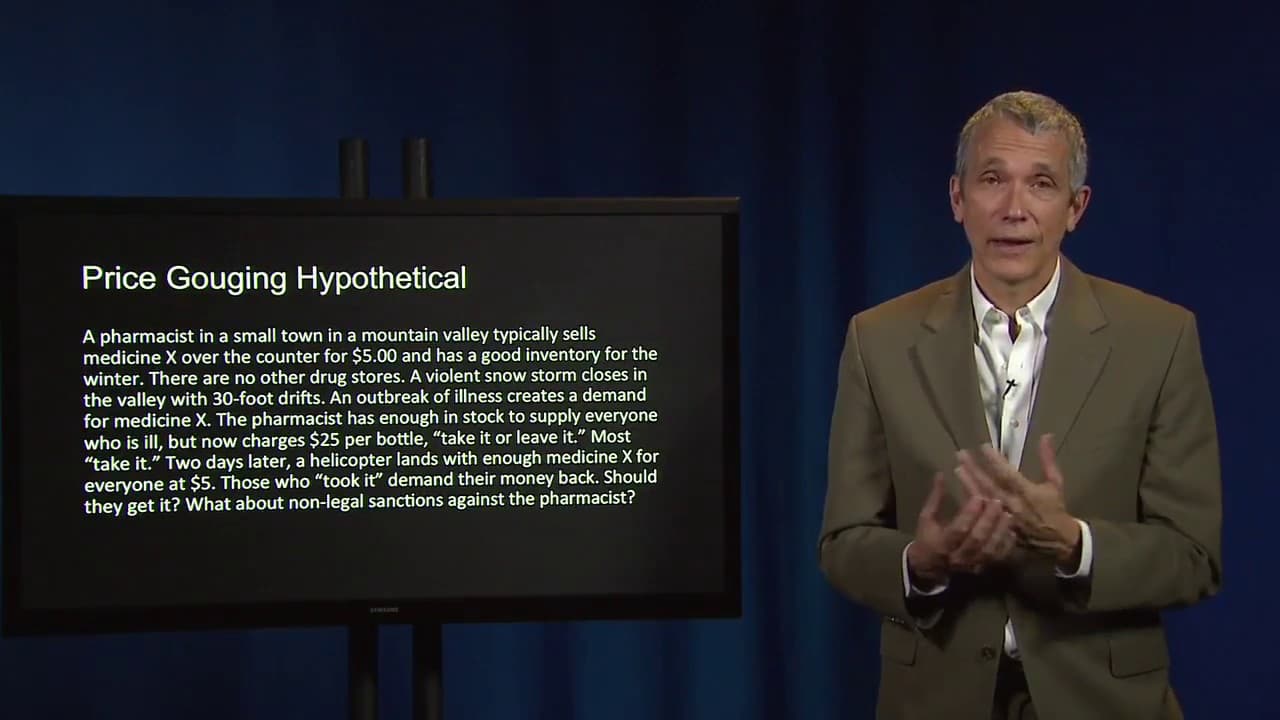
in today's lecture we continue discussing formation defenses while the defense's we've considered to this point have focused on how the contract was formed we now turn our attention to defenses that focus as well on what the contracts say we begin by examining the unconscionability doctrine which in part inquires into the fairness of the contracts ... Read More
Key Insights
- 🍉 The unconscionability doctrine addresses the fairness of contract terms and requires both substantive and procedural defects for a contract to be voided.
- 💁 Courts consider factors like price disparity, exploitation of vulnerable individuals, and flaws in the process of forming the contract when determining unconscionability.
- 💁 The unconscionability doctrine is a formation defense judged at the time of contract formation, unlike the impracticability defense, which concerns post-formation circumstances.
- 🍃 Contracts of adhesion, presented on a take-it-or-leave-it basis, are generally enforceable, but substantial procedural and substantive unconscionability can render them unenforceable.
Install to Summarize YouTube Videos and Get Transcripts
Explore YouTube Video Summarizer or Get YouTube Transcript Extractor
Questions & Answers
Q: What is the unconscionability doctrine in contracts?
The unconscionability doctrine focuses on the fairness of contract terms and allows a party to void the agreement if the terms are seriously unfair, substantively and procedurally.
Q: How does the unconscionability doctrine address the goal of policing the revealed preference inference?
When courts are uncertain if a party's manifestation of consent indicates a value-enhancing contract, a finding of unconscionability aligns with the goal of policing the revealed preference inference, thus allowing the party to void the agreement.
Q: What factors does a court consider when determining unconscionability?
Courts consider factors such as whether the price grossly exceeds the market value of similar services, whether a professional seller exploits vulnerable individuals, and whether there is a procedural defect in the formation process.
Q: Are contracts of adhesion always procedurally unconscionable?
In California, contracts of adhesion are generally considered procedurally unconscionable, but most adhesive contracts are still enforceable unless the substantive terms are severely unfair.
Summary & Key Takeaways
-
The unconscionability doctrine examines the fairness of contract terms and allows a party to void the agreement if the contract is not value-enhancing.
-
A case example, Fleet vs. U.S. Consumer Council, illustrates how courts apply the unconscionability doctrine, finding that charging ill-informed consumers for a service readily available elsewhere is unconscionable.
-
The unconscionability doctrine is a formation defense that considers both substantive unfairness of terms and procedural defects in the process of forming the contract.
Read in Other Languages (beta)
Share This Summary 📚
Summarize YouTube Videos and Get Video Transcripts with 1-Click
Try YouTube Summary with ChatGPT & Claude or YouTube Transcript Generator
Explore More Summaries from YaleCourses 📚

Summarize YouTube Videos and Get Video Transcripts with 1-Click
Try YouTube Summary with ChatGPT & Claude or YouTube Transcript Generator