How to Calculate Maximum Speed for a Car on a Curve
TL;DR
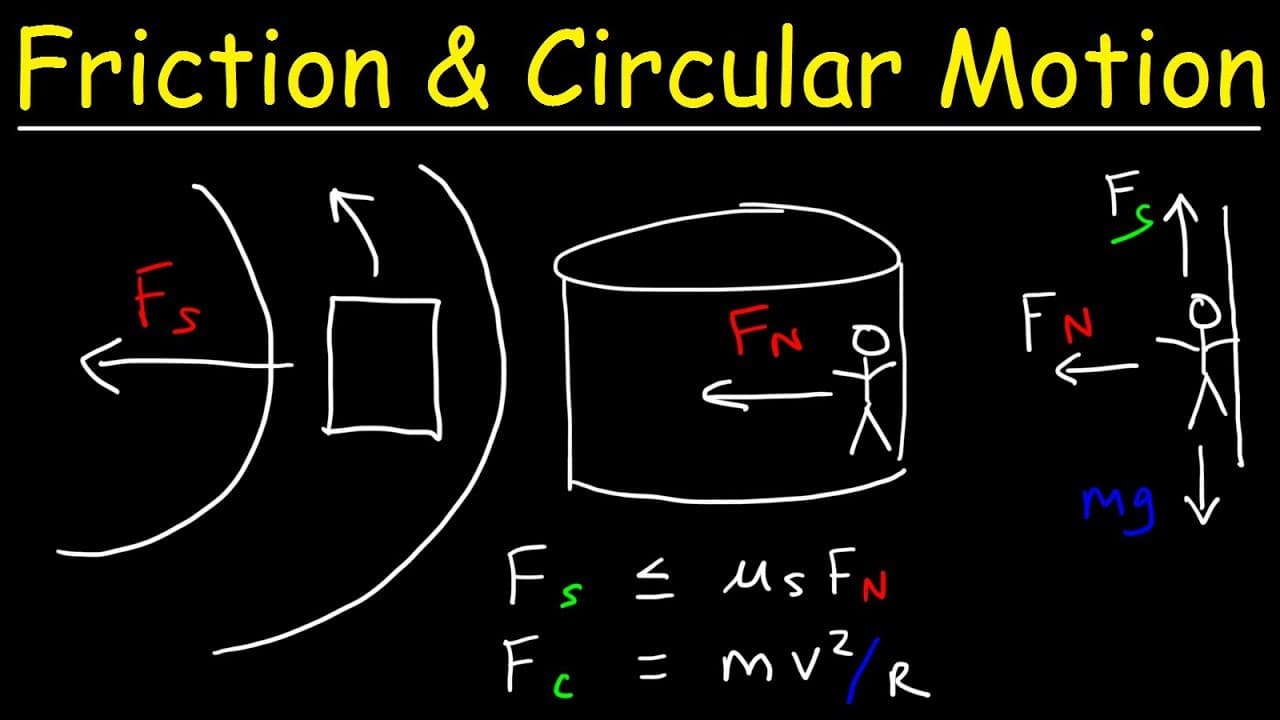
To calculate the maximum speed a car can safely round a turn, use the formula v = √(μs * r * g), where μs is the coefficient of static friction, r is the turn radius, and g is the gravitational acceleration. For example, with a radius of 90 meters and μs of 0.75, the maximum speed is approximately 25.7 m/s.
Transcript
so here's the question for you what is the maximum speed at which a car can safely round a turn of radius 90 meters if the coefficient of static friction is 0.75 so let's say a car is making a circular turn i'm going to draw a box to represent the car so it's going in that direction how can we calculate the coefficient of static friction that allow... Read More
Key Insights
- 😨 The maximum speed a car can safely round a turn is determined by the coefficient of static friction, which provides the centripetal force.
- 🥰 The formula v = √(μs * r * g) is used to calculate the maximum speed based on the coefficient of static friction, radius, and gravity.
- 😨 The maximum speed of a car does not depend on its mass.
- 👾 The coefficient of static friction can be calculated using the formula μs = (rg) / v^2, where μs is the coefficient of static friction, r is the radius of the turn, g is the acceleration due to gravity, and v is the speed of the car.
- 💋 In a rotor ride, static friction prevents people from slipping down by providing the necessary centripetal force to keep them in circular motion.
- 👰♀️ As the speed of a rotor ride increases, the normal force and static friction also increase, ensuring that people do not slide down.
- 🤒 The conversion from rpms to meters per second can be done by calculating the frequency, period, and linear speed of the rotation.
Install to Summarize YouTube Videos and Get Transcripts
Explore YouTube Video Summarizer or Get YouTube Transcript Extractor
Questions & Answers
Q: How can the coefficient of static friction be used to calculate the maximum speed a car can safely round a turn?
The coefficient of static friction is used to determine the maximum speed by providing the centripetal force. The formula to calculate this speed is v = √(μs * r * g), where μs is the coefficient of static friction, r is the radius of the turn, and g is the acceleration due to gravity.
Q: Does the maximum speed of a car depend on its mass?
No, the maximum speed of a car does not depend on its mass. The mass cancels out when calculating the maximum speed, so the result is independent of the car's mass.
Q: How can the coefficient of static friction be determined if the radius and speed of a turn are given?
To calculate the coefficient of static friction, use the formula μs = (rg) / v^2, where μs is the coefficient of static friction, r is the radius of the turn, g is the acceleration due to gravity, and v is the speed of the car.
Q: How does static friction prevent people from slipping down on a rotor ride?
In a rotor ride, the rotation of the ride forces people to move in a circular motion. The normal force exerted by the wall of the ride, combined with static friction, prevents people from sliding down. As the speed increases, the normal force and static friction also increase.
Summary & Key Takeaways
-
The maximum speed a car can safely round a turn is determined by the coefficient of static friction, which provides the centripetal force. The formula to calculate this speed is v = √(μs * r * g).
-
For a given radius and coefficient of static friction, the maximum speed can be calculated using the formula v = √(μs * r * g).
-
In order to prevent people from slipping down when the floor drops in a rotor ride, the minimum coefficient of static friction can be calculated using the formula μs = (rg) / v^2.
Read in Other Languages (beta)
Share This Summary 📚
Summarize YouTube Videos and Get Video Transcripts with 1-Click
Try YouTube Summary with ChatGPT & Claude or YouTube Transcript Generator
Explore More Summaries from The Organic Chemistry Tutor 📚



Summarize YouTube Videos and Get Video Transcripts with 1-Click
Try YouTube Summary with ChatGPT & Claude or YouTube Transcript Generator