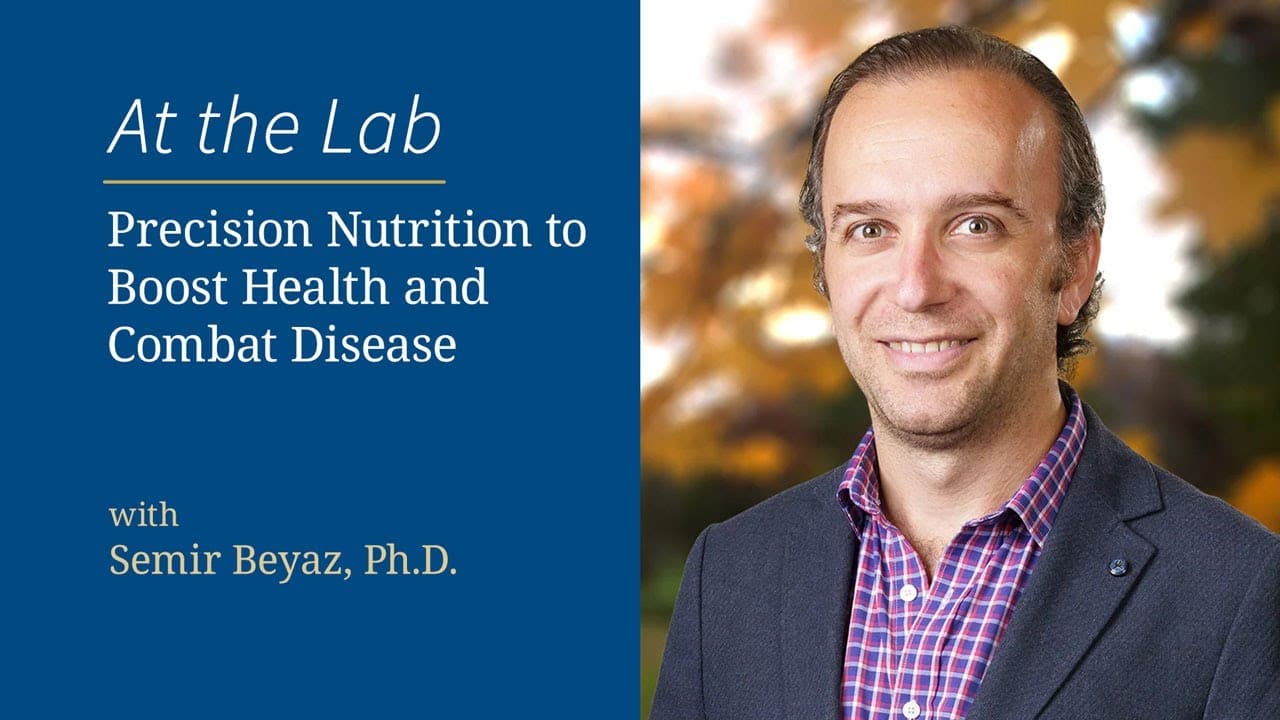
Precision Nutrition to Boost Health and Combat Disease: From Molecules to Whole-Body Physiology
TL;DR
Precision nutrition explores how nutrients influence health and disease.
Transcript
Thank you for the association for having me present the work that I've been doing with my team over the past almost five years now. This is an exciting time to think about nutrition because we are almost there to start answering all the questions that you may have. Tonight, I will give you an outline of what you are going to learn. It may not be th... Read More
Key Insights
- Precision nutrition aims to understand how nutrients affect health and disease, focusing on mechanism-based research rather than one-size-fits-all solutions.
- The evolution of human diets has led to diverse nutritional states, with significant impacts on health, including obesity and malnutrition.
- Nutrients can influence cellular identity and contribute to various disease states, including cancer, cardiovascular disease, and neurological disorders.
- Obesity, driven by high-fat diets, is a significant risk factor for cancer due to the hyperactivity of stem cells influenced by fatty acids.
- Different dietary fats have varying effects on health, with some potentially exacerbating conditions like brain trauma despite common beliefs about their benefits.
- The microbiome is significantly affected by diet, with changes persisting even after dietary adjustments, highlighting the long-term impact of nutrition.
- A comprehensive human biobank allows for the study of nutritional states and pathologies, facilitating the development of targeted dietary regimens for disease prevention and treatment.
- The future of nutrition research lies in defining precise nutrient regimens and developing therapeutics based on mechanistic targets, aiming to improve human health.
Install to Summarize YouTube Videos and Get Transcripts
Explore YouTube Video Summarizer or Get YouTube Transcript Extractor
Questions & Answers
Q: What is the main focus of precision nutrition research?
Precision nutrition research focuses on understanding how specific nutrients affect health and disease mechanisms. It aims to move beyond generalized dietary advice by investigating the molecular and physiological impacts of nutrients on different cells and tissues, ultimately developing targeted dietary regimens to improve health outcomes.
Q: How does obesity contribute to cancer risk according to the presentation?
Obesity contributes to cancer risk through the hyperactivity of stem cells influenced by fatty acids in high-fat diets. These fatty acids activate lipid-sensing factors in the nucleus, reprogramming stem cells and increasing their activity, which can lead to mutations and cancer development. This understanding helps in developing regenerative diet regimens to mitigate such risks.
Q: What role does the microbiome play in nutrition and health?
The microbiome plays a crucial role in nutrition and health by influencing the immune system and metabolic processes. Dietary changes can significantly alter the microbiome, with effects persisting even after dietary adjustments. Understanding these interactions helps in developing targeted nutritional interventions to improve health and prevent diseases.
Q: What are the challenges faced in precision nutrition research?
Precision nutrition research faces challenges due to the complexity of human diets, genetic diversity, and the dynamic nature of organismal metabolism. Understanding how different diets affect cells, tissues, and organs requires advanced models and comprehensive data. Additionally, translating mechanistic insights into practical dietary regimens and therapeutics is a significant challenge.
Q: How does the presentation address the relationship between diet and brain health?
The presentation highlights that dietary components like fish oil can have unexpected effects on brain health, especially in the context of brain injuries. While fish oil is generally considered beneficial, it can exacerbate brain trauma by affecting cellular structures, emphasizing the need for context-specific dietary recommendations and further research into how nutrients impact neurological health.
Q: What is the significance of the human biobank mentioned in the presentation?
The human biobank is significant as it provides a comprehensive collection of samples for studying nutritional states and pathologies like obesity. It facilitates the investigation of the functional consequences of dietary interventions and mechanistic discoveries in a human context, aiding in the development of targeted dietary regimens and improving the understanding of nutrition-related health outcomes.
Q: How does the presentation propose to use nutrients as medicine?
The presentation proposes using nutrients as medicine by defining precise nutrient regimens that modulate human health and mitigate disease. It emphasizes the importance of empirical evidence and mechanistic understanding in developing dietary interventions and therapeutics, aiming to tailor nutrition-based treatments to individual health needs and genetic backgrounds.
Q: What future directions does the presentation suggest for nutrition research?
The presentation suggests that future nutrition research should focus on developing data-driven models to predict causal mediators of health outcomes and consider human genetics and environmental exposures. It emphasizes the need for mechanistic research to identify therapeutic targets and develop biologics independent of nutritional interventions, ultimately aiming to improve human health through precision nutrition.
Summary & Key Takeaways
-
Precision nutrition research focuses on understanding how specific nutrients affect health and disease mechanisms, moving beyond generalized dietary advice. The evolution of human diets has led to diverse nutritional states, with significant impacts on health, such as obesity and malnutrition, influencing various diseases.
-
Obesity, driven by high-fat diets, is a significant risk factor for cancer due to the hyperactivity of stem cells influenced by fatty acids. Research aims to develop regenerative diet regimens to protect against diseases and improve health outcomes, with ongoing efforts to translate findings into clinical trials.
-
The microbiome is significantly impacted by diet, with changes persisting even after dietary adjustments. Precision nutrition research utilizes comprehensive biobanks and advanced models to study the effects of nutrients on cellular and organismal health, aiming to develop targeted therapies and dietary regimens for disease prevention and treatment.
Read in Other Languages (beta)
Share This Summary 📚
Summarize YouTube Videos and Get Video Transcripts with 1-Click
Try YouTube Summary with ChatGPT & Claude or YouTube Transcript Generator
Explore More Summaries from Cold Spring Harbor Laboratory 📚


Summarize YouTube Videos and Get Video Transcripts with 1-Click
Try YouTube Summary with ChatGPT & Claude or YouTube Transcript Generator