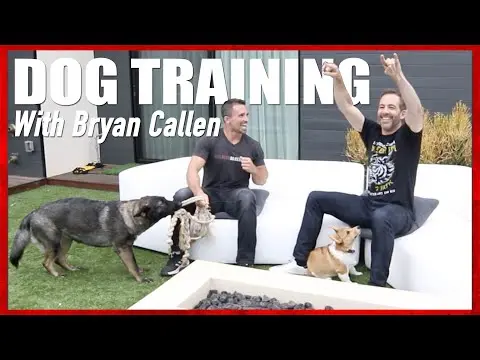
Clicker/Marker Dog Training Analysis and Q&A

TL;DR
Understanding and implementing marker training is crucial for effective dog training.
Transcript
all right well when i was an assistant instructor at the tom rose school one of the biggest factors that separated the students that did very well and would graduate and would go on to continue doing great things within the dog training profession and the ones that did not aside from their work ethic was their ability to understand and properly use... Read More
Key Insights
- Markers in dog training are essential tools that help in predicting rewards, enhancing communication between the trainer and the dog.
- The concept of classical conditioning, introduced by Ivan Pavlov, underscores the importance of predictability in training.
- A primary reinforcer is the actual reward given to the dog, while a conditioned reinforcer is a signal predicting the reward.
- Clickers are effective because they produce a consistent sound that dogs can easily associate with rewards.
- Training should be engaging and enjoyable for dogs to enhance learning and retention of commands.
- The timing of rewards is crucial; trainers have about one second to influence a dog's behavior effectively.
- Engagement training, or loading the markers, is vital for getting dogs to learn quickly and stay focused.
- Training should be tailored to individual dogs, considering their motivation and response to different stimuli.
Install to Summarize YouTube Videos and Get Transcripts
Explore YouTube Video Summarizer or Get YouTube Transcript Extractor
Questions & Answers
Q: What is the significance of markers in dog training?
Markers are critical in dog training as they serve as signals predicting rewards. This helps in establishing clear communication with the dog, making it easier for the dog to understand which behaviors are being reinforced. By associating a specific sound or word with a reward, dogs can quickly learn to repeat desired behaviors.
Q: How does the concept of classical conditioning apply to dog training?
Classical conditioning, introduced by Ivan Pavlov, is foundational in dog training. It involves associating a neutral stimulus with a significant event, like a reward, to create a conditioned response. In dog training, this means using a marker sound or word to predict a reward, helping dogs learn behaviors through predictability and pattern recognition.
Q: Why are clickers considered effective in dog training?
Clickers are effective because they produce a consistent, distinct sound that dogs can easily associate with rewards. Unlike verbal cues, which can vary in tone, a clicker always sounds the same, making it a reliable signal for dogs. This consistency helps in reinforcing behaviors more effectively, facilitating quicker learning.
Q: What role does timing play in dog training?
Timing is crucial in dog training as trainers have approximately one second to influence a dog's behavior effectively. Delivering a marker or reward within this timeframe helps in creating a clear association between the behavior and the consequence, whether it's a reward or a correction, leading to more efficient learning.
Q: How can trainers ensure training is engaging for dogs?
Training should be engaging by keeping sessions short, fun, and varied. Dogs learn better when they are in a positive emotional state, so incorporating games, rewards, and positive reinforcement can keep them motivated and eager to learn. Stopping sessions before the dog becomes bored ensures they remain interested and willing to participate.
Q: What is the difference between a primary and a conditioned reinforcer?
A primary reinforcer is the actual reward given to the dog, such as food or a toy, which directly satisfies a need or desire. A conditioned reinforcer, on the other hand, is a signal, such as a sound or word, that predicts the primary reinforcer. This signal helps in bridging the time gap between the behavior and the delivery of the primary reinforcer.
Q: Can different people train the same dog using their own markers?
Yes, different people can train the same dog using their own markers, but consistency is key. Each trainer should use the same training techniques and ensure their markers are distinct and consistent. Dogs can distinguish between different voices and markers, but having a unified training approach helps in reinforcing behaviors more effectively.
Q: How can trainers address a dog's resource guarding behavior?
To address resource guarding, trainers can use a technique of adding value to the dog's resource. By approaching the dog while they have a resource and offering something of higher value, trainers can change the dog's perception from fearing the removal of the resource to anticipating an addition. This helps in reducing guarding behavior over time.
Summary & Key Takeaways
-
Marker training is a fundamental aspect of dog training that separates successful trainers from others. It involves using signals to predict rewards, enhancing communication with dogs.
-
The episode emphasizes the importance of timing in training, with trainers having about one second to influence a dog's behavior effectively, based on classical conditioning principles.
-
Clickers and verbal markers can be used interchangeably, but consistency is key. Training should be engaging and tailored to individual dogs to ensure effective learning.
Read in Other Languages (beta)
Share This Summary 📚
Summarize YouTube Videos and Get Video Transcripts with 1-Click
Try YouTube Summary with ChatGPT & Claude or YouTube Transcript Generator
Explore More Summaries from Nate Schoemer 📚





Summarize YouTube Videos and Get Video Transcripts with 1-Click
Try YouTube Summary with ChatGPT & Claude or YouTube Transcript Generator