What Are Smart Contracts and Their Benefits?
TL;DR
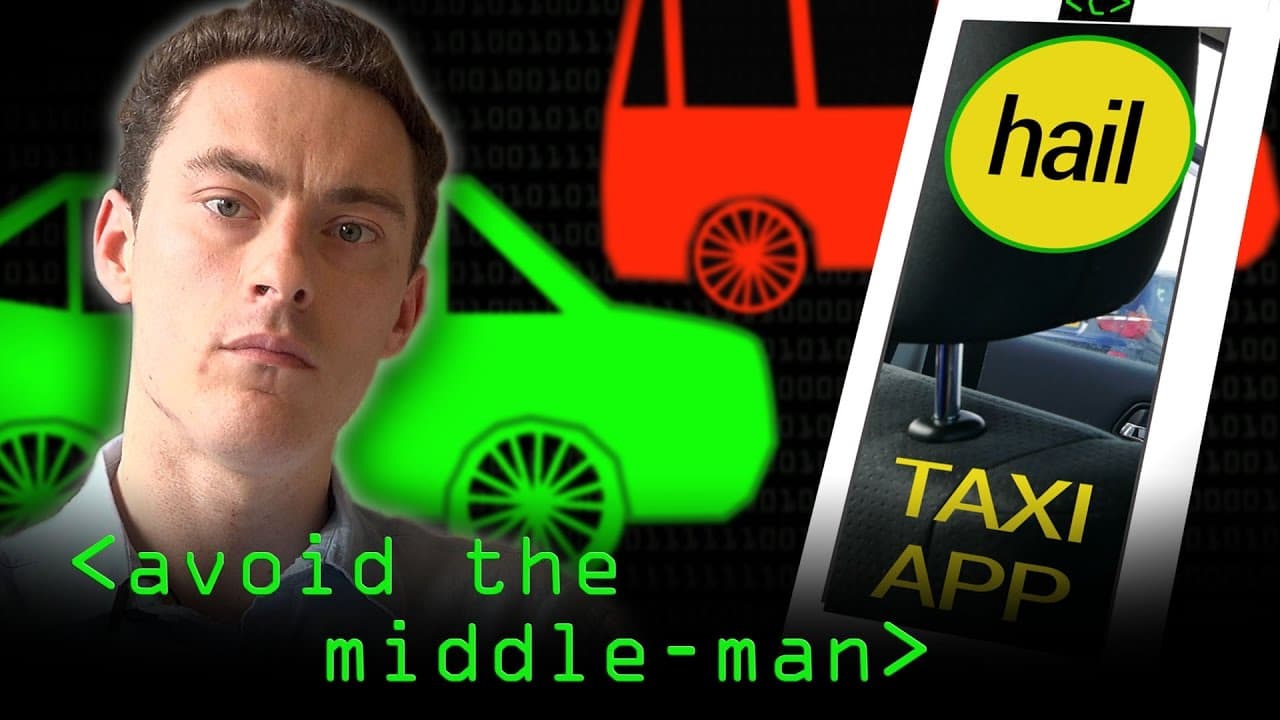
Smart contracts function as applications that automate negotiations without intermediaries, using blockchain technology for execution. This shift minimises reliance on centralised organisations, enabling anyone to create user-friendly interfaces that interact with various smart contracts, revolutionising how services are delivered.
Transcript
so smart contracts are rather poorly named in the sense that they're more properly thought of as applications a series of if then else type Clauses um for um drafting up um and executing negotiations the last video I did was on blockchain technology uh with a leaning towards Bitcoin and cryptocurrencies without rehashing too much of that video a bl... Read More
Key Insights
- 🫵 Smart contracts should be viewed as applications that automate negotiations, rather than traditional contracts.
- 📱 Blockchain technology, particularly Ethereum, enables the storage and execution of smart contracts.
- 🈸 Distributed applications remove the need for centralized websites or organizations, allowing anyone to create their own interface to a smart contract application.
- 🈸 The decentralization of applications on blockchain technology has the potential to eliminate middlemen and revolutionize industries.
- 👤 User-friendly interfaces for smart contracts and distributed applications are crucial for their success and adoption.
- 👻 Different smart contracts can have different models and benefits for drivers, allowing for more flexibility.
- 👾 Ethereum is a significant player in the smart contract and distributed application space, offering a global computer state on its blockchain.
Install to Summarize YouTube Videos and Get Transcripts
Explore YouTube Video Summarizer or Get YouTube Transcript Extractor
Questions & Answers
Q: What are smart contracts and how are they different from traditional contracts?
Smart contracts can be viewed as applications that contain if-then-else clauses for negotiations. Unlike traditional contracts, smart contracts are executed automatically based on predefined conditions, eliminating the need for a middleman.
Q: How do distributed applications work?
Distributed applications allow individuals to create their own front-end interfaces for a smart contract application. These interfaces can be distributed in various ways and do not rely on a central website or organization.
Q: Can different smart contracts have different models for drivers?
Yes, drivers can choose to use different smart contracts with different models. For example, a driver could use one contract for weekdays and another for weekends, offering different benefits for each. The interface for the client remains seamless regardless of the underlying contract.
Q: How are smart contracts and distributed applications powered by blockchain technology?
Blockchain technology, particularly platforms like Ethereum, stores the global state and computational operations required for smart contracts and distributed applications. Payments within the network are made using cryptocurrency, such as Ethereum's ether.
Summary & Key Takeaways
-
Smart contracts are better understood as applications that consist of if-then-else clauses for drafting and executing negotiations.
-
Blockchain technology was initially used for cryptocurrencies like Bitcoin, but it is now being applied to store and run smart contracts.
-
Distributed applications allow anyone to create their own interface to a smart contract application, removing the need for a central website or organization.
Read in Other Languages (beta)
Share This Summary 📚
Summarize YouTube Videos and Get Video Transcripts with 1-Click
Try YouTube Summary with ChatGPT & Claude or YouTube Transcript Generator
Explore More Summaries from Computerphile 📚

Summarize YouTube Videos and Get Video Transcripts with 1-Click
Try YouTube Summary with ChatGPT & Claude or YouTube Transcript Generator