Apo A1 & Apo B: How to Measure Your Cardiovascular Risk Using These 2
TL;DR
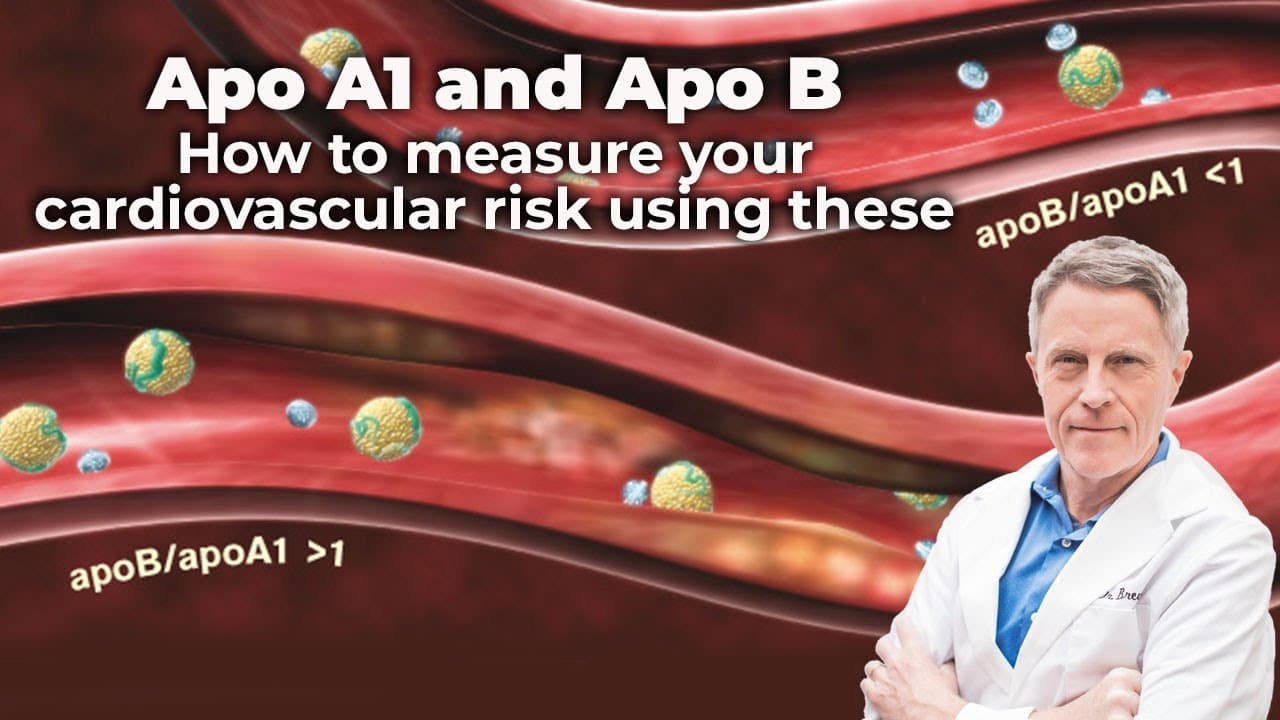
This content explains the differences between APO A1 and APO B proteins found in HDL and LDL particles, their impact on heart health, and the implications of genetic variations.
Transcript
hello today we're gonna talk about fo a1 f OB now let's go back and take a look at a picture but before we do just a brief introduction Ford Brewer with prep med heart attack stroke prevention now this is a picture of an HDL particle and an LDL particle this the standard saying is that the only difference between these two is that LDLs are twenty f... Read More
Key Insights
- 🥰 APO A1 proteins in HDL particles have protective effects on heart health by clearing cholesterol and reducing inflammation.
- 🤑 APO B proteins in LDL particles, especially the small dense ones, contribute to atherosclerosis and increase the risk of cardiovascular disease.
- 🥰 Genetic variations in APO A1 and APO B proteins can impact heart health, with some variations linked to longevity and others to increased cardiovascular risk.
- 😘 Monitoring the ratio of APO B to APO A1 proteins can serve as a useful risk indicator for heart health, with lower ratios indicating lower risk.
- 🥰 Understanding the role of APO A1 and APO B proteins can help in developing effective strategies for preventing heart attacks and strokes.
- 🧠 HDL particles can help improve overall cardiovascular and brain health due to the cardioprotective and anti-inflammatory effects of APO A1 proteins.
- 🧑🏭 Research on APO A1 mutations and variations has revealed potential factors influencing longevity and cardiovascular susceptibility.
Install to Summarize YouTube Videos and Get Transcripts
Explore YouTube Video Summarizer or Get YouTube Transcript Extractor
Questions & Answers
Q: What is the difference between APO A1 and APO B proteins?
APO A1 is found in HDL particles and is beneficial for heart health, helping clear cholesterol and reducing inflammation. APO B, on the other hand, is found in LDL particles, particularly the small dense ones that pose a higher risk for heart disease.
Q: How do APO A1 and APO B proteins affect heart health?
APO A1 proteins in HDL particles have a cardioprotective effect, clearing cholesterol from artery walls and reducing inflammation. In contrast, APO B proteins in LDL particles contribute to the development of atherosclerosis and increase the risk of heart attacks and strokes.
Q: Can genetic variations in APO A1 and APO B proteins impact heart health?
Yes, genetic variations in these proteins have been identified. For example, individuals with a genetic mutation called APO A1 Milano tend to live longer, while certain variations of APO B can increase the risk of premature cardiovascular disease. These variations can help determine an individual's risk for heart health issues.
Q: How can the ratio of APO B to APO A1 proteins be used as a risk indicator?
Research suggests that individuals with a lower APO B to APO A1 ratio have a lower risk of heart health issues. For men, a moderate risk cut point is 0.7 to 0.89, while for women, it is 0.6 to 0.79. Ratios higher than these cut points indicate higher risk.
Key Insights:
- APO A1 proteins in HDL particles have protective effects on heart health by clearing cholesterol and reducing inflammation.
- APO B proteins in LDL particles, especially the small dense ones, contribute to atherosclerosis and increase the risk of cardiovascular disease.
- Genetic variations in APO A1 and APO B proteins can impact heart health, with some variations linked to longevity and others to increased cardiovascular risk.
- Monitoring the ratio of APO B to APO A1 proteins can serve as a useful risk indicator for heart health, with lower ratios indicating lower risk.
- Understanding the role of APO A1 and APO B proteins can help in developing effective strategies for preventing heart attacks and strokes.
- HDL particles can help improve overall cardiovascular and brain health due to the cardioprotective and anti-inflammatory effects of APO A1 proteins.
- Research on APO A1 mutations and variations has revealed potential factors influencing longevity and cardiovascular susceptibility.
- Differentiating between APO A1 and APO B proteins provides insights into the intricate mechanisms of cholesterol metabolism and its impact on heart health.
Summary & Key Takeaways
-
APO A1 is a protein found in HDL particles and is cardioprotective, helping clear cholesterol from artery walls and protecting against inflammation and dementia.
-
APO B is a protein found in LDL particles, particularly the small dense ones, which are harmful to heart health.
-
Genetic variations in APO A1 and APO B proteins can have significant implications on heart health, with some variations linked to longevity and others to increased risk of cardiovascular disease.
Read in Other Languages (beta)
Share This Summary 📚
Summarize YouTube Videos and Get Video Transcripts with 1-Click
Try YouTube Summary with ChatGPT & Claude or YouTube Transcript Generator
Explore More Summaries from PrevMed Health 📚






Summarize YouTube Videos and Get Video Transcripts with 1-Click
Try YouTube Summary with ChatGPT & Claude or YouTube Transcript Generator