Space Navigation. Finding Your Way in the Cosmos
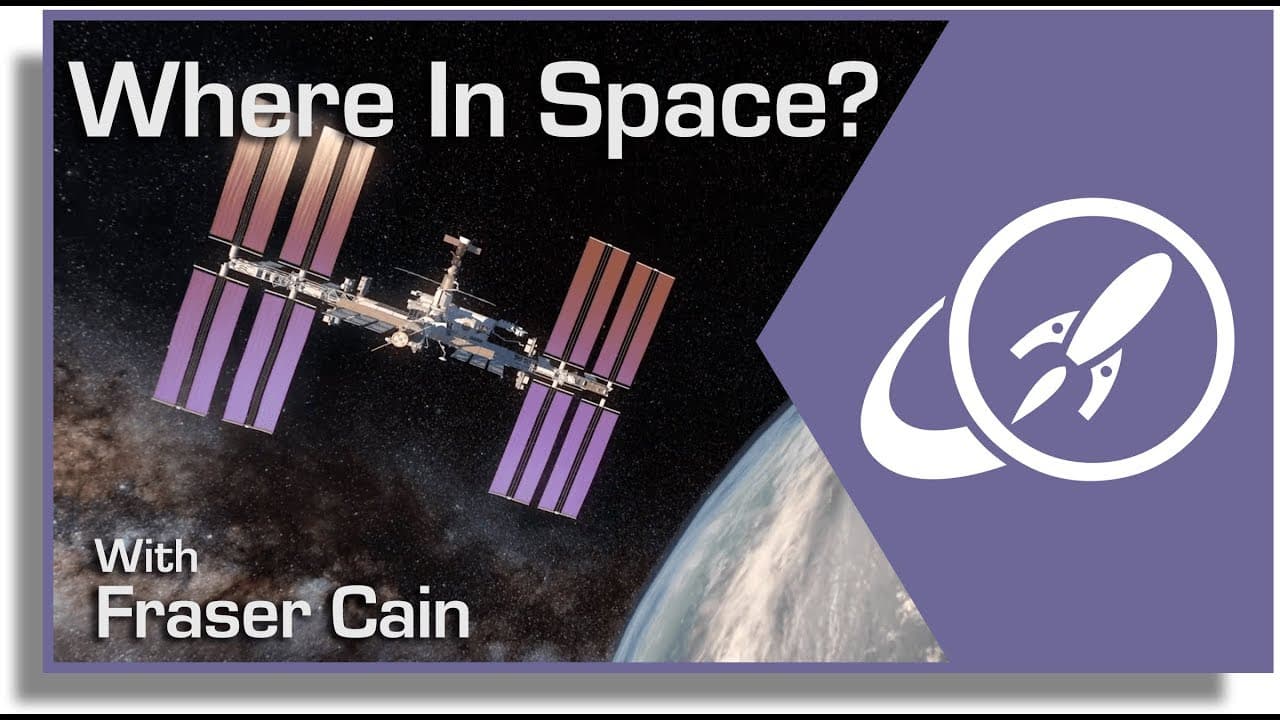
TL;DR
Space navigation techniques, from celestial to pulsars, revolutionize spacecraft positioning.
Transcript
Until we learned to properly navigate our way across the oceans, early explorers were fearful to lose sight of land in case they’d be lost at sea. They learned to use the water currents, winds, movements of birds and of course, the positions of the Sun, the Moon and the stars to find their way across the seas to distant lands. As we learned to laun... Read More
Key Insights
- 🤩 Early sailors used celestial navigation techniques, such as sextants and star angles, for maritime navigation.
- 📡 GPS revolutionized Earth navigation by providing precise location data through satellite signals.
- 🧑🚀 NASA's Apollo missions to the Moon used a mix of ground-based tracking, onboard computers, and astronaut observations for navigation.
- 🧘 Spacecraft navigation involves ground-based radio dishes monitoring and maneuvering spacecraft positions.
- 🦻 Deep Space Network aids spacecraft navigation through frequency shifts of signals for accurate distance calculations.
- ⏲️ Accurate clocks are crucial for spacecraft navigation, with NASA developing the Deep Space Atomic Clock for precise time updates.
- 👾 The future of space navigation may utilize pulsar signals for high-precision spacecraft positioning across vast distances.
Install to Summarize YouTube Videos and Get Transcripts
Explore YouTube Video Summarizer or Get YouTube Transcript Extractor
Questions & Answers
Q: How did early explorers navigate across the seas?
Early explorers used water currents, winds, birds, stars, and celestial navigation to find their way across the oceans to distant lands.
Q: What technology revolutionized Earth navigation?
GPS (Global Positioning System) satellites surrounding Earth at 20,000 km provided precise location data by broadcasting signals for navigation systems.
Q: How did NASA navigate spacecraft to the Moon during the Apollo missions?
NASA used the Apollo Guidance Computer, ground-based tracking, and astronauts' space sextant observations to navigate spacecraft accurately to the Moon.
Q: What new navigation technique did NASA successfully test for future space exploration?
NASA tested using pulsars, rapidly spinning neutron stars emitting radio signals, to provide high-precision timing signals for precise spacecraft positioning in space.
Summary & Key Takeaways
-
Early explorers navigated using water currents, winds, birds, stars, and celestial navigation.
-
GPS revolutionized Earth navigation, while space navigation involves radio dishes and sextants.
-
Future space navigation may utilize pulsars for precise spacecraft positioning across the Milky Way.
Read in Other Languages (beta)
Share This Summary 📚
Summarize YouTube Videos and Get Video Transcripts with 1-Click
Try YouTube Summary with ChatGPT & Claude or YouTube Transcript Generator
Explore More Summaries from Fraser Cain 📚


Summarize YouTube Videos and Get Video Transcripts with 1-Click
Try YouTube Summary with ChatGPT & Claude or YouTube Transcript Generator