Develop Measuring Instrument for Research
TL;DR
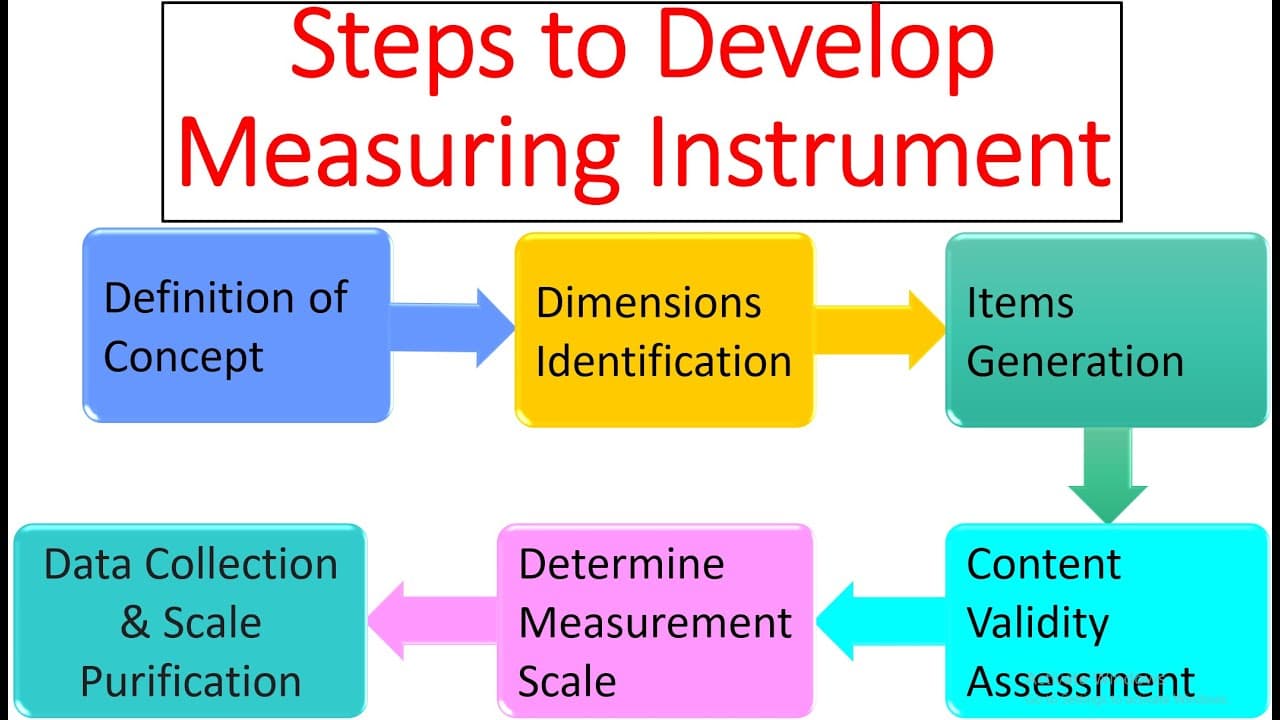
This lesson discusses the steps involved in developing a measuring instrument, including defining the concept, identifying dimensions, generating items, assessing content validity, determining the measurement scale, and data collection.
Transcript
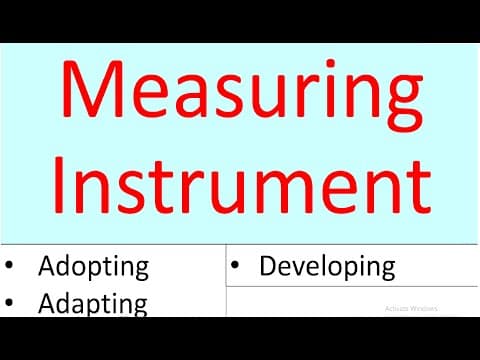
hello everybody and welcome back to lesson 21 developing measuring instrument is a previous lesson we have discussed about measuring instrument adoption adoption and developing measuring instrument by the way if we get a suitable measuring instrument for our research question so adoption is best option if we cannot get a suitable exactly the same m... Read More
Key Insights
- 👨🔬 Developing a measuring instrument is the last resort when a suitable instrument cannot be found for a research question.
- ❓ Defining the concept and understanding its context-specific meaning is crucial in developing a measuring instrument.
- 👨🔬 Dimensions that represent the concept can be identified through literature review, exploratory research, or expert consultation.
- ⚾ Content validity ensures that the items adequately represent the dimensions, and adjustments can be made based on input from subject matter experts.
- 😐 The measurement scale should be chosen based on the researcher's judgment and the likelihood of neutral responses.
- 😘 Scale purification involves deleting items with low item-to-total correlation and examining factor loadings to ensure construct validity.
- 😘 Coefficient Alpha is used to assess internal consistency, and low values may require deleting items to increase reliability.
Install to Summarize YouTube Videos and Get Transcripts
Explore YouTube Video Summarizer or Get YouTube Transcript Extractor
Questions & Answers
Q: What are the steps involved in developing a measuring instrument?
The steps include defining the concept, identifying dimensions, generating items, assessing content validity, determining the measurement scale, and collecting data.
Q: How can the definition of a concept be clarified?
The definition of a concept can be clarified by assessing similar concepts from existing literature and understanding their meanings in the required context.
Q: How are dimensions identified?
Dimensions are identified by referring to existing literature, conducting exploratory research, or consulting subject matter experts to find constructs that represent the concept.
Q: How is content validity assessed?
Content validity is assessed by obtaining feedback from subject matter experts and making adjustments to the items based on their recommendations.
Q: What is the significance of determining the measurement scale?
The measurement scale determines the categories or options for respondents to choose from. The researcher's judgment and the likelihood of neutral responses influence whether an odd or even number scale is used.
Q: How is scale purification done?
Scale purification involves deleting items with low item-to-total correlation and conducting factor analysis to ensure that each item has a high loading on a single factor.
Q: What is the importance of coefficient Alpha in scale purification?
Coefficient Alpha is used to assess the internal consistency of the items within each dimension. If the Alpha value is low, items with low item-to-total correlation are deleted to increase reliability.
Q: When can the developed instrument be considered valid and reliable?
The instrument is considered valid and reliable when it has undergone content validity assessment, has items with high factor loadings, and shows good internal consistency and combined reliability.
Summary & Key Takeaways
-
Developing a measuring instrument is the last option when a suitable instrument cannot be found for a research question.
-
The first step is to define the concept or variable to be measured and understand its definition in the required context.
-
Dimensions that represent the concept are identified, and items are generated to measure each dimension.
-
Content validity is assessed by obtaining feedback from subject matter experts to ensure that the items adequately represent the dimensions.
-
The measurement scale, such as a 3, 5, 7, or 9-point scale, is determined based on the researcher's judgment and the likelihood of neutral responses.
-
Data is collected from the target population, and scale purification is done by deleting items with low item-to-total correlation and conducting factor analysis.
Read in Other Languages (beta)
Share This Summary 📚
Summarize YouTube Videos and Get Video Transcripts with 1-Click
Try YouTube Summary with ChatGPT & Claude or YouTube Transcript Generator
Explore More Summaries from Solomon Getachew 📚


Summarize YouTube Videos and Get Video Transcripts with 1-Click
Try YouTube Summary with ChatGPT & Claude or YouTube Transcript Generator