What Themes Does Caspar David Friedrich Explore in 'Wanderer Above the Sea of Fog'?
TL;DR
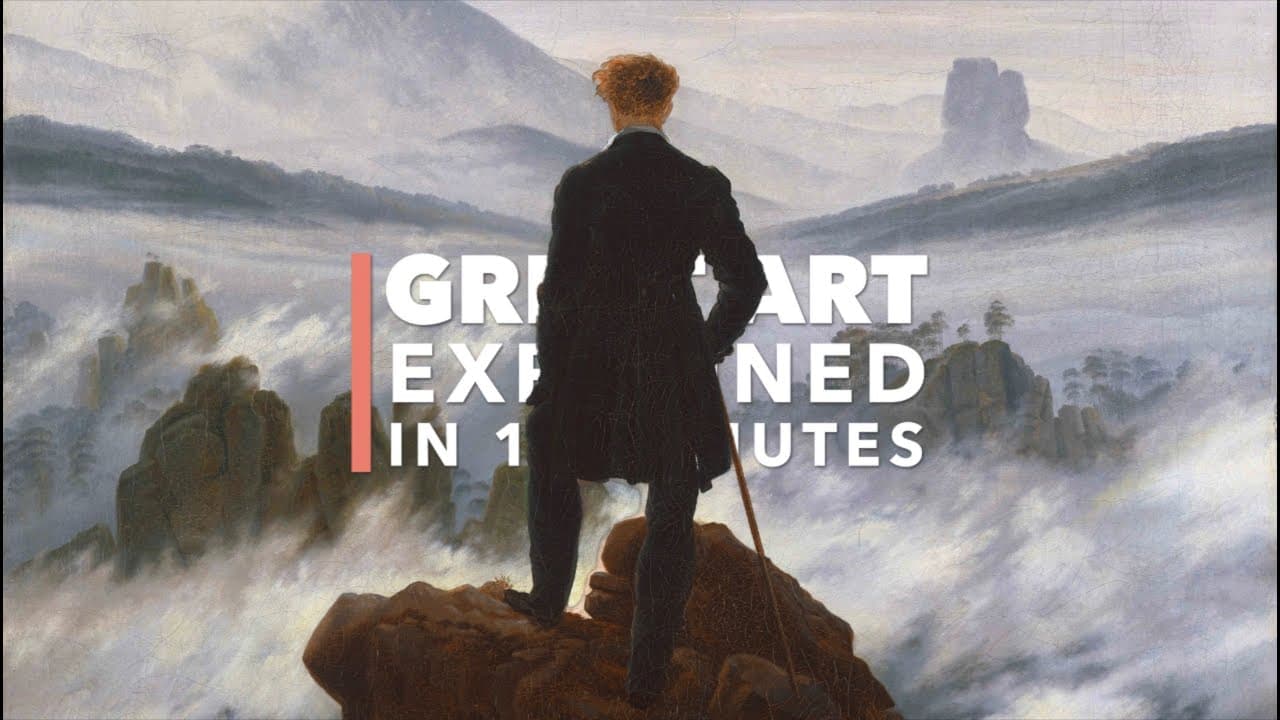
'Wanderer Above the Sea of Fog' by Caspar David Friedrich explores themes of the sublime and human insignificance, reflecting the artist's personal tragedies and the broader romantic and nationalistic context of early 19th-century Germany. The painting's use of a Rückenfigur invites viewers to engage with the landscape from an introspective perspective, emphasizing the emotional and spiritual depth of nature.
Transcript
This video is sponsored by Skillshare, the online learning community for creatives who have a great offer for my viewers at the end of this video. Every single work by the great German romantic artist, Casper David Friedrich, was based around a complex idea, which he articulated very simply. "A picture must not be invented"... Read More
Key Insights
- Caspar David Friedrich's 'Wanderer Above the Sea of Fog' is a complex painting that blends romanticism with nationalistic themes, exploring the sublime and human insignificance in nature.
- Friedrich's work is deeply influenced by personal tragedies and the Romantic movement, emphasizing the spiritual and emotional power of landscapes over traditional portraiture or history painting.
- The painting's composition uses a Rückenfigur, inviting viewers to experience the landscape from the protagonist's perspective, enhancing the sense of the sublime and personal reflection.
- Friedrich's landscapes are not literal depictions but idealized amalgamations, constructed from sketches and his 'inner eye,' reflecting his spiritual and philosophical beliefs.
- The painting has been interpreted as both a patriotic epitaph for a fallen soldier and a spiritual journey, illustrating the multifaceted nature of Friedrich's work.
- Friedrich's use of landscape as a medium for religious themes was controversial at the time, challenging traditional artistic norms and expanding the genre's possibilities.
- Despite his later obscurity and the appropriation of his imagery by the Nazis, Friedrich's work was re-evaluated in the 20th century, reinstating his importance in German Romantic painting.
- The video also highlights the influence of the Enlightenment and Romanticism on Friedrich's work, contrasting the scientific rationalism of the former with the emotional and spiritual focus of the latter.
Install to Summarize YouTube Videos and Get Transcripts
Explore YouTube Video Summarizer or Get YouTube Transcript Extractor
Questions & Answers
Q: What is the main theme of 'Wanderer Above the Sea of Fog'?
The main theme of 'Wanderer Above the Sea of Fog' is the exploration of the sublime, a concept central to Romanticism. It reflects the overwhelming and awe-inspiring power of nature, highlighting human insignificance in the face of vast landscapes. The painting invites viewers to experience these emotions through its unique composition and perspective.
Q: How did Friedrich's personal life influence his art?
Friedrich's personal life, marked by early tragedies such as the deaths of his mother and siblings, deeply influenced his art. These experiences contributed to the melancholic and introspective themes present in his work. His exploration of loss, spirituality, and the sublime can be seen as a reflection of his own emotional struggles and philosophical beliefs.
Q: Why was Friedrich's use of landscape controversial?
Friedrich's use of landscape was controversial because it challenged traditional artistic norms. At the time, landscapes were considered mere backdrops for historical or religious scenes. Friedrich, however, used landscapes as the primary subject, imbuing them with spiritual and emotional significance. This approach was radical and initially met with criticism, but it ultimately expanded the possibilities of landscape painting.
Q: What is the significance of the Rückenfigur in Friedrich's painting?
The Rückenfigur in Friedrich's painting is significant because it invites viewers to see the landscape from the protagonist's perspective, rather than focusing on the figure itself. This compositional choice enhances the viewer's engagement with the scene, encouraging personal reflection and emotional response to the sublime landscape. It is a hallmark of Friedrich's innovative approach to art.
Q: How did the Enlightenment and Romanticism influence Friedrich's work?
The Enlightenment and Romanticism influenced Friedrich's work by providing contrasting perspectives on art and nature. The Enlightenment emphasized reason and scientific understanding, while Romanticism focused on emotion, spirituality, and the sublime. Friedrich's work embodies the Romantic response to Enlightenment ideals, prioritizing personal vision and the emotional power of the natural world.
Q: What historical context is relevant to Friedrich's painting?
The historical context of Friedrich's painting includes the aftermath of the Napoleonic Wars and the rise of German nationalism. The painting reflects themes of national identity and the struggle for unity, as well as the broader Romantic interest in the sublime and the individual's connection to nature. This context adds layers of meaning to Friedrich's work.
Q: How was Friedrich's legacy affected by the Nazis?
Friedrich's legacy was affected by the Nazis, who appropriated his imagery to promote their nationalist agenda. This association tainted his reputation for a time, overshadowing the original spiritual and philosophical intentions of his work. However, art historians re-evaluated his contributions in the 20th century, restoring his status as a key figure in Romantic painting.
Q: What role does the concept of the 'inner eye' play in Friedrich's art?
The concept of the 'inner eye' plays a crucial role in Friedrich's art, as it represents the artist's ability to see beyond the physical world and convey deeper, spiritual truths. This idea, rooted in Romantic philosophy, emphasizes the importance of personal vision and imagination in creating art that transcends mere observation, reflecting the artist's inner thoughts and emotions.
Summary & Key Takeaways
-
The video explores Caspar David Friedrich's 'Wanderer Above the Sea of Fog,' highlighting its romantic and nationalistic themes. It discusses Friedrich's personal tragedies and their influence on his art, emphasizing the painting's exploration of the sublime and human insignificance.
-
Friedrich's innovative use of landscape challenges traditional artistic norms, using idealized scenes to convey spiritual and emotional experiences. The painting's Rückenfigur composition invites viewers to engage with the landscape from the protagonist's perspective, enhancing its philosophical depth.
-
The video also addresses the historical context of Friedrich's work, including its initial controversy and later appropriation by the Nazis. Despite this, Friedrich's legacy endures, with his work re-evaluated in the 20th century, highlighting his significance in Romantic art.
Read in Other Languages (beta)
Share This Summary 📚
Summarize YouTube Videos and Get Video Transcripts with 1-Click
Try YouTube Summary with ChatGPT & Claude or YouTube Transcript Generator
Explore More Summaries from Great Art Explained 📚






Summarize YouTube Videos and Get Video Transcripts with 1-Click
Try YouTube Summary with ChatGPT & Claude or YouTube Transcript Generator